Introduction In today’s rapidly evolving business landscape, operational efficiency is not just a goal—it’s a necessity. Organizations often find themselves
Continue reading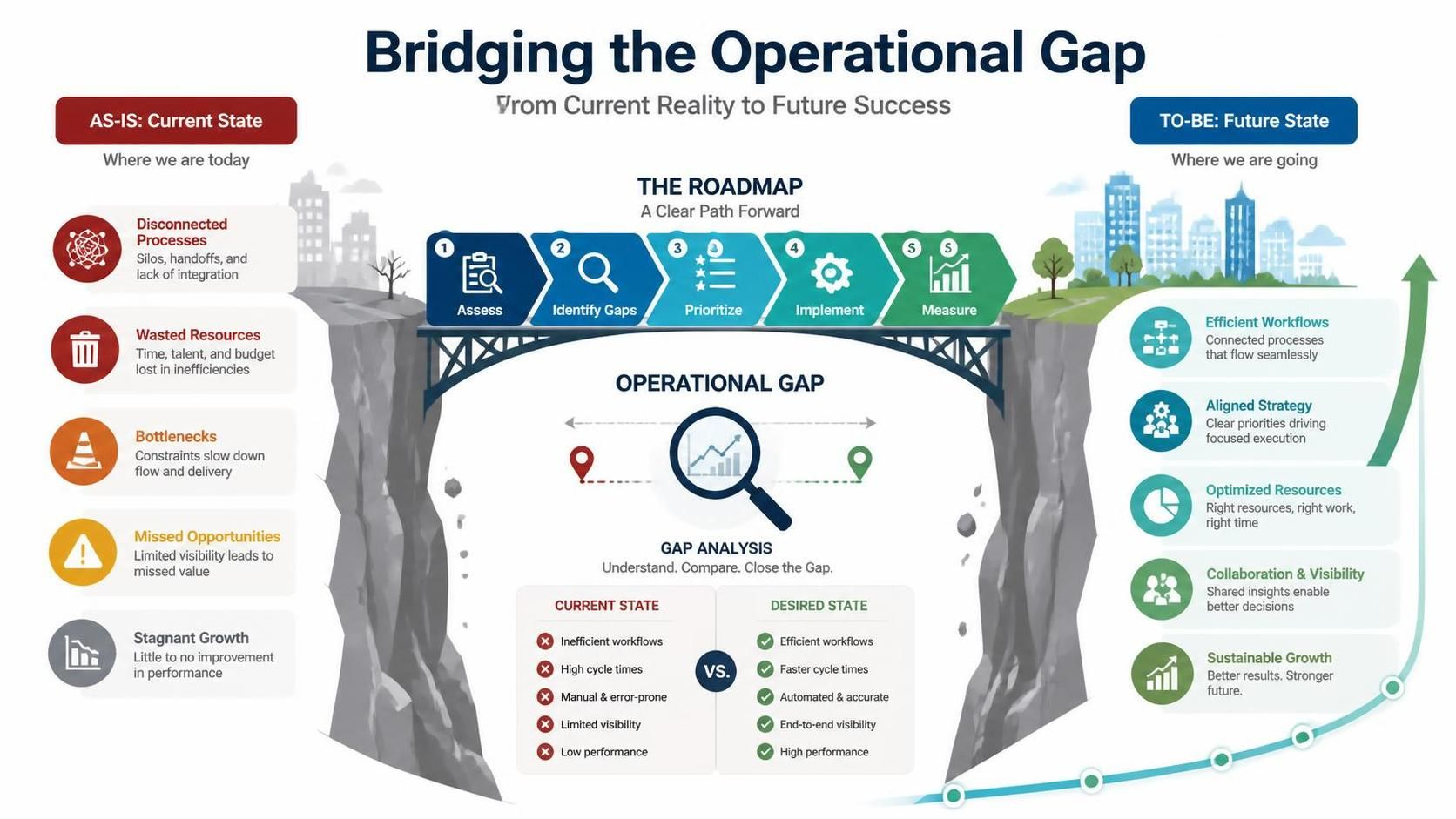
Learning one new thing everyday
Introduction In today’s rapidly evolving business landscape, operational efficiency is not just a goal—it’s a necessity. Organizations often find themselves
Continue reading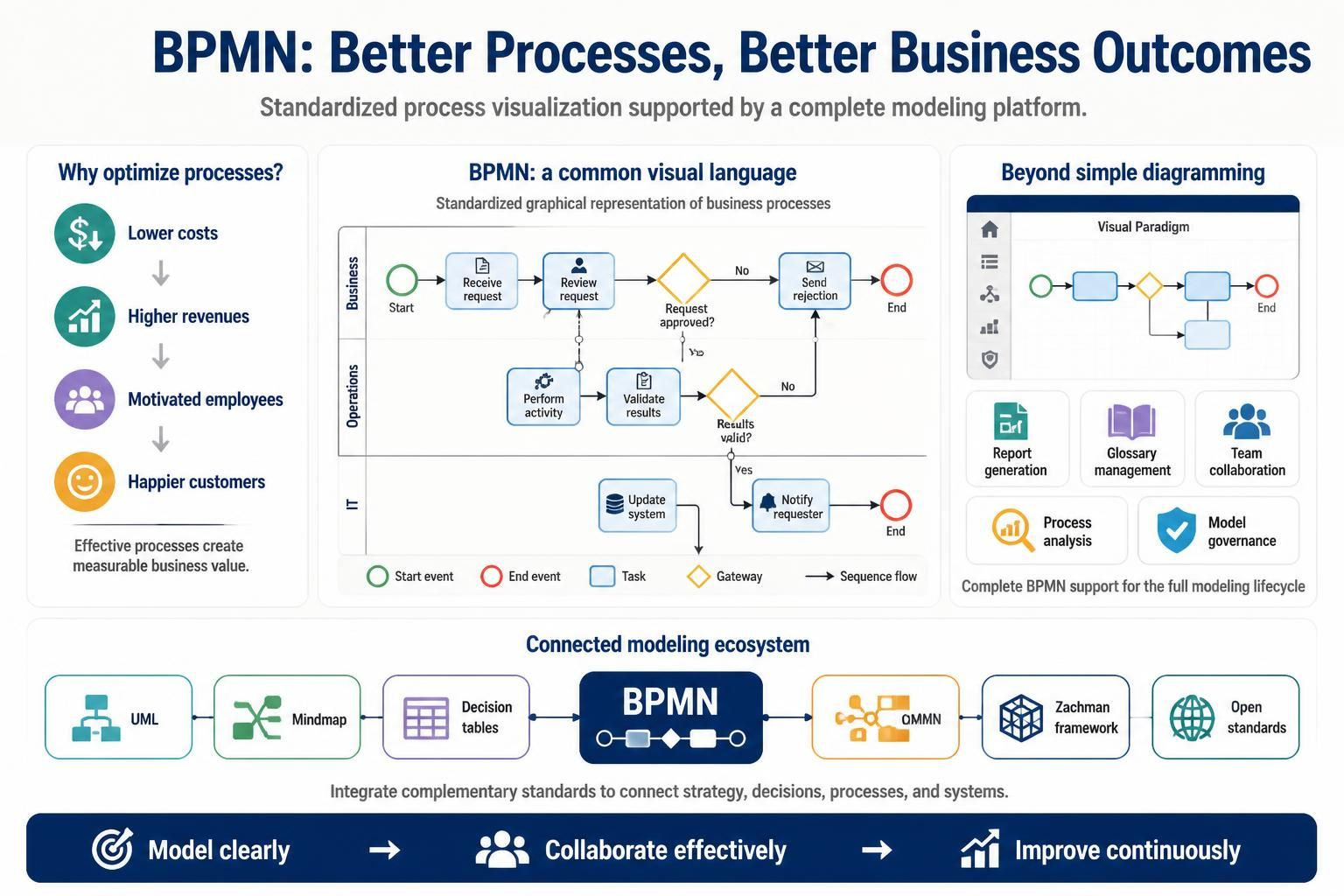
Introduction In today’s fast-paced business environment, organizations constantly seek ways to optimize operations, reduce costs, and enhance customer satisfaction. One
Continue reading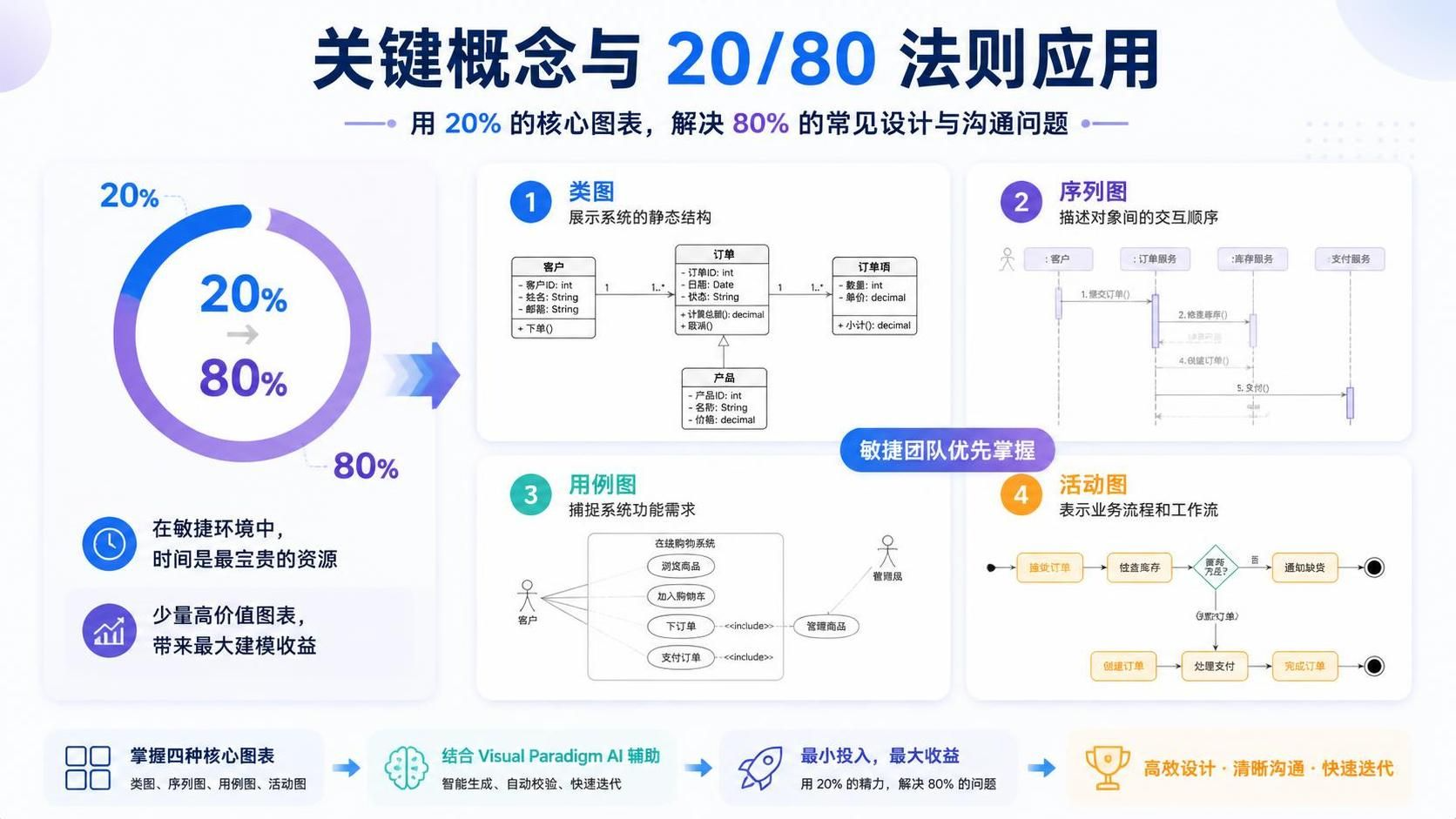
敏捷团队的UML建模20/80法则:借助AI让MDA可行,实现代码即文档 引言 在敏捷开发环境中,传统上认为详细的UML建模与快速迭代的文化相悖。然而,完全放弃可视化建模往往导致系统架构模糊、沟通成本增加以及技术债务累积。Visual Paradigm作为一款全面的可视化建模平台,支持所有14种标准统一建模语言(UML)图表类型,为软件设计和系统架构提供了坚实基础。 随着AI技术的融入,特别是生成式文本到图表功能、AI图表聊天机器人和自动化模型生成功能的出现,UML建模过程得到了显著简化。这使得模型驱动架构(MDA)在敏捷团队中变得更加可行,同时促进了”代码即文档”的理念,确保文档与代码保持同步更新。本文将介绍如何运用20/80法则,聚焦最有价值的UML图表类型,并利用Visual Paradigm的AI辅助功能,为敏捷团队提供高效、实用的建模指南。 关键概念与20/80法则应用 为什么选择20/80法则? 在敏捷环境中,时间是最宝贵的资源。研究表明,20%的UML图表类型能够解决80%的常见设计和沟通问题。对于大多数软件项目而言,以下四种图表类型最具价值: 类图(Class Diagram) – 展示系统的静态结构 序列图(Sequence Diagram) – 描述对象间的交互顺序 用例图(Use Case Diagram)
Continue reading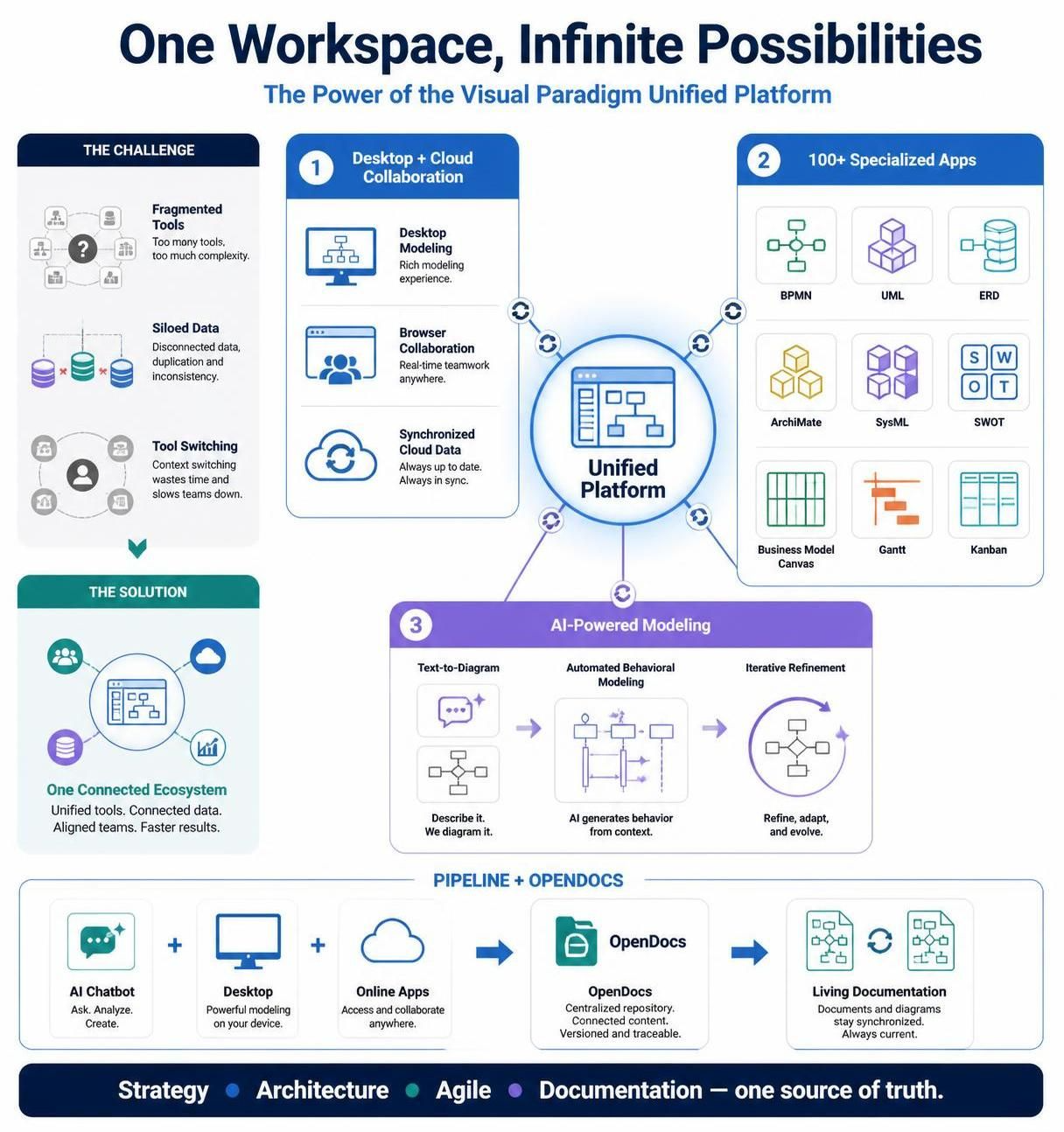
For years, architects, software engineers, business analysts, and project managers have wrestled with a fragmented digital toolkit. Valuable desktop models
Continue readingIntroduction In the fast-paced world of modern software engineering, documentation often struggles to keep up with development. The Diagram-as-Code (DaC)
Continue reading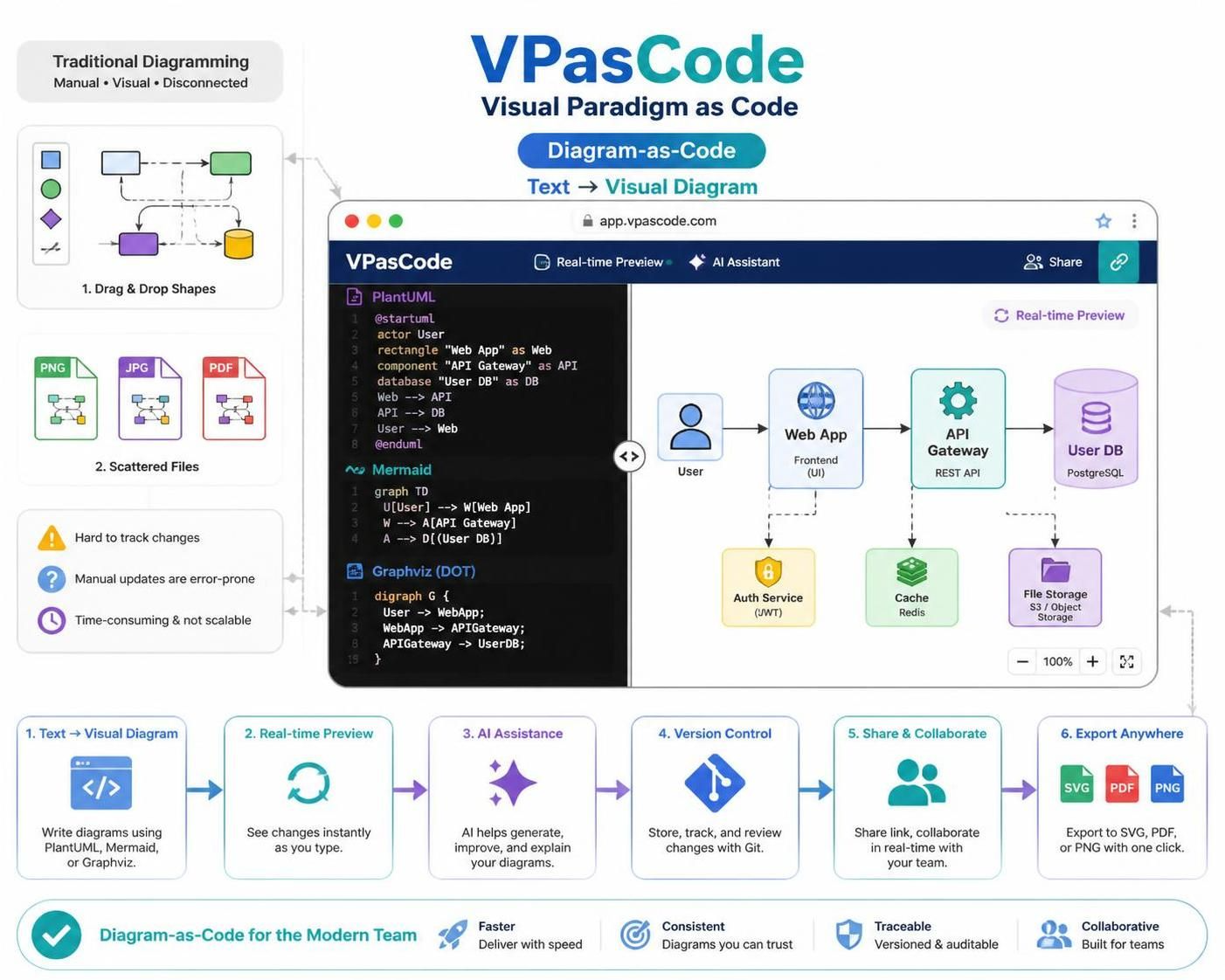
Introduction Software architecture and business processes are often easier to understand visually than through prose or source code alone. However,
Continue readingIntroduction Software architecture is easier to understand, communicate, and maintain when complex requirements are represented visually. UML diagrams, architecture maps,
Continue reading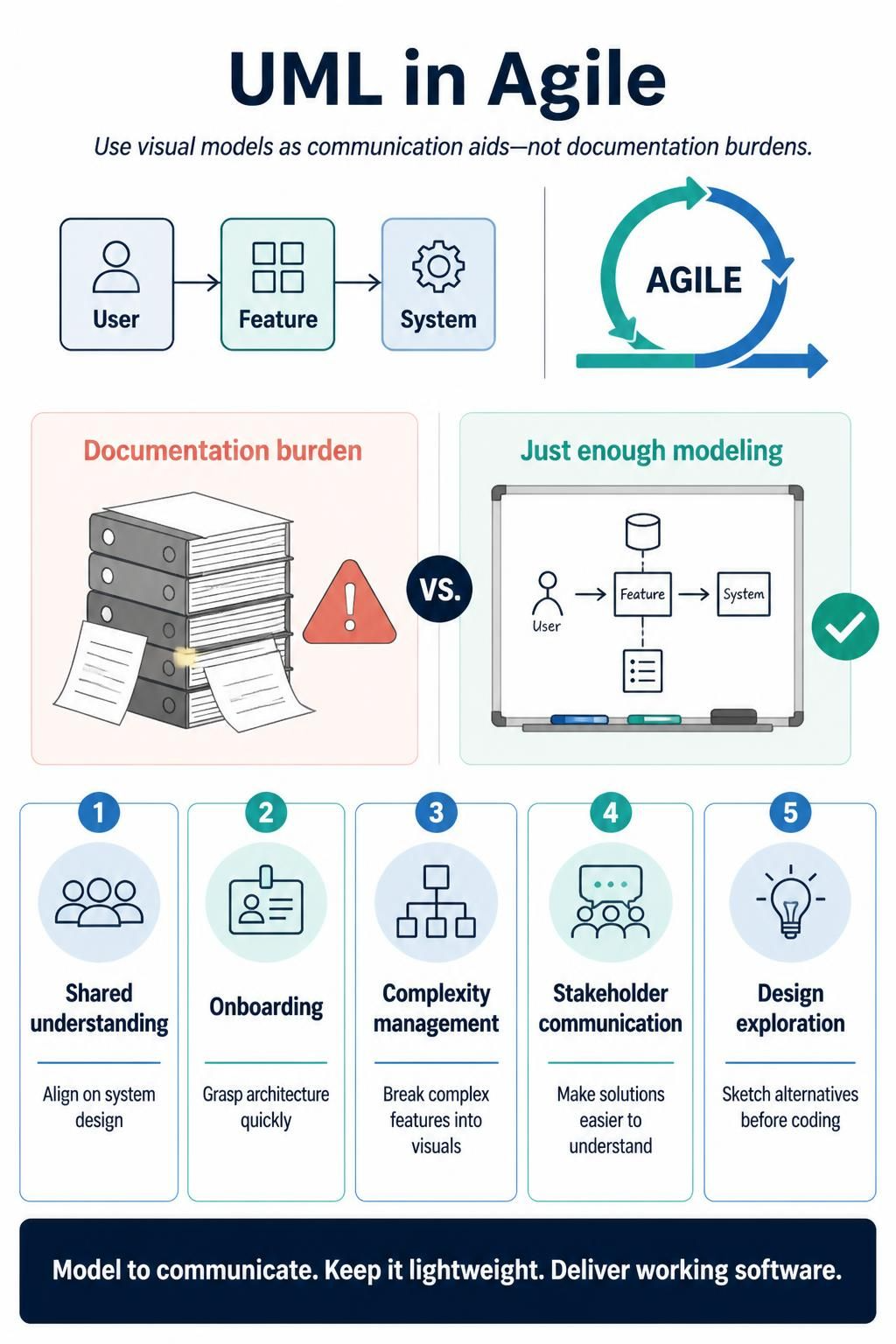
Introduction Unified Modeling Language (UML) has long been associated with heavyweight, documentation-driven development processes. However, when applied thoughtfully, UML can
Continue readingWelcome to the world of UML. Whether you are a software developer, a project manager, a business analyst, or a
Continue reading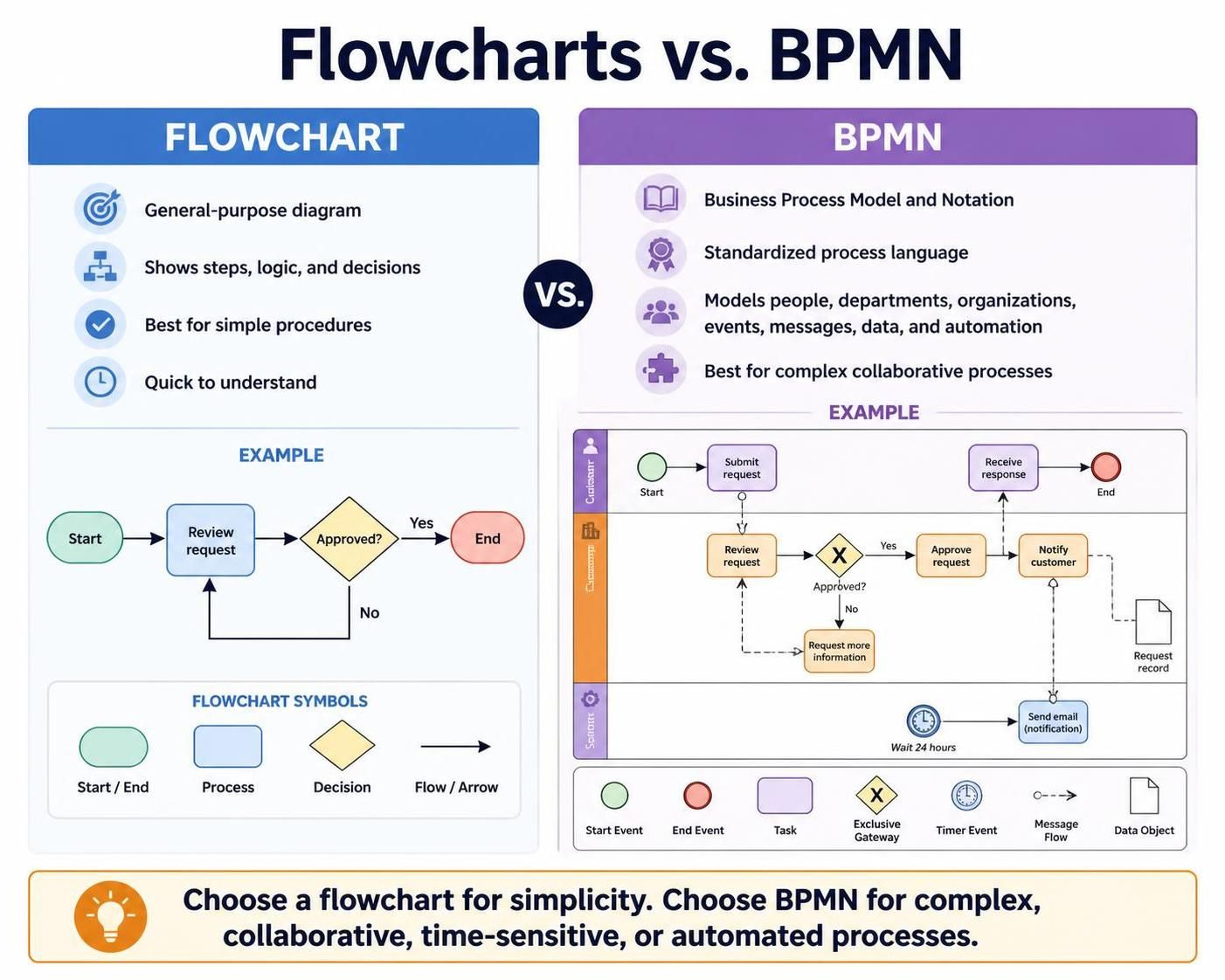
Flowcharts and BPMN diagrams both show how work progresses from one step to another. The difference is mainly purpose and
Continue reading