


Modern software architecture demands rapid design iterations without compromising precision. Enterprise architects and system designers frequently rely on Domain-Specific Languages (DSLs) to maintain clarity across technical documentation. However, manually drafting detailed visual models like C4 architecture containers or multi-tier sequence flows often creates significant friction during rapid design sprints.
Visual Paradigm’s VPasCode addresses this challenge directly. Functioning as an advanced diagram as code tool, the platform combines a text-based editing canvas with a conversational AI engine specifically tuned for technical visualization. This enables enterprise teams to draft, refactor, and maintain complex enterprise models through natural language instructions.
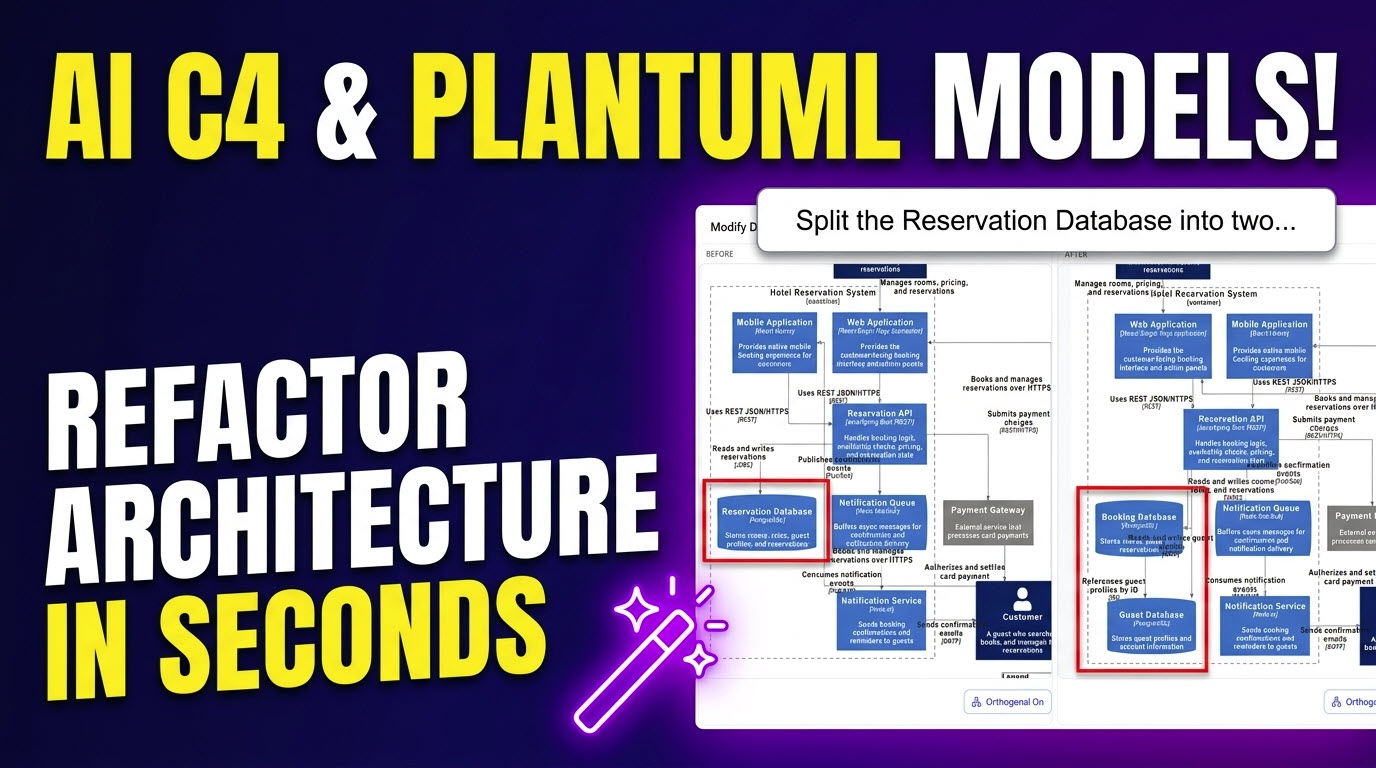
Transforming Technical Architecture with Natural Language Prompts
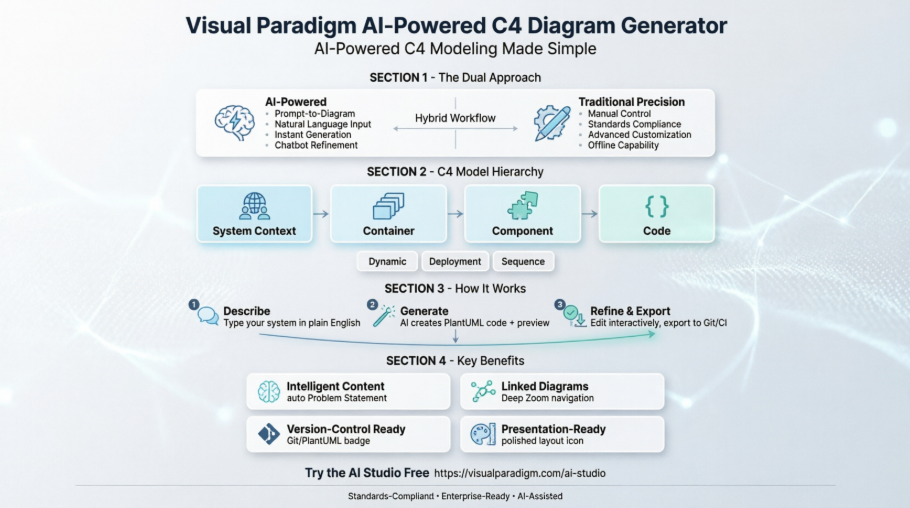
Rather than constructing diagrams shape-by-shape in drag-and-drop suites, software architects can utilize an AI PlantUML tool to translate high-level system descriptions into structured scripts. VPasCode processes these plain-English prompts and outputs syntax-valid scripts across diverse visualization standards, including PlantUML, Mermaid, Graphviz, and C4 layouts.
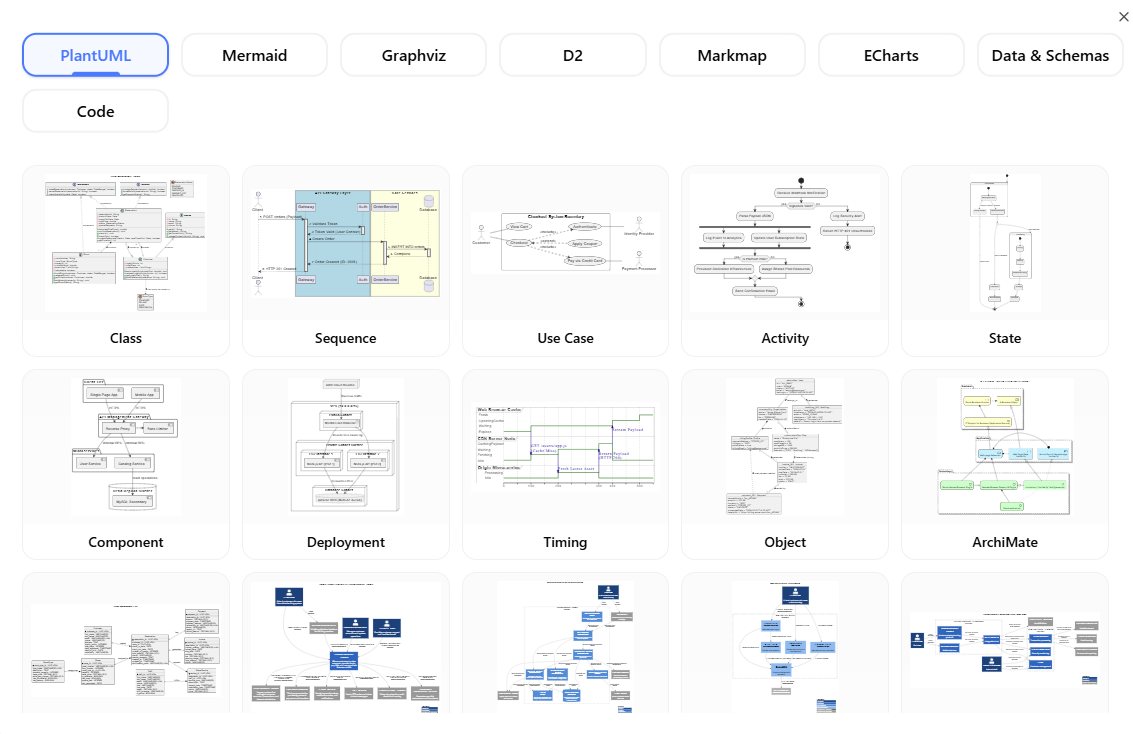
Through its multi-format engine, the AI diagram generator automatically structures relationships, components, and boundaries. Architects retain full governance over the underlying code, enabling seamless integration into Git repositories or corporate technical documentation systems like Visual Paradigm OpenDocs.

To generate a C4, entre your system context and include the kind of C4 diagram you want to generate in your prompt.
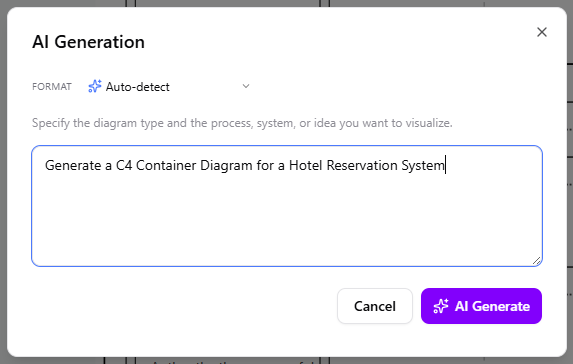
Here is the C4 Container Diagram generated for a hotel room booking system:
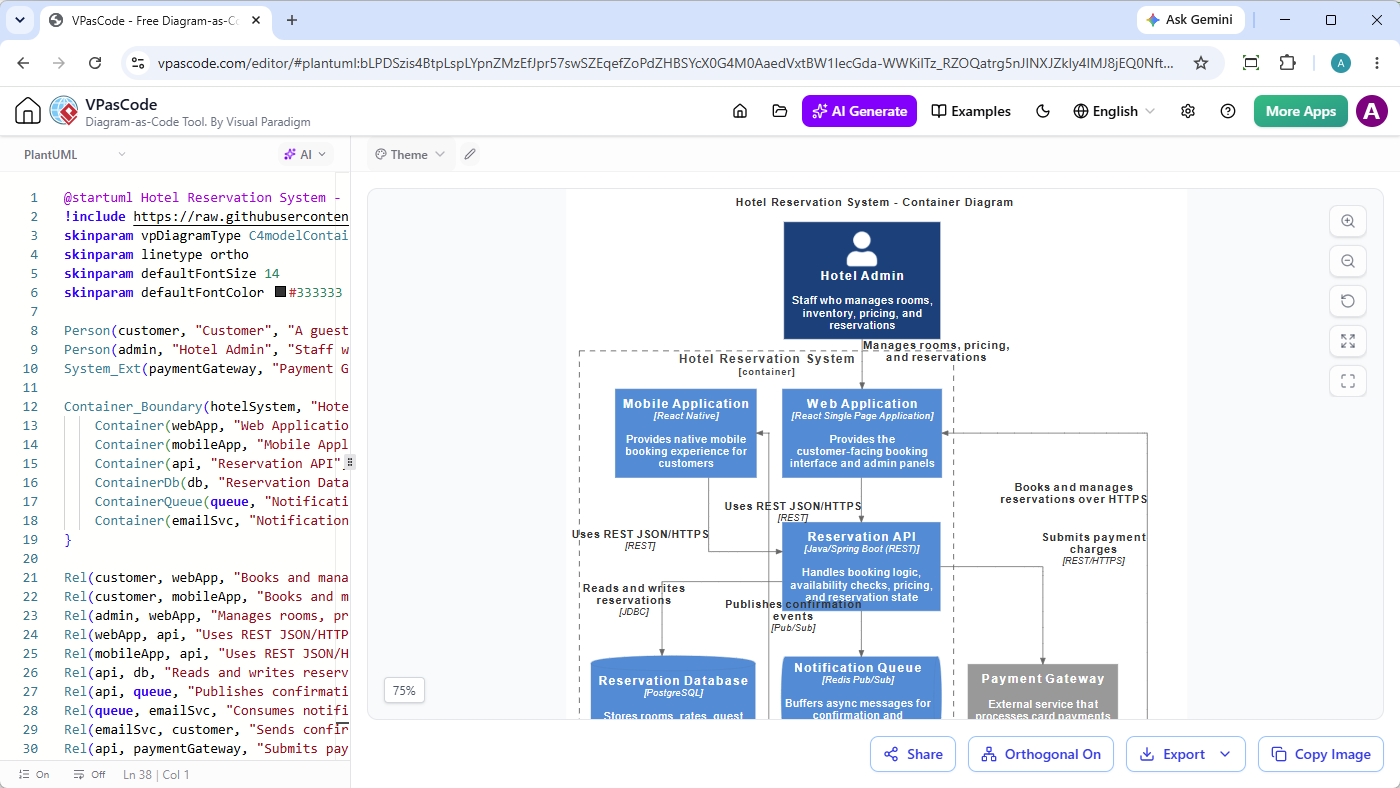
@startuml Hotel

title Reservation System - Container Diagram
!include https://raw.githubusercontent.com/plantuml-stdlib/C4-PlantUML/master/C4_Container.puml
skinparam vpDiagramType C4modelContainerDiagram
skinparam linetype ortho
skinparam defaultFontSize 14
skinparam defaultFontColor #333333

Person(customer, "Customer", "A guest who searches, books, and manages hotel reservations")
Person(admin, "Hotel Admin", "Staff who manages rooms, inventory, pricing, and reservations")
System_Ext(paymentGateway, "Payment Gateway", "External service that processes card payments")

Container_Boundary(hotelSystem, "Hotel Reservation System") {
    Container(webApp, "Web Application", "React Single Page Application", "Provides the customer-facing booking interface and admin panels")
    Container(mobileApp, "Mobile Application", "React Native", "Provides native mobile booking experience for customers")
    Container(api, "Reservation API", "Java/Spring Boot (REST)", "Handles booking logic, availability checks, pricing, and reservation state")
    ContainerDb(db, "Reservation Database", "PostgreSQL", "Stores rooms, rates, guest profiles, and reservations")
    ContainerQueue(queue, "Notification Queue", "Redis Pub/Sub", "Buffers async messages for confirmation and notification delivery")
    Container(emailSvc, "Notification Service", "Node.js", "Sends booking confirmations and reminders to guests")
}

Rel(customer, webApp, "Books and manages reservations over HTTPS")
Rel(customer, mobileApp, "Books and manages reservations over HTTPS")
Rel(admin, webApp, "Manages rooms, pricing, and reservations")
Rel(webApp, api, "Uses REST JSON/HTTPS", "REST")
Rel(mobileApp, api, "Uses REST JSON/HTTPS", "REST")
Rel(api, db, "Reads and writes reservations", "JDBC")
Rel(api, queue, "Publishes confirmation events", "Pub/Sub")
Rel(queue, emailSvc, "Consumes notification events", "Pub/Sub")
Rel(emailSvc, customer, "Sends confirmation emails", "SMTP")
Rel(api, paymentGateway, "Submits payment charges", "REST/HTTPS")
Rel(paymentGateway, customer, "Authorizes and settles card payment")

LAYOUT_WITH_LEGEND()

title Hotel Reservation System - Container Diagram

@endumlRefactoring C4 Models and PlantUML via AI Modification
As software systems evolve, updating technical blueprints line by line can become tedious. VPasCode functions as an interactive AI code modification tool, allowing creators to pass targeted refactoring instructions directly to the editor.
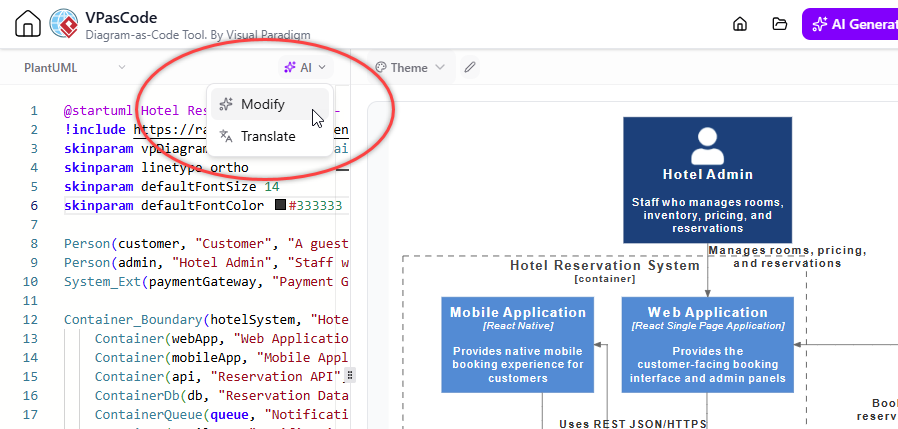
Enter your instruction. In this case we ask AI to split the Reservation Database into two.
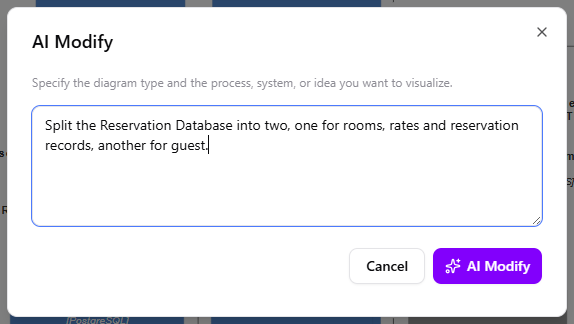
Common architectural refactoring requests handled by the platform include:
- Converting high-level class or sequence views into granular C4 container models.
- Inserting fallback routes or error-handling flows into existing system sequence models.
- Grouping database operations and microservices into dedicated sub-clusters.
Ensuring Precision through Visual Code Diffing
To preserve technical accuracy across complex infrastructure models, transparency is essential. VPasCode includes a built-in visual code diff inspection window. When modifying an existing diagram, engineers can click “View Details” to evaluate line-by-line script adjustments alongside a side-by-side graphical comparison before accepting changes.
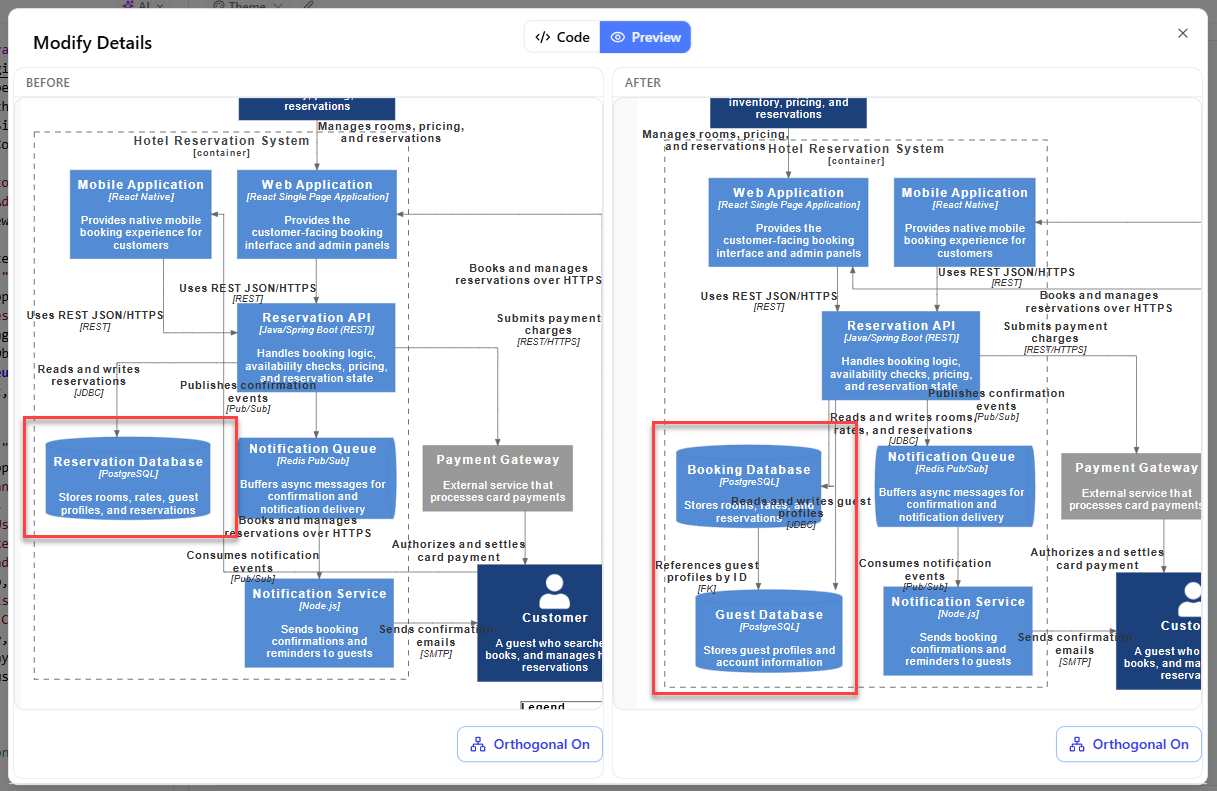
Furthermore, if manual edits introduce syntax issues, the platform’s integrated AI error fixing tool automatically repairs invalid syntax while explaining the root cause, ensuring smooth documentation maintainability.
Key Benefits for Enterprise System Designers
- Rapid Prototyping: Move from initial whiteboard ideas to fully compliant PlantUML or C4 architecture specs in seconds.
- Zero Lock-in: Clean, standard text output ensures diagrams remain fully portable, editable, and version-controllable.
- Flexible Multi-Format Visuals: Support for ERDs, UML, mind maps, Gantt charts, and DBML within a single web platform.
To experience AI-assisted architectural modeling firsthand, launch the free VPasCode Diagram Editor directly in your browser.
This post is also available in Deutsch, Español, فارسی, Français, English, Bahasa Indonesia, 日本語, Polski, Portuguese, Ру́сский, Việt Nam, 简体中文 and 繁體中文.
Related posts:
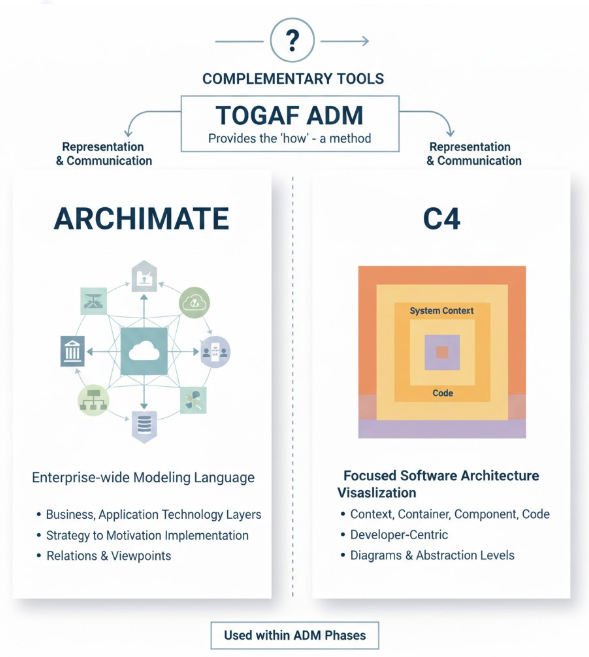 Unifying Enterprise Architecture: How Visual Paradigm Empowers TOGAF ADM, ArchiMate, and C4 with AI-Powered Intelligence

 From Prompt to Architecture: My Hands-On Review of Visual Paradigm’s AI-Powered C4 Diagram Studio
 Mastering C4 Diagrams in Visual Paradigm: A Hands-On Review of All Four Creation Methods