
Introduction
In the complex ecosystem of modern enterprise, clarity is currency. Business processes are the arteries through which value flows, yet they are often obscured by siloed departments, legacy systems, and ambiguous documentation. For decades, organizations struggled with inconsistent methods for mapping these workflows, leading to miscommunication between business stakeholders and technical implementers.
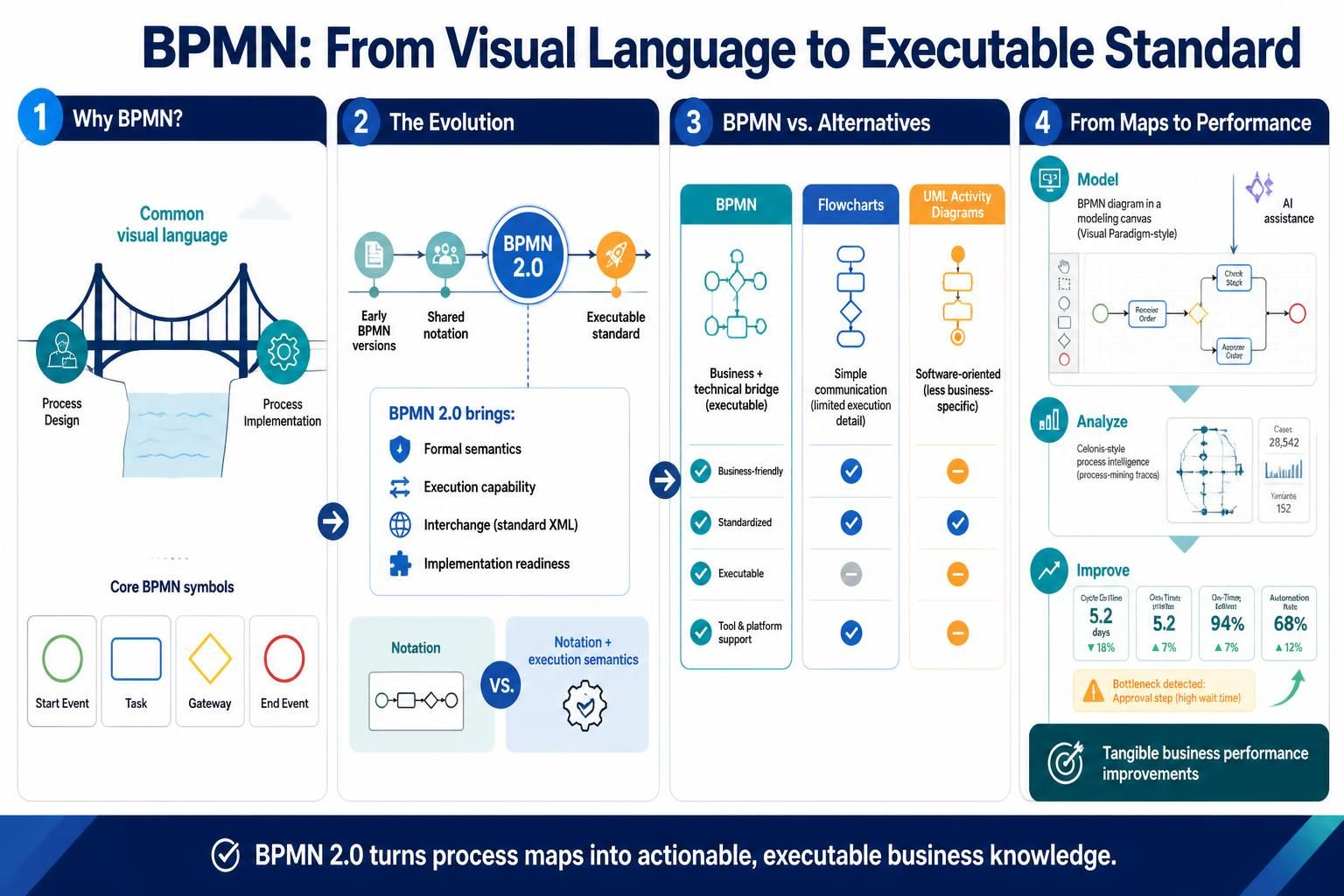
Enter Business Process Model and Notation (BPMN). Originally developed to bridge the gap between process design and implementation, BPMN has evolved into the global standard for business process modeling. While early versions provided a common visual language, the release of BPMN 2.0 marked a pivotal shift from a simple notation system to a rigorous, executable standard.
This guide explores the critical differences between historic BPMN versions and the current 2.0 standard, compares BPMN to alternative modeling techniques, and demonstrates how modern tooling—specifically Visual Paradigm BPMN enhanced with AI—and Process Intelligence platforms like Celonis are transforming theoretical maps into tangible business performance improvements.
Part 1: The Evolution – BPMN 1.x vs. BPMN 2.0
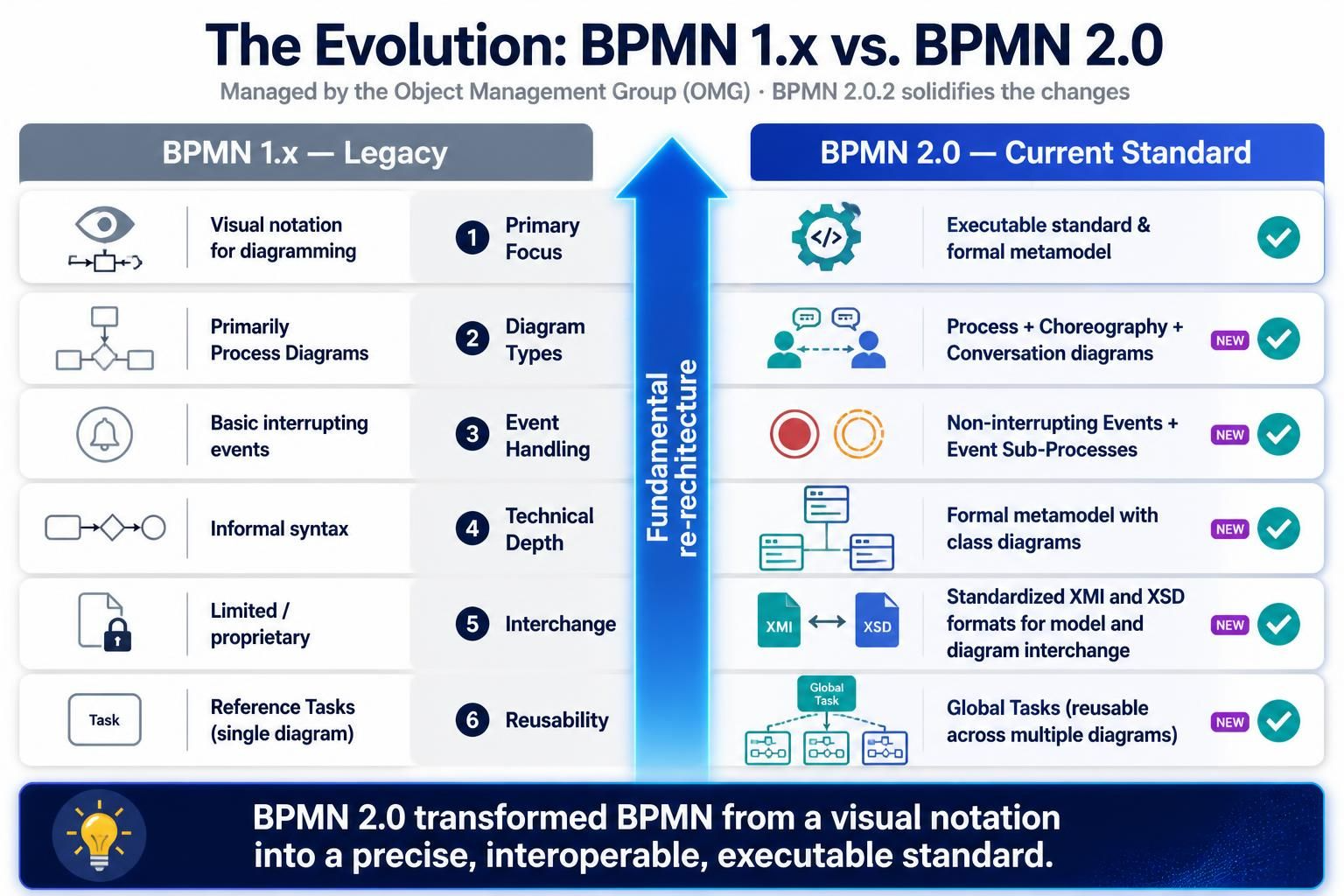
To understand the power of BPMN 2.0, one must appreciate what changed. Managed by the Object Management Group (OMG), BPMN 2.0 is not merely an update; it is a fundamental re-architecture of the standard. The current iteration, BPMN 2.0.2, solidifies these changes.
Key Differences at a Glance
| Feature | BPMN 1.x (Legacy) | BPMN 2.0 (Current Standard) |
|---|---|---|
| Primary Focus | Visual notation for diagramming | Executable standard & formal metamodel |
| Diagram Types | Primarily Process Diagrams | Added Choreography & Conversation diagrams |
| Event Handling | Basic interrupting events | Added Non-interrupting Events & Event Sub-Processes |
| Technical Depth | Informal syntax | Formal metamodel with class diagrams |
| Interchange | Limited/Proprietary | Standardized XMI and XSD formats for model/diagram interchange |
| Reusability | Reference Tasks (single diagram) | Global Tasks (reusable across multiple diagrams) |
Major Notational Changes in BPMN 2.0
-
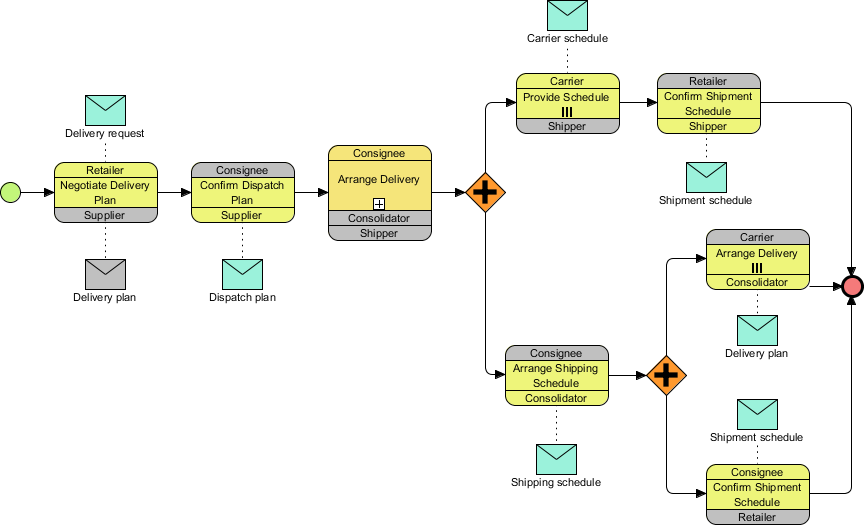
Choreography Diagrams: These allow you to model interactions between two or more business entities (e.g., a customer and a vendor) without revealing their internal private processes. It focuses on the “handshake” rather than the internal machinery.
-
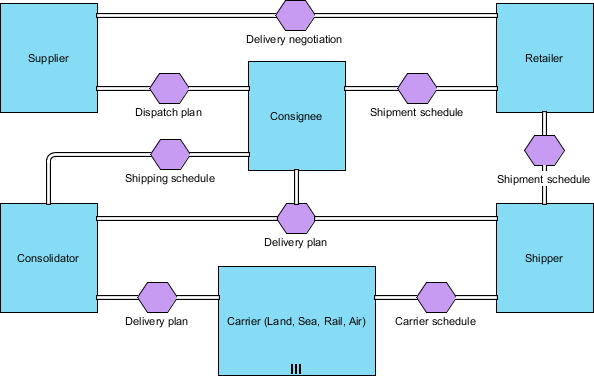
Conversation Diagrams: A high-level abstraction that shows the summary of conversations between participants. It’s ideal for executive overviews where detailed flow is unnecessary.
-
Non-interrupting Events: In BPMN 1.x, an event often stopped the current path. BPMN 2.0 introduced non-interrupting events, allowing a process to continue its main flow while simultaneously triggering a parallel path (e.g., sending a notification email while continuing to process an order).
-
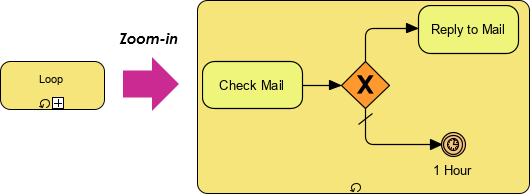
Event Sub-Processes: These allow for modular handling of specific events within a process, improving diagram readability and reusability.
Major Technical Changes in BPMN 2.0
-
Formal Metamodel: BPMN 2.0 introduced a strict class diagram-based metamodel. This ensures that every symbol has a precise technical definition, making it possible for software engines to “execute” the diagram directly.
-
Interchange Formats: The adoption of XMI (XML Metadata Interchange) and XSD (XML Schema Definition) allows models to be moved seamlessly between different vendors’ tools without losing data integrity.
-
Removal of Reference Tasks: To simplify the language, Reference Tasks were removed in favor of Global Tasks, which offer broader reusability across the entire organization’s model repository.
Part 2: BPMN vs. Alternative Modeling Techniques
While BPMN is the industry leader, it is not the only player. Choosing the right tool depends on your audience and goal.
1. Event-driven Process Chain (EPC)
-
Overview: Uses simple flowchart symbols similar to BPMN but often requires more elements to convey the same logic.
-
Comparison: EPC diagrams tend to be bulkier and sprawling. They are restricted to top-down flows, whereas BPMN supports horizontal visualization, which is often more intuitive for screen-based viewing.
-
Best For: Legacy SAP environments where EPC is deeply embedded.
2. Unified Modeling Language (UML)
-
Overview: A comprehensive standard for software modeling with 14 different diagram types.
-
Comparison: UML is overly complex for business users. It focuses on interactions between “objects” (software components) rather than business processes. You can map the system a customer buys from, but not the actual stages of the sale.
-
Best For: Software architects and developers designing system architecture.
3. Universal Process Notation (UPN)
-
Overview: Abandons unique symbols for conventional boxes and arrows.
-
Comparison: UPN relies on descriptive notes attached to arrows to provide context. While easier for novices to read initially, it lacks the precision and executable potential of BPMN’s standardized symbols.
-
Best For: Quick, informal brainstorming sessions with non-technical stakeholders.
4. Integrated Definition for Function Modeling (IDEF)
-
Overview: A highly complex method focusing on detailed logic and inputs.
-
Comparison: IDEF provides a deep analytical overview but is less intuitive. Multiple arrows feeding into single functions can create “spaghetti diagrams.” BPMN is superior for automation; IDEF is better for static analytical audits.
-
Best For: Detailed engineering analysis and manufacturing process optimization.
Part 3: Key Concepts and Examples
Concept 1: The Three Layers of BPMN 2.0
BPMN 2.0 allows you to zoom in and out of complexity using three distinct diagram types:
-
Process Diagram: The detailed “how-to” inside a single organization.
-
Choreography Diagram: The “who-does-what” between two organizations.
-
Conversation Diagram: The high-level “what-we-talk-about” between multiple parties.
Concept 2: Executability
Because BPMN 2.0 has a formal metamodel, it is not just a drawing. It can be fed into a Business Process Management Suite (BPMS) to automate workflows. For example, a “Service Task” in BPMN can be linked directly to a web service API.
Real-World Example: Order-to-Cash at A. O. Smith
A. O. Smith, a leading provider of water heating solutions, faced challenges in optimizing their Order-to-Cash and Purchase-to-Pay processes. Traditional manual mapping was slow and error-prone.
By adopting a BPMN-centric approach enhanced with Process Intelligence, they achieved:
-
Time Savings: Over 2,000 hours of manual effort saved in Procurement within three months.
-
Data-Driven Insights: Moved from subjective process assumptions to objective, data-centric improvement.
-
Continuous Optimization: The ability to continuously identify bottlenecks across all business units.
As Matthew Rodgers, Senior Director of Business Solutions, noted, “Celonis was very helpful in moving our organization forward towards data-centric, data-driven process improvement.”
Part 4: Tooling Spotlight – Visual Paradigm BPMN + AI
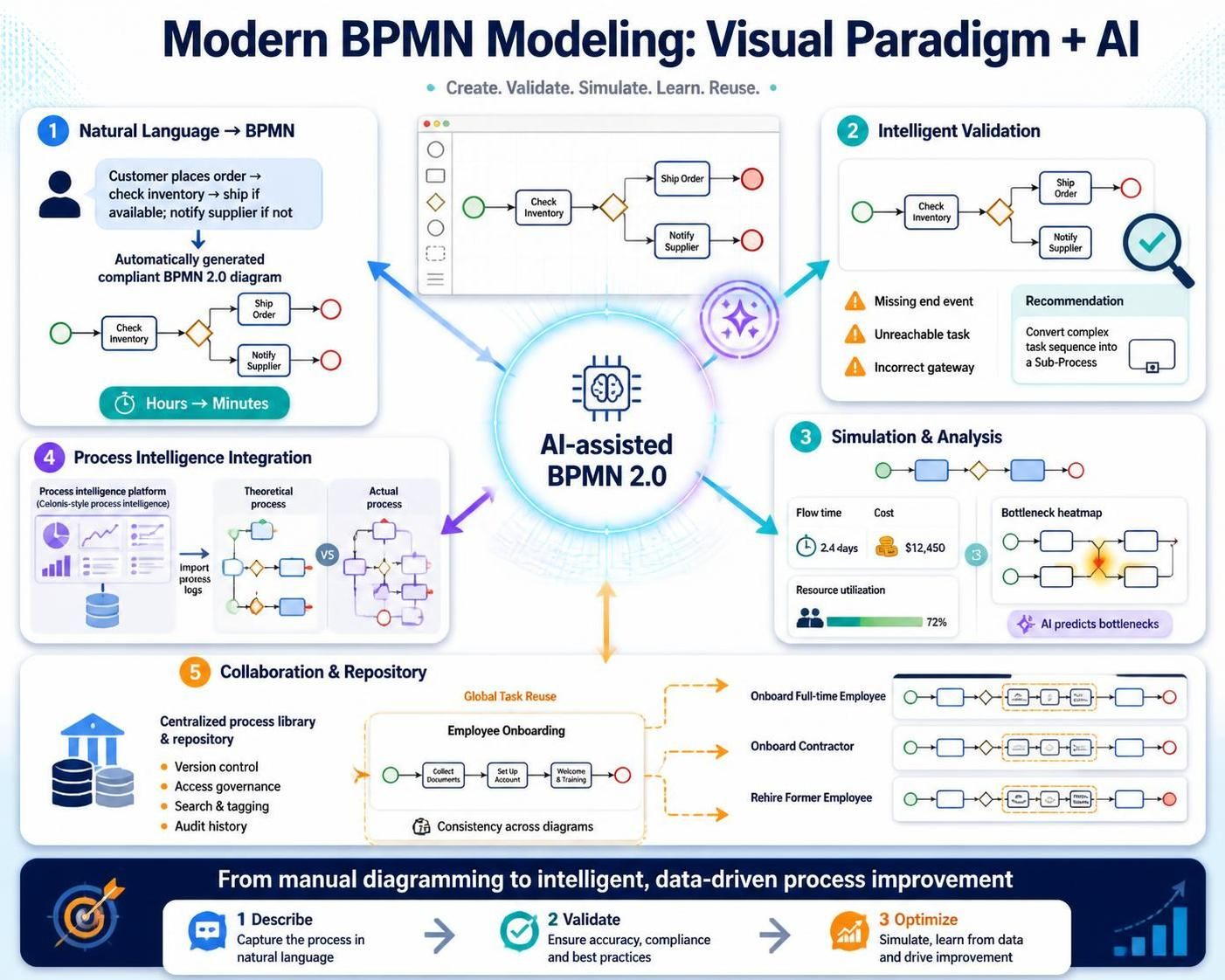
Modern BPMN modeling is no longer about dragging and dropping shapes manually. Visual Paradigm has integrated Artificial Intelligence to accelerate the creation and analysis of BPMN 2.0 diagrams.
How Visual Paradigm + AI Enhances BPMN
-
AI-Assisted Diagram Generation:
-
Natural Language to BPMN: Users can describe a process in plain English (e.g., “When a customer places an order, check inventory. If available, ship item; if not, notify supplier.”). The AI engine interprets this text and generates a compliant BPMN 2.0 diagram automatically.
-
Speed: Reduces initial drafting time from hours to minutes.
-
-
Intelligent Validation:
-
Syntax Checking: The AI reviews diagrams against the BPMN 2.0 specification, flagging errors such as missing end events, unreachable tasks, or incorrect gateway usage.
-
Best Practice Recommendations: Suggests optimizations, such as converting a complex sequence of tasks into a Sub-Process for better readability.
-
-
Simulation and Analysis:
-
What-If Scenarios: Before implementing a process, users can simulate flow times, costs, and resource utilization. The AI can predict bottlenecks based on historical data patterns.
-
Integration with Process Intelligence: Visual Paradigm can import process logs from tools like Celonis, automatically updating BPMN diagrams to reflect the actual process rather than the theoretical one.
-
-
Collaboration and Repository:
-
Global Task Reuse: Leveraging BPMN 2.0’s Global Tasks, teams can create a centralized library of common processes (e.g., “Employee Onboarding”) that can be referenced across multiple diagrams, ensuring consistency.
-
Conclusion
The journey from BPMN 1.x to BPMN 2.0 represents a maturation of business process management from a artistic endeavor to an engineering discipline. By introducing a formal metamodel, executable standards, and advanced diagram types like Choreography and Conversation, BPMN 2.0 provides the precision needed for modern automation.
While alternative methods like EPC, UML, and IDEF have their niches, BPMN remains the most balanced solution for bridging the gap between business strategy and technical execution. When combined with Process Intelligence tools like Celonis and AI-enhanced modeling platforms like Visual Paradigm, organizations can move beyond static maps. They can achieve dynamic, data-driven process optimization that saves thousands of hours and drives measurable business performance.
For practitioners, the message is clear: Master BPMN 2.0 not just as a notation, but as a foundational language for digital transformation.
Related posts:
 How Visual Paradigm’s AI Diagram Generation Turns Your Ideas into Professional UML & BPMN Diagrams in Seconds
 Mastering Business Process Modeling: A Hands-On Review of BPMN and Visual Paradigm’s AI-Powered Tools
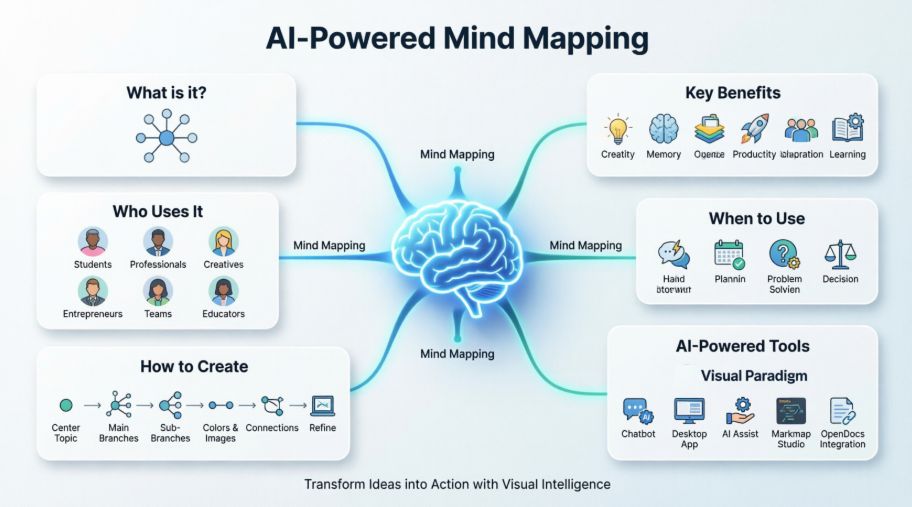 Mastering AI-Powered Mind Mapping with Visual Paradigm
 A Software Engineer’s Field Guide to UML, BPMN, and SysML