


Introduction
As a TOGAF-certified enterprise architect with over a decade of experience guiding digital transformations across finance, retail, and healthcare sectors, I’ve seen countless teams struggle with the same fundamental challenge: how do we turn the powerful but complex TOGAF framework into practical, day-to-day value?
When I first adopted TOGAF, I spent months navigating dense documentation, wrestling with deliverable templates, and trying to align cross-functional stakeholders—all while delivering tangible outcomes. If you’re an EA beginner or part of a team just starting your architecture journey, you likely recognize that tension.
This guide shares my hands-on experience evaluating and implementing Visual Paradigm’s AI-enhanced TOGAF ADM Guide-Through Process. Written specifically for architects early in their EA practice and teams building their first architecture capability, it cuts through the theory to focus on what actually works in practice. You’ll find real workflow examples, honest assessments of strengths and learning curves, and actionable tips to accelerate your adoption—without the jargon overload.
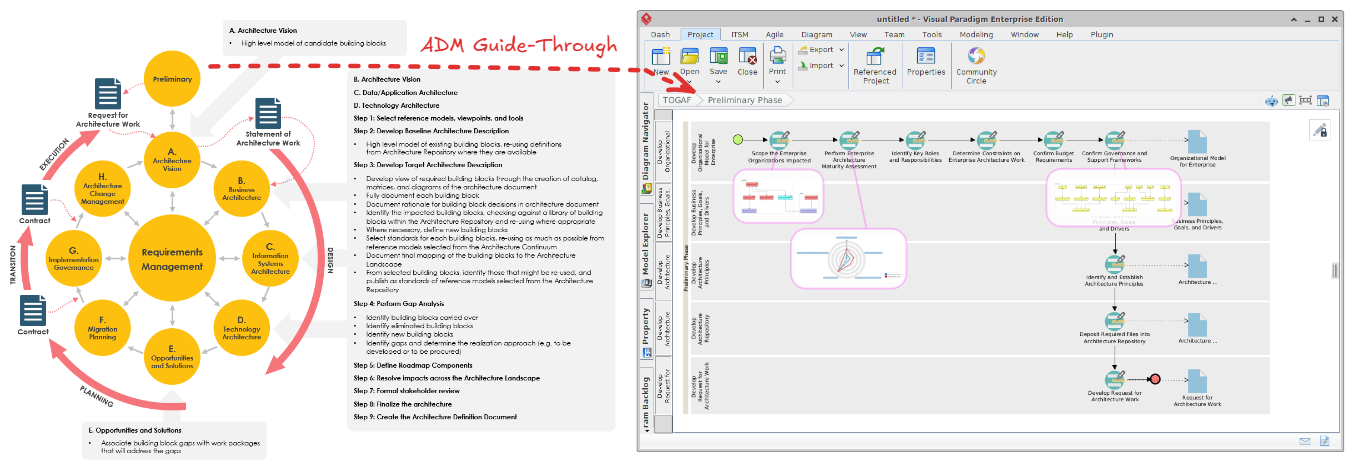
Let’s explore how modern tooling can transform TOGAF from a reference manual into a collaborative, AI-assisted partner in your architecture practice.
The Reality Check: Common EA Hurdles I’ve Witnessed (And How to Overcome Them)
Before diving into solutions, let’s acknowledge the real-world friction points that derail many EA initiatives. Based on my work with dozens of organizations, these challenges resonate deeply:
-
High Barrier to Entry: Enterprise Architecture requires significant upfront investment in training, tools, and specialized resources. Teams often stall before they even begin.
-
Skills Gap: Even motivated staff may lack the maturity or expertise to initiate and sustain EA projects, leading to inconsistent outputs and frustrated stakeholders.
-
Misalignment with Business Goals: IT deliverables sometimes drift from strategic objectives, resulting in wasted effort and missed opportunities for impact.
-
Fragmented Initiatives: Without clear guidelines, isolated projects proliferate, creating technical debt and integration nightmares down the line.
-
Documentation Burden: Meeting standard deliverable requirements can consume more time than strategic analysis, shifting focus from value creation to administrative tasks.
If any of these sound familiar, you’re not alone. The good news? The right tooling approach can directly address each of these pain points.
Discovering Visual Paradigm: A Practical Walkthrough for EA Beginners
When I first explored Visual Paradigm’s TOGAF ADM Guide-Through Process, what stood out immediately was its intentional design for adoption. Unlike tools that assume deep TOGAF expertise, this solution meets you where you are.
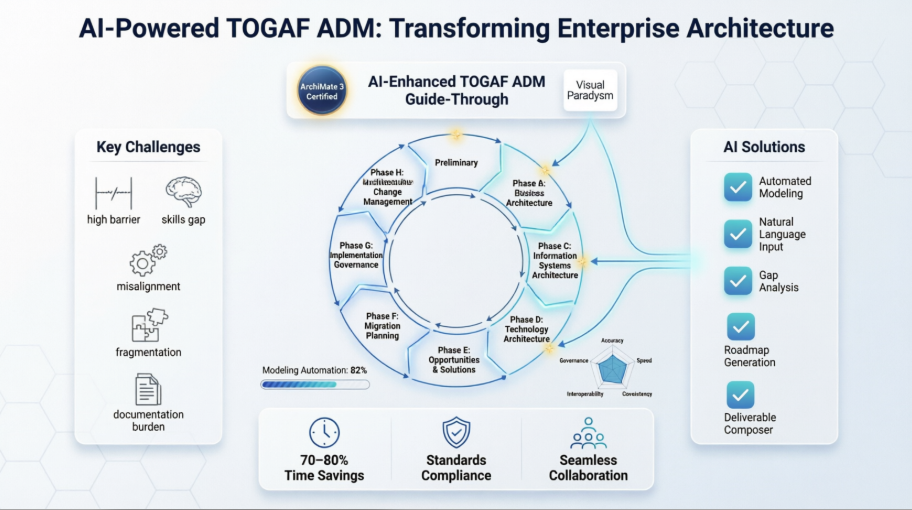
Kick-Starting Projects with Confidence
The automated guide-through process provides step-by-step instruction, input references, and samples that let you launch projects of any size. What I appreciate most: you develop architecture deliverables incrementally and collaboratively, with automated task management and notifications available both on desktop and in the cloud.
Visual Paradigm is a certified ArchiMate 3 enterprise architecture tool—a critical detail for teams committed to standards-based modeling.
-
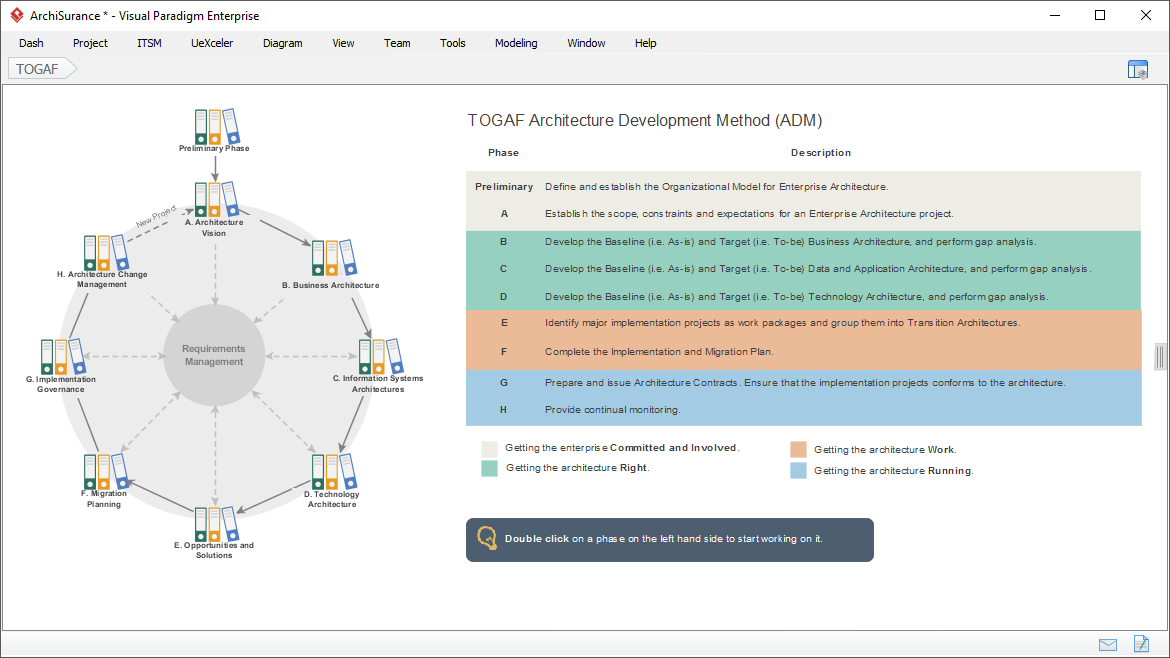 The TOGAF ADM Process Navigator covers all nine ADM phases. Simply double-click on a phase to start working on it.
Features That Made a Difference: My Hands-On Assessment
TOGAF ADM Process Navigator
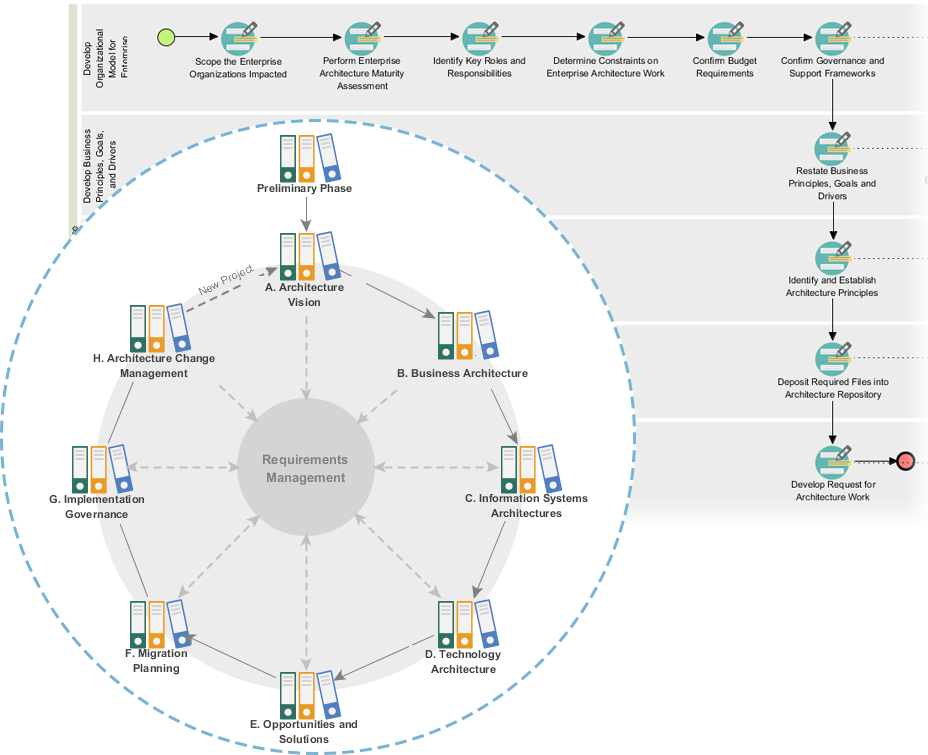
This visual navigator transformed how my team approaches the ADM cycle. Instead of memorizing phase sequences or hunting for templates, we have an interactive map that shows progress, highlights next actions, and keeps everyone oriented. For beginners, this eliminates the “where do I start?” paralysis that often stalls early EA efforts.
Actionable Guided Process
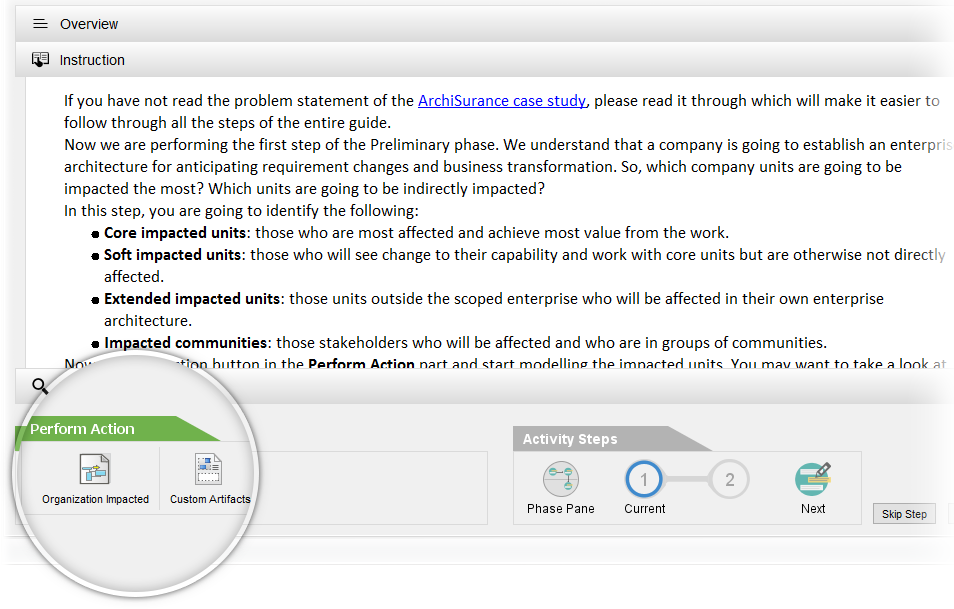
The step-by-step approach to developing TOGAF deliverables is where theory meets practice. With easy-to-follow instructions, modeling tools, real-life examples, and expert techniques built in, the tool ensures consistent, high-quality outputs—even when team members have varying levels of TOGAF experience.
Form Filling and Inline Instruction
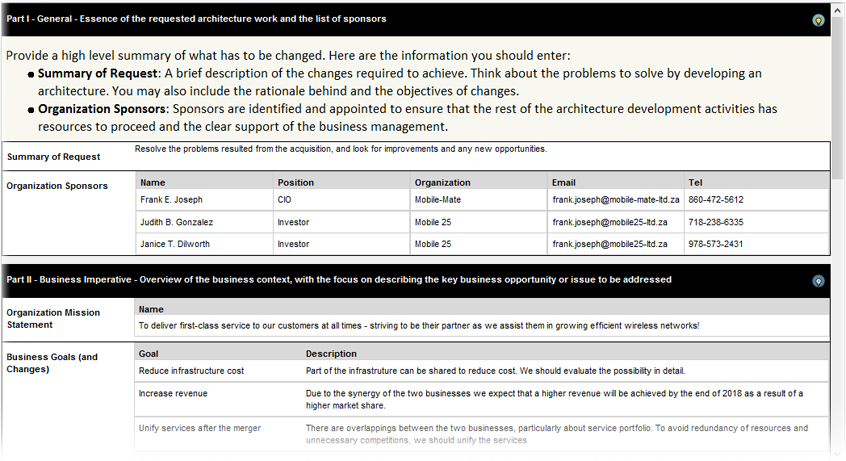
One of my favorite features: contextual guidance appears exactly where you need it. Whether following recommended steps or inserting custom content, the interface provides deep insights into the development process without overwhelming you. This balance of structure and flexibility is essential for teams adapting TOGAF to their unique context.
Deliverable Composer
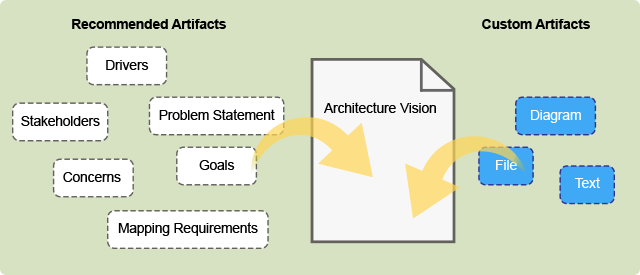
Instead of manually assembling documents from disparate sources, the Deliverable Composer automatically compiles forms, diagrams, and analysis results into structured, stakeholder-ready outputs. This alone saved my team countless hours previously spent on formatting and version reconciliation.
Auto Versioning And Deliverable Generation
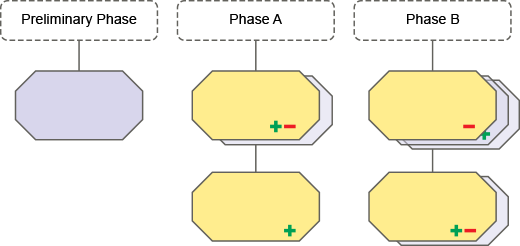
Version control isn’t just a nice-to-have—it’s essential for collaborative architecture work. With automatic tracking and one-click deliverable generation, teams can iterate confidently, knowing progress is secure and outputs are always current.
Shape Legend & Color Legend
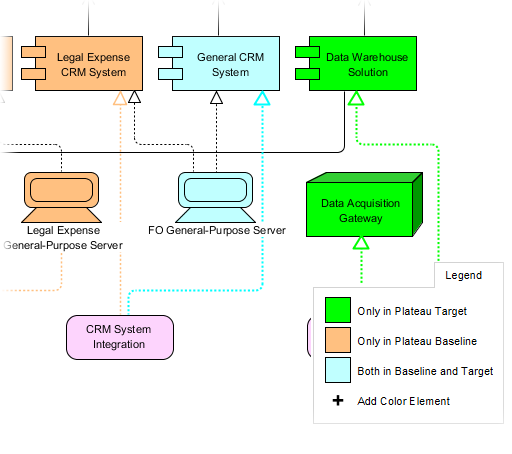
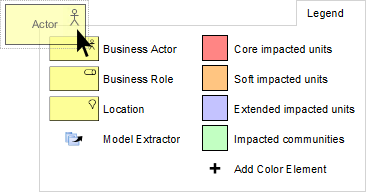
For beginners learning ArchiMate or TOGAF notation, the shape and color legends are invaluable. They ensure you’re using the right elements for the right viewpoint, reducing modeling errors and accelerating onboarding. Drag-and-drop functionality makes diagram creation intuitive rather than intimidating.
Reuse Elements with Model Extractor
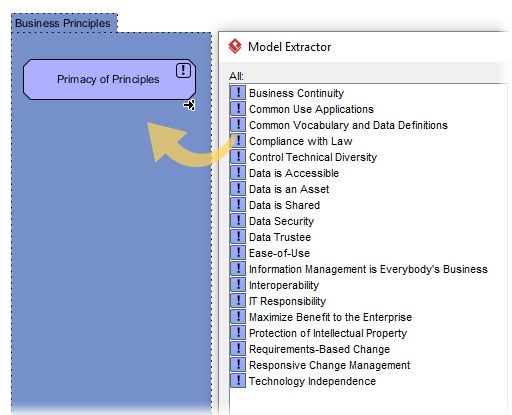
This feature addresses a subtle but critical efficiency gain: avoiding redundant work. The Model Extractor analyzes your project and suggests existing elements that can be reused across models. Select, confirm, and you’re done—no more duplicating effort or risking inconsistency.
Architecture And Documentation Repository
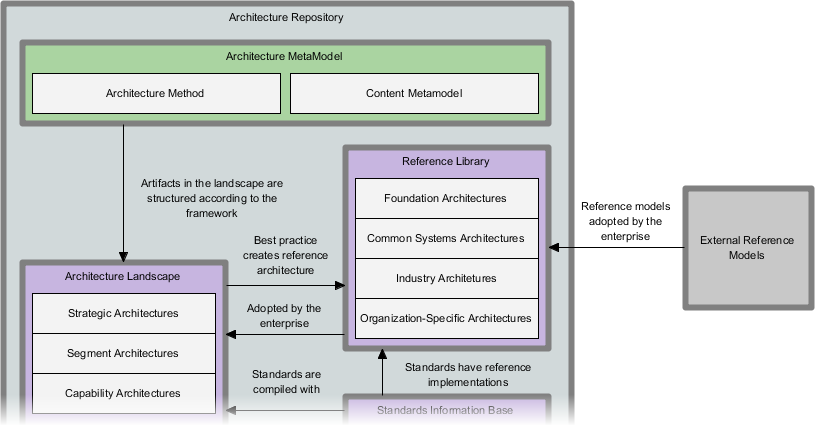
Organizing architecture artifacts shouldn’t be an afterthought. Visual Paradigm lets you configure repository structures that match your organizational taxonomy, with intuitive drag-and-drop file management. This creates a single source of truth that scales with your practice.
The AI Enhancement: A Game Changer for Daily Architecture Work
When Visual Paradigm integrated generative AI into the TOGAF ADM Guide-Through, it wasn’t just a feature update—it was a fundamental shift in how architecture work gets done. Here’s how the AI assistant transforms key phases:
AI Automation Across ADM Phases
-
Phase A: Architecture Vision
-
Organizational Impact Analysis: Input a business challenge, and the AI identifies affected structures and stakeholders, instantly generating impact maps.
-
Maturity & Capability Assessment: AI evaluates textual descriptions to score capabilities and renders professional radar charts automatically.
-
-
Phases B, C, D: Business / Information Systems / Technology Architecture
-
ArchiMate Modeling: AI converts architecture objectives into standards-compliant diagrams, eliminating manual layout and connection tasks.
-
-
Phases E, F: Opportunities & Solutions / Migration Planning
-
Gap Analysis: AI intelligently compares Baseline and Target architectures to automatically identify gaps and discontinuities.
-
Implementation Roadmaps & WBS: Automatically generates Work Breakdown Structures and migration roadmaps, translating blueprints into executable steps.
-
The Four-Step AI Collaboration Workflow
-
Launch Project: Start the Guide-Through navigator to access the interactive TOGAF ADM cycle.
-
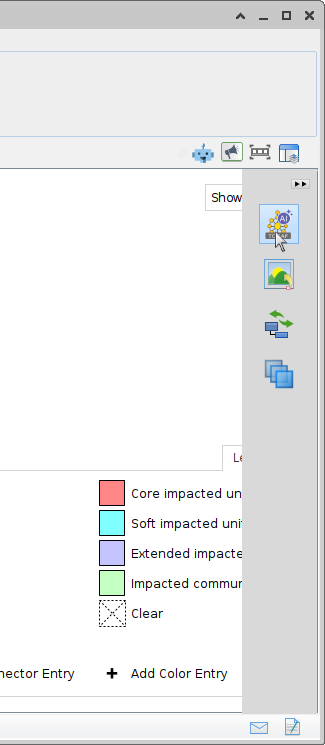
Activate AI Assistant: Click the AI panel in the right-side toolbar.
-
Input Natural Language: Describe your challenge in plain text (e.g., “We need to migrate our legacy ERP to cloud-native microservices to resolve latency during peak checkout”).
-
Review and Refine: Within seconds, AI generates charts and documents. Architects fine-tune outputs while context carries forward to ensure lifecycle consistency.
Strategic Benefits I’ve Observed
-
Eliminate “Blank Canvas” Anxiety: Instead of facing hundreds of pages of TOGAF deliverables with no starting point, AI provides high-quality, compliant drafts in seconds.
-
Standards Compliance by Design: All generated processes, diagrams, and symbols adhere to TOGAF and ArchiMate specifications, reducing errors from unfamiliarity.
-
Enhanced Cross-Functional Collaboration: AI-generated artifacts can be directly shared with project owners, business analysts, or development teams, breaking down information silos.
Real-World Application: Lessons from a Global Retailer Cloud Migration
Background: A multinational retail organization needed to modernize its legacy on-premise ERP system to support global expansion, improve customer experience, and enable real-time analytics. Strict adherence to TOGAF ADM was required for governance, risk management, and stakeholder alignment.
Implementation Approach:
-
The architecture team launched Visual Paradigm’s Guide-Through Process, selecting the TOGAF ADM template.
-
Using the AI assistant, they input the migration objective: “Transition from monolithic ERP to cloud-native microservices to support 10x transaction volume growth while maintaining PCI-DSS compliance.”
-
In Phase A, AI generated stakeholder maps, business capability assessments, and an initial Architecture Vision document.
-
During Phases B-D, the team used AI-powered ArchiMate modeling to depict current and target states for business processes, application portfolios, and technology infrastructure.
-
In Phases E-F, AI performed gap analysis between baseline and target architectures, then auto-generated a phased migration roadmap with WBS items, risk registers, and resource estimates.
-
Throughout, the Deliverable Composer compiled all artifacts into a cohesive repository, with version control enabling parallel workstreams.
Outcomes:
-
60% reduction in time-to-initial-deliverables compared to previous EA initiatives
-
Improved stakeholder buy-in through visually clear, standards-compliant architecture artifacts
-
Seamless handoff to implementation teams via auto-generated migration plans and technical specifications
-
Enhanced audit readiness through centralized, versioned documentation aligned with TOGAF requirements
Tips for EA Beginners and Teams Getting Started
Based on my experience implementing this solution across multiple organizations, here are practical recommendations to accelerate your success:
-
Start Small, Scale Confidently: Begin with a single ADM phase or a contained pilot project. Use the Guide-Through to build momentum before expanding scope.
-
Leverage the Samples: Don’t skip the built-in examples. They provide proven patterns you can adapt rather than building from scratch.
-
Embrace the AI as a Collaborator, Not a Replacement: Use AI-generated drafts as starting points. Your architectural judgment and contextual knowledge remain essential for refinement.
-
Invest in Team Onboarding: Schedule brief, focused training sessions on the Process Navigator and AI workflow. Even 30 minutes can dramatically reduce adoption friction.
-
Customize Thoughtfully: The tool allows flexibility—insert custom text, diagrams, or models where your organization requires specificity. Balance standardization with relevance.
-
Use the Repository Early: Configure your architecture repository structure from day one. Consistent organization pays dividends as your artifact library grows.
-
Share Outputs Proactively: Use AI-generated visuals and assessments to engage non-architecture stakeholders. Clear artifacts build trust and alignment.
Conclusion
Enterprise Architecture doesn’t have to be an intimidating, documentation-heavy exercise reserved for specialists. As this review demonstrates, the convergence of rigorous frameworks like TOGAF with intuitive, AI-enhanced tooling can transform architecture practice into a collaborative, value-driven discipline.
For beginners and teams building their EA capability, Visual Paradigm’s Guide-Through Process offers more than features—it offers a pathway. A pathway that reduces the learning curve, accelerates deliverable quality, and keeps focus on strategic outcomes rather than procedural overhead. The AI enhancements aren’t about replacing architectural thinking; they’re about amplifying it—freeing you to concentrate on insight, innovation, and impact.
My advice? Start where you are. Use the guidance available. Iterate with confidence. And remember: every mature architecture practice began with a single phase, a single diagram, a single conversation. With the right tools and mindset, your team can turn TOGAF from a reference framework into a living engine for digital transformation.
The future of enterprise architecture is guided, intelligent, and collaborative. Your journey begins now.
References
- AI-Enhanced TOGAF ADM Guide Through | Intelligent ADM Tool: Official feature overview of Visual Paradigm’s AI-powered TOGAF ADM capabilities, including automated modeling, natural language input, and intelligent deliverable generation.
- TOGAF® Standard: Official TOGAF 9 specification from The Open Group, providing foundational definitions, ADM phases, and deliverable standards.
- AI-Powered TOGAF Guide-Through Release Notes: Release announcement detailing new AI features, workflow enhancements, and integration capabilities in Visual Paradigm’s TOGAF toolset.
- Visual Paradigm TOGAF ADM AI-Powered Guide-Through Process: Technical blog post exploring AI integration patterns, use cases, and implementation tips for TOGAF ADM automation.
- Visual Paradigm’s TOGAF ADM Guide-Through Process with ArchiMate Integration: Article highlighting the synergy between TOGAF ADM workflows and ArchiMate 3 modeling within Visual Paradigm’s unified environment.
- TOGAF Guide-Through Process Solution Overview: Solution page describing Visual Paradigm’s end-to-end TOGAF ADM support, including collaboration features, repository management, and deliverable automation.
- Visual Paradigm TOGAF ADM AI Demo Video: Video demonstration showcasing AI-assisted TOGAF ADM workflow, from natural language input to automated diagram generation and deliverable compilation.
- IEEE Paper: AI-Augmented Enterprise Architecture Methods: Academic research examining the impact of AI integration on enterprise architecture practices, with case references to tool-assisted TOGAF implementation.
- AI-Powered TOGAF ADM Guide: Visual Paradigm Article: Thought leadership article discussing strategic benefits, adoption considerations, and future directions for AI-enhanced enterprise architecture tooling.
This post is also available in Deutsch, Español, فارسی, Français, English, Bahasa Indonesia, 日本語, Polski, Portuguese, Ру́сский, Việt Nam, 简体中文 and 繁體中文.