


Introduction
The Open Group Architecture Framework (TOGAF) is the global standard for Enterprise Architecture (EA). It offers a structured approach to designing, planning, implementing, and governing architectures that align business strategy with IT execution. However, despite its widespread adoption, TOGAF is frequently criticized for being complex, heavyweight, and bureaucratic.
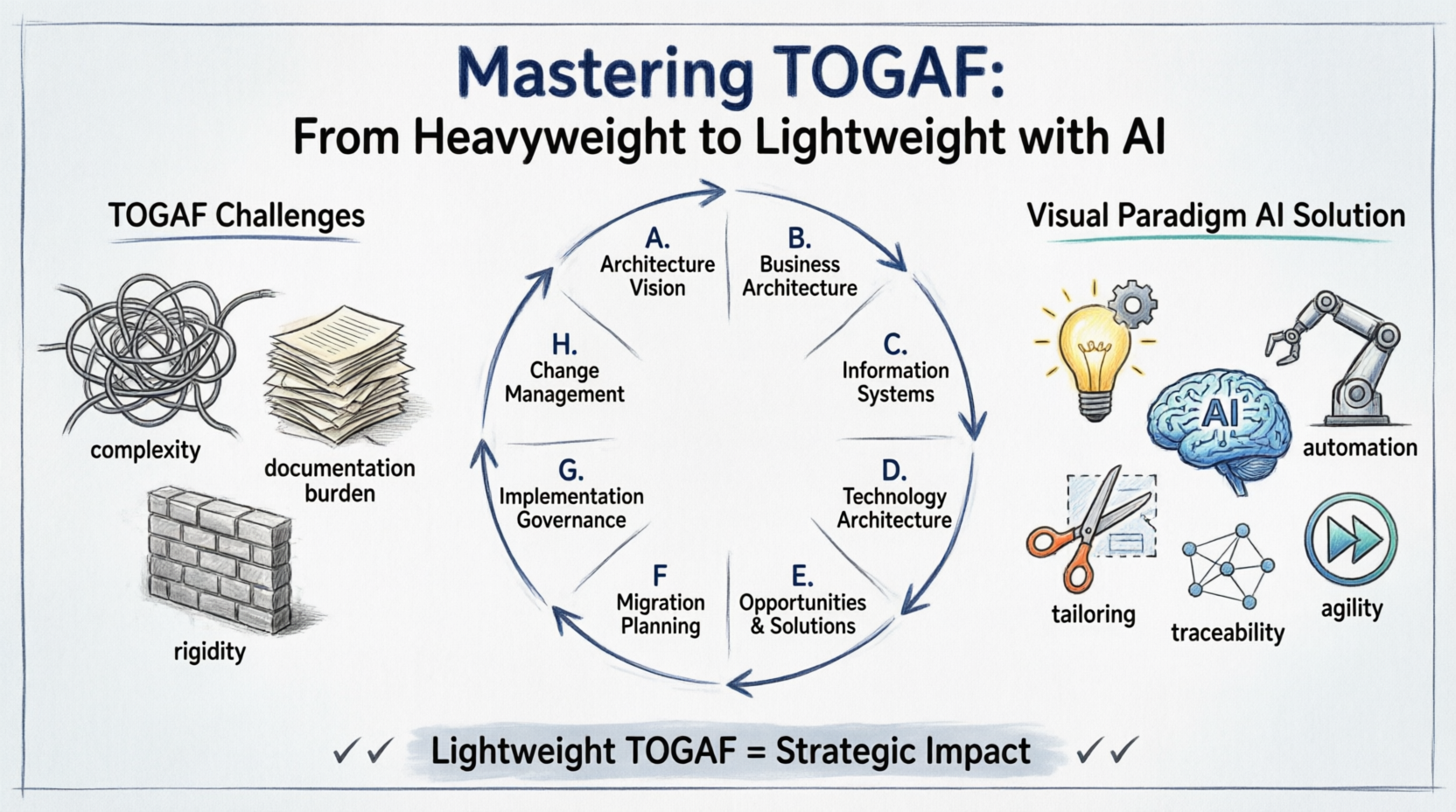
This guide explores the core components of TOGAF, acknowledges the real-world challenges of its implementation, and demonstrates how Visual Paradigm’s AI-driven TOGAF ADM acts as a gamechanger. By leveraging automation and intelligent modeling, organizations can transform TOGAF from a rigid documentation exercise into a lightweight, pragmatic, and value-driven process.
Part 1: Understanding the TOGAF Framework
What is TOGAF?
TOGAF is a structured framework that provides a common language and approach for organizations. Its primary goal is to ensure that architectural decisions support long-term organizational goals, bridging the gap between business strategy and IT execution.
The Core: The Architecture Development Method (ADM)
The heart of TOGAF is the Architecture Development Method (ADM). It is not a rigid sequence but an iterative cycle that guides organizations from defining a vision to managing change.
-
Function: It defines how EA is developed, maintained, and governed.
-
Flexibility: Teams can adapt the ADM, applying selected phases or iterating based on scope and maturity.
-
Relationship to TOGAF: The ADM is the execution backbone, while the broader TOGAF framework provides the principles, guidelines, and governance structures that support the ADM.
The ADM Phases
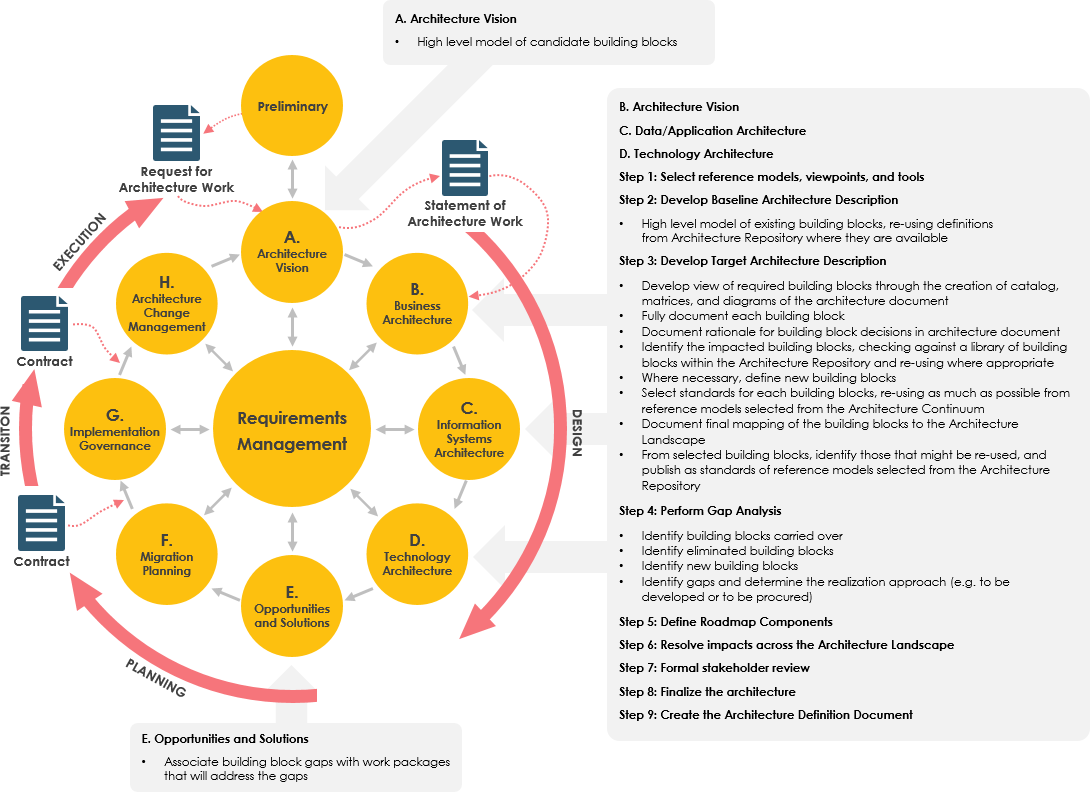
The ADM cycle moves from setup to target state implementation through the following phases:
-
Phase A – Architecture Vision: Defining the overall strategy and vision.
-
Phase B – Business Architecture: Mapping value flows, processes, and relationships.
-
Phase C – Information Systems Architecture: Designing data and application architectures.
-
Phase D – Technology Architecture: Defining infrastructure (hardware, software, IoT, networks).
-
Phase E – Opportunities and Solutions: Identifying solutions and high-level migration plans.
-
Phase F – Migration Planning: Sequencing projects and managing dependencies.
-
Phase G – Implementation Governance: Ensuring projects adhere to the architecture.
-
Phase H – Architecture Change Management: Managing ongoing changes to stay aligned with goals.
-
Requirements Management: A central step ensuring requirements are managed systematically throughout the cycle.
Part 2: The Challenge – Why TOGAF is Perceived as Heavyweight
To make TOGAF actionable, we must first understand why it often fails in practice. The article highlights several critical pain points:
-
Complexity & Breadth: TOGAF covers everything from governance to detailed deliverables. For organizations with lower maturity, this breadth is overwhelming.
-
Documentation Burden: When applied rigidly, TOGAF leads to extensive documentation that offers limited immediate value to stakeholders.
-
Lack of Prioritization: Without tailoring, organizations adopt more of the framework than needed, slowing down transformation.
-
Theoretical vs. Practical: Critics argue TOGAF is too theoretical, lacking clear guidance for actual implementation.
-
Rigidity & Innovation: The framework can feel inflexible and slow to respond to new technological developments.
The Verdict: The issue is rarely TOGAF itself, but rather how it is applied. A pragmatic, tailored approach is required to make it valuable.
Part 3: The Gamechanger – Visual Paradigm’s AI TOGAF ADM
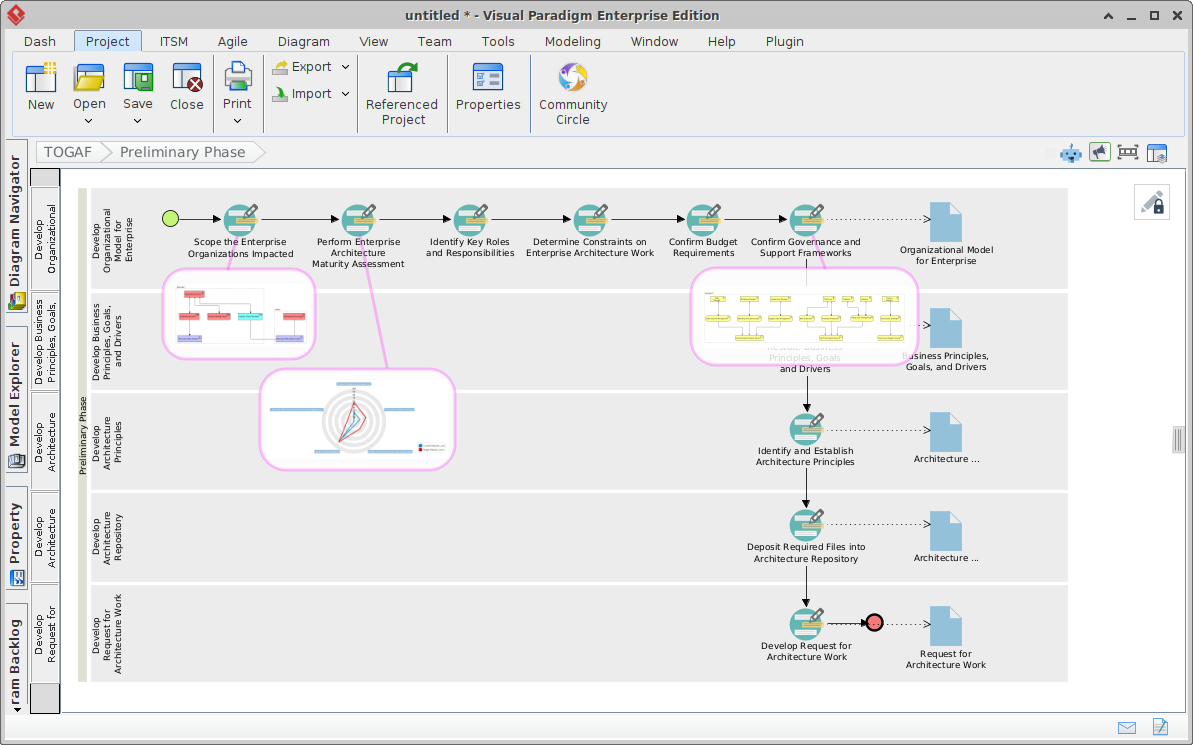
Visual Paradigm (VP) transforms the TOGAF experience by integrating Artificial Intelligence directly into the Architecture Development Method. This shifts the focus from manual documentation to strategic modeling and decision-making.
Here is how Visual Paradigm’s AI TOGAF ADM overcomes the “heavyweight” perception and streamlines the process:
1. Automating the Documentation Burden
-
The Problem: Traditional TOGAF requires massive manual effort to create artifacts for each phase, leading to the “bureaucratic” label.
-
The VP AI Solution: VP’s AI capabilities can auto-generate architectural artifacts, diagrams, and text descriptions based on high-level inputs.
-
Result: Architects spend less time formatting documents and more time validating strategy. This directly addresses the criticism of excessive documentation.
2. Enabling True Tailoring (Lightweight TOGAF)
-
The Problem: TOGAF is often applied rigidly, forcing teams to complete phases that aren’t relevant to their specific project scope.
-
The VP AI Solution: Visual Paradigm allows users to tailor the ADM cycle visually. You can enable/disable specific phases or deliverables based on the project’s needs.
-
Result: Organizations can adopt a “Minimum Viable Architecture” approach, using only the parts of TOGAF that add value, making the framework flexible and purpose-oriented.
3. Bridging Theory and Practice
-
The Problem: TOGAF is criticized for being too theoretical.
-
The VP AI Solution: VP provides visual modeling tools that turn abstract concepts into concrete diagrams (e.g., turning a text vision into a stakeholder map). The AI suggests best-practice models based on industry standards.
-
Result: Architecture becomes visual and actionable, bridging the gap between theoretical frameworks and real-world implementation.
4. Enhancing Traceability and Governance
-
The Problem: Maintaining alignment between business goals (Phase A) and technology implementation (Phase D/G) is difficult manually.
-
The VP AI Solution: VP creates automatic traceability links between requirements, business processes, and technology components. If a business goal changes, the AI can highlight impacted technology assets.
-
Result: Governance (Phase G) becomes proactive rather than reactive, ensuring the architecture remains aligned with organizational goals (Phase H).
Part 4: Streamlining the ADM Phases with Visual Paradigm
Visual Paradigm streamlines every stage of the ADM cycle, making the process faster and more agile.
| ADM Phase | Traditional Challenge | Visual Paradigm AI Streamlining |
|---|---|---|
| A: Vision | Vague strategy statements. | AI Text Generation: Drafts clear vision statements and stakeholder maps from bullet points. |
| B: Business | Complex process mapping. | Auto-Diagramming: Converts process descriptions into BPMN diagrams automatically. |
| C: Info Systems | Disconnected data/app models. | Smart Modeling: Ensures data entities link correctly to application components. |
| D: Technology | Outdated infrastructure lists. | Integration: Connects models to live IT inventory where possible; visualizes IoT/Cloud specs. |
| E: Solutions | Manual gap analysis. | Automated Gap Detection: AI compares As-Is and To-Be models to highlight gaps instantly. |
| F: Migration | Complex dependency tracking. | Roadmap Visualization: Generates Gantt-style migration roadmaps linked to architecture components. |
| G: Governance | Hard to enforce standards. | Compliance Checking: Automated rules check if designs adhere to defined architecture principles. |
| H: Change Mgmt | Static documentation. | Dynamic Repositories: Centralized repository ensures changes are versioned and communicated. |
Part 5: Best Practices for a Lightweight TOGAF Implementation
To fully leverage Visual Paradigm and the TOGAF framework, organizations should follow these pragmatic guidelines:
-
Focus on Outcomes, Not Artifacts: Use VP to create models that support decision-making, not just documents for storage. If a diagram doesn’t help a stakeholder decide, don’t build it.
-
Iterate, Don’t Waterfall: Use VP’s agile features to cycle through ADM phases quickly. Start with a high-level Vision (Phase A) and iterate into Business Architecture (Phase B) without waiting for perfect documentation.
-
Leverage AI for the “Heavy Lifting”: Let the AI handle the initial drafting of requirements and standard diagrams. Human architects should focus on review, refinement, and strategic alignment.
-
Tailor the ADM: Do not feel obligated to use all 8 phases for every project. For a small IT upgrade, you might only need Phases A, D, and G. VP allows you to hide irrelevant phases to reduce clutter.
-
Maintain a Single Source of Truth: Store all architecture artifacts in VP’s central repository. This ensures that Requirements Management is systematic and that Phase H (Change Management) is based on accurate data.
Conclusion
TOGAF remains a powerful standard for Enterprise Architecture, but its value is often obscured by complexity and rigid implementation. As the article notes, the framework is not the problem; the lack of prioritization and tailoring is.
Visual Paradigm’s AI TOGAF ADM is the gamechanger that unlocks TOGAF’s potential. By automating documentation, enabling flexible tailoring, and providing intelligent traceability, it transforms TOGAF from a heavyweight burden into a lightweight, agile engine for transformation. For modern organizations seeking to align business strategy with IT execution without getting bogged down in bureaucracy, combining the TOGAF standard with Visual Paradigm’s AI capabilities is the most pragmatic path forward.
Reference
- Step-by-Step TOGAF ADM Enterprise Architecture Guide: This guide provides a detailed walkthrough for applying TOGAF’s ADM phases using clear instructions and templates. It helps architects streamline the development of enterprise architecture through practical case studies.
- TOGAF Architecture Development Method (ADM) Guide-Through Process: This resource details an automated, step-by-step guide designed to help teams initiate any project using the ADM process. It includes structured references and samples to ensure practitioners follow the methodology correctly.
- Techniques for Developing TOGAF ADM: This article offers practical insights into the core techniques required to build a robust enterprise architecture. It focuses on the specific methodologies used within the ADM framework to produce high-quality architectural outputs.
- Comprehensive Guide to Applying Gap Analysis in TOGAF ADM: This technical guide explains how to identify discrepancies between current and target states within the ADM lifecycle. It provides the necessary steps for conducting an architectural assessment that aligns with strategic goals.
- TOGAF ADM: Requirements Management Deliverables: This resource focuses on the processes and outputs essential for managing architecture requirements throughout the ADM cycle. It ensures that requirements are consistently tracked and validated as the architecture evolves.
- TOGAF ADM Phase A: Architecture Vision Deliverables: This guide details the activities and key deliverables produced during Phase A (Architecture Vision). It emphasizes the importance of establishing a clear vision to gain stakeholder alignment early in the project.
- Quick Tutorial on TOGAF ADM Implementation: This concise tutorial is designed for beginners who need to understand the fundamental implementation steps of the ADM. It covers the basic concepts required to start using the framework effectively.
- Visual Paradigm TOGAF ADM and ArchiMate Integration: This article discusses how combining the ADM process with the ArchiMate language enhances the management of enterprise architecture. It illustrates how visual modeling standards provide better clarity during architectural development.
- OGAF ADM: A Comprehensive Guide: This resource highlights the role of AI diagram generators in accelerating the ADM process. It explains how AI can produce complex visuals like stakeholder maps and maturity assessments instantly from input data.
- Applying GAP Analysis in TOGAF ADM: Phases B, C, and D: This guide explains how systematic gap analysis ensures alignment across business, data, application, and technology domains. It details the specific identification of differences between baseline and desired states during these critical ADM phases.
This post is also available in Deutsch, Español, فارسی, Français, English, Bahasa Indonesia, 日本語, Polski, Portuguese, Ру́сский, Việt Nam, 简体中文 and 繁體中文.
Related posts:
 AI State Machine Diagram Case Study for Microwave Lifecycle
Comprehensive Step-by-Step Guide: Creating a 3D Printer UML State Machine Diagram Using Visual Paradigm AI Chatbot
AI State Machine Diagram Case Study for Microwave Lifecycle
Comprehensive Step-by-Step Guide: Creating a 3D Printer UML State Machine Diagram Using Visual Paradigm AI Chatbot
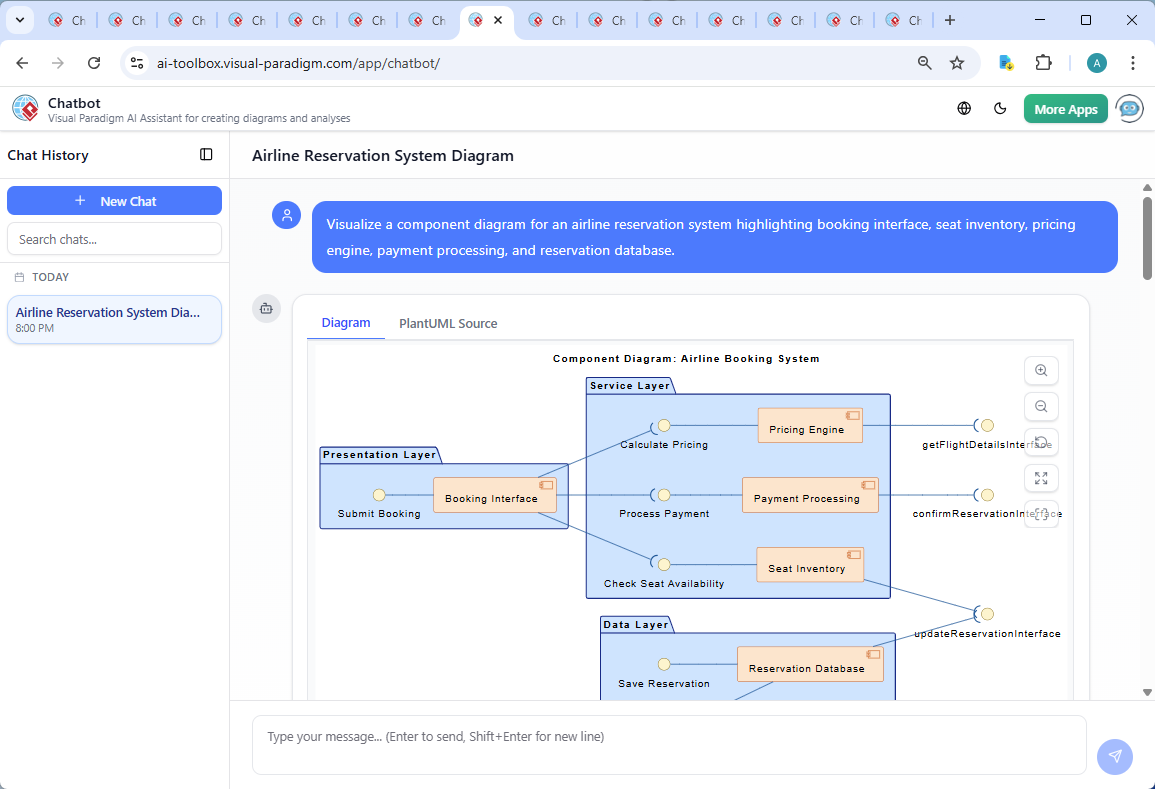 Best AI-Powered Visual Modeling Software in 2026: Why Visual Paradigm Leads the Way
Why Visual Paradigm 18.0 Is More Than Just a Free LLM: The Case for Intelligent, Specialized AI in Professional Work
Best AI-Powered Visual Modeling Software in 2026: Why Visual Paradigm Leads the Way
Why Visual Paradigm 18.0 Is More Than Just a Free LLM: The Case for Intelligent, Specialized AI in Professional Work