Introduction
In the modern landscape of software development and business architecture, fragmentation is the enemy of productivity. For years, professionals have struggled with a disjointed ecosystem where modeling tools, documentation platforms, and project management apps operate in isolation. Data becomes siloed, context-switching slows down workflows, and maintaining a single source of truth becomes nearly impossible.
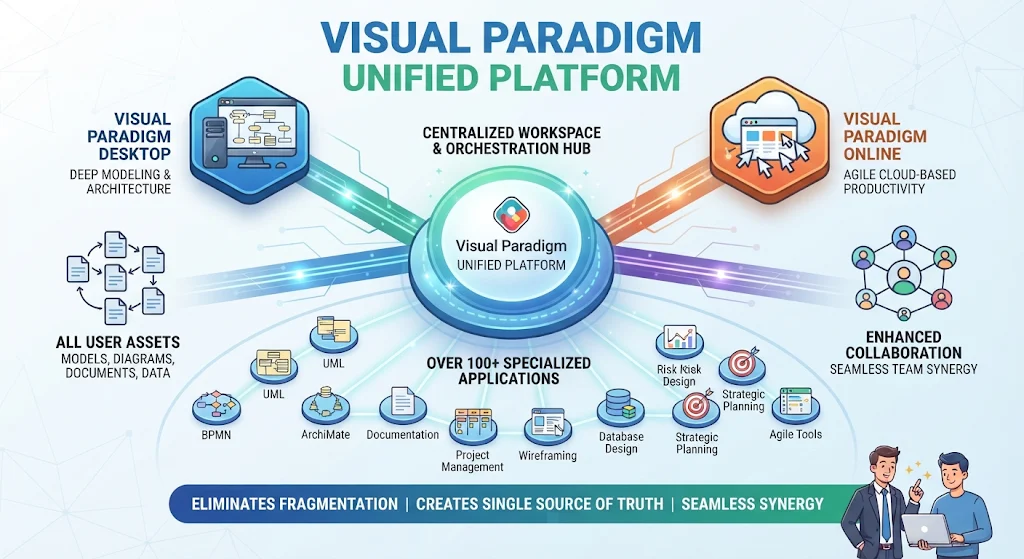
The launch of the Visual Paradigm Unified Platform marks a pivotal shift in how we approach visual productivity. This is not merely a user interface refresh; it is a fundamental architectural evolution that bridges the gap between Visual Paradigm Desktop and Visual Paradigm Online. By centralizing over 100 specialized applications and all user assets into one cohesive hub, the Unified Platform eliminates friction, enhances collaboration, and creates a seamless synergy between heavy-duty desktop modeling and agile cloud-based productivity.
This guide explores the core philosophy of the Unified Platform, its key concepts, real-world application scenarios, and how it integrates with AI-driven tooling to transform your workflow.
Key Concepts of the Unified Platform
The word “Unified” represents the core philosophy behind this release. The platform is built on four foundational pillars designed to break down barriers between applications and environments.
1. A Centralized Cloud Drive for All Data
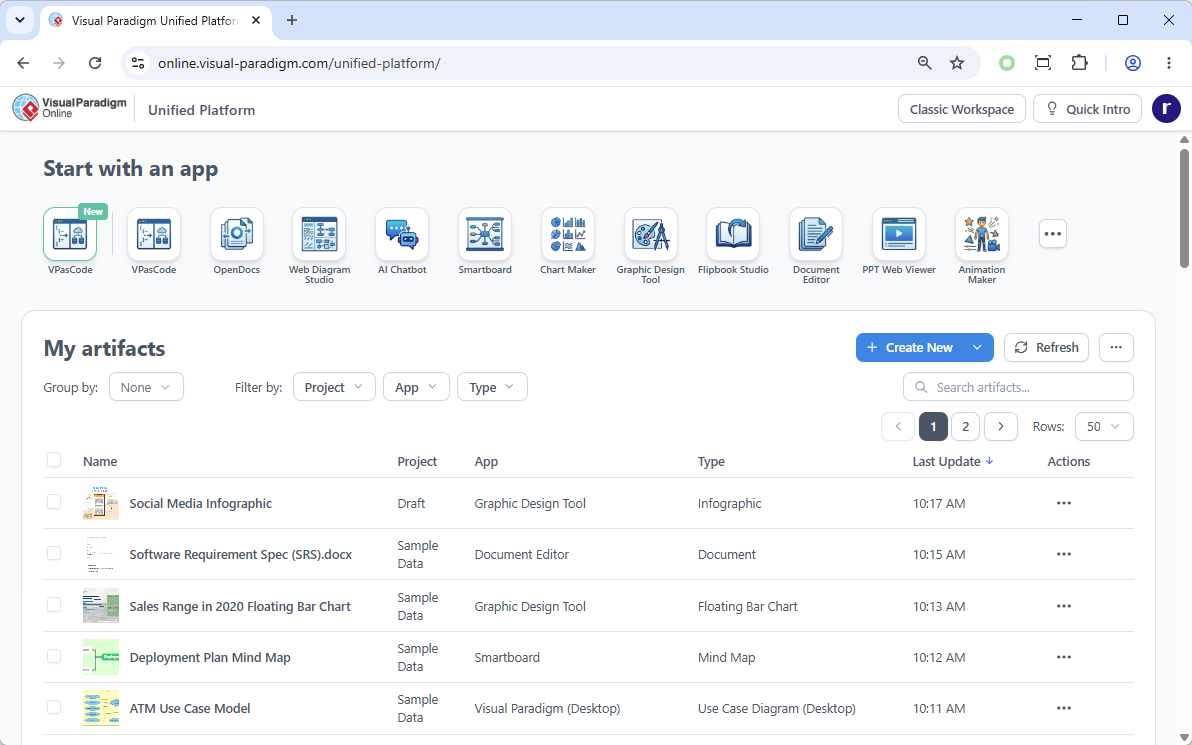
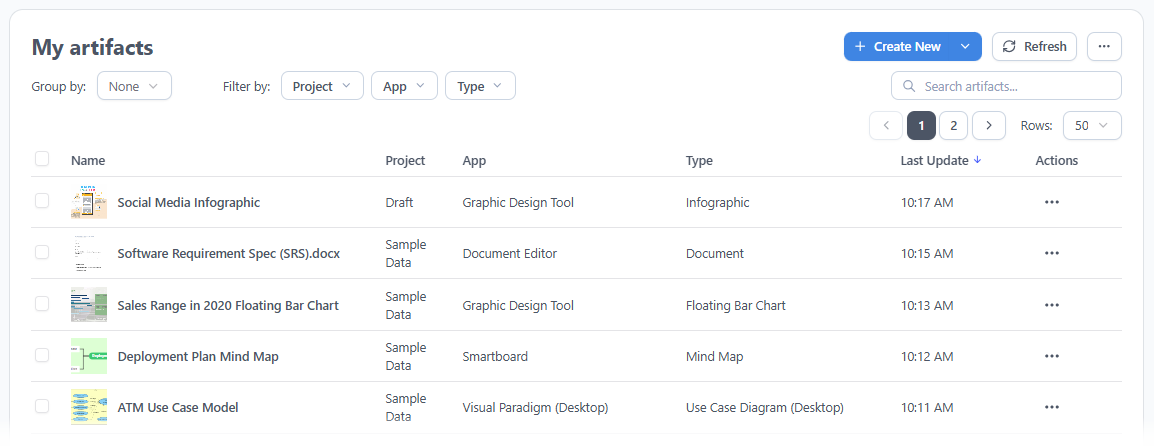
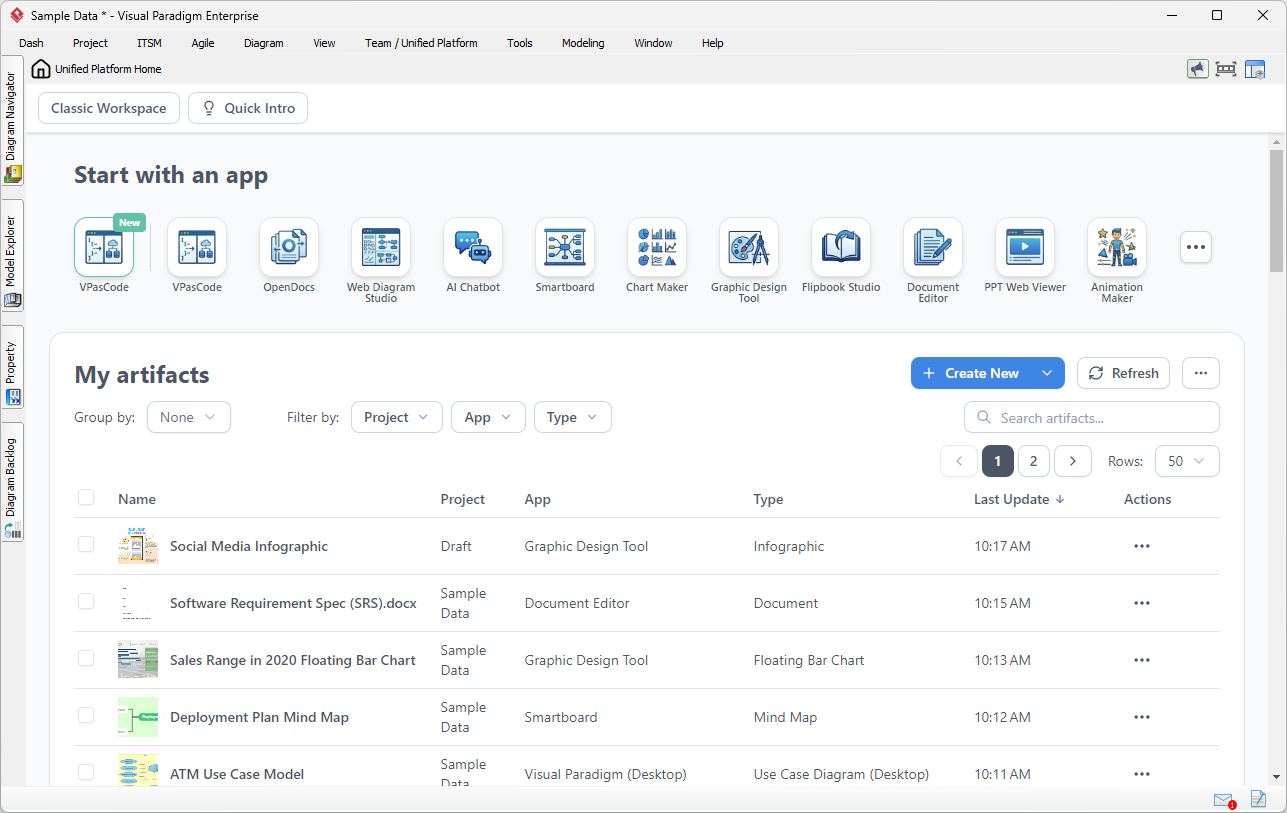
The most significant change is the introduction of a drive-like space that acts as the single source of truth for your work. Previously, data was scattered across individual tools. Now, every diagram, artifact, document, or project created across the entire Visual Paradigm suite is automatically organized and visible in this centralized location. This ensures that whether you are working on a UML diagram or a business infographic, your assets are always accessible and synchronized.
2. Desktop and Web Browser Synergy
The Unified Platform dissolves the boundary between local and cloud work. For Desktop users, the platform is accessible via an embedded browser directly within the desktop environment. This means diagrams built locally are instantly visible and manageable within the Unified Platform. Conversely, users can log in via any external web browser on any device to access, view, and manage both desktop-synced and cloud-native assets seamlessly.
3. A Central Entrance to 100+ Apps
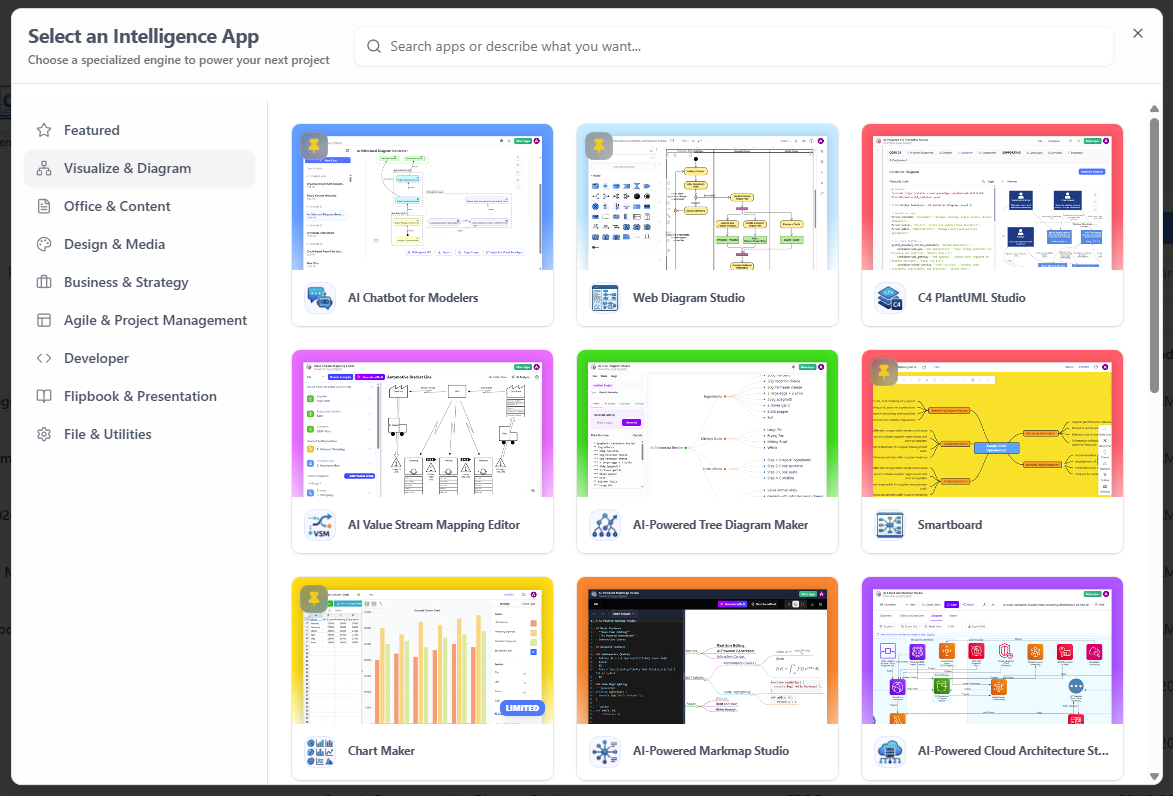
Gone are the days of hunting for the right tool. The Unified Platform provides a clear, categorized, and centralized dashboard hosting over 100 specialized apps. These span advanced system modeling, agile planning, business infographics, and strategic management. Exploring and launching the exact tool you need is now just a single click away, significantly reducing setup time and cognitive load.
4. Streamlined Creation Workflow
The creation interface has been completely redesigned to remove friction. Instead of opening different applications or navigating deep menus, a new centralized menu allows you to instantly spin up any diagram or visual artifact from one place. This streamlined approach ensures that your focus remains on content creation rather than tool navigation.
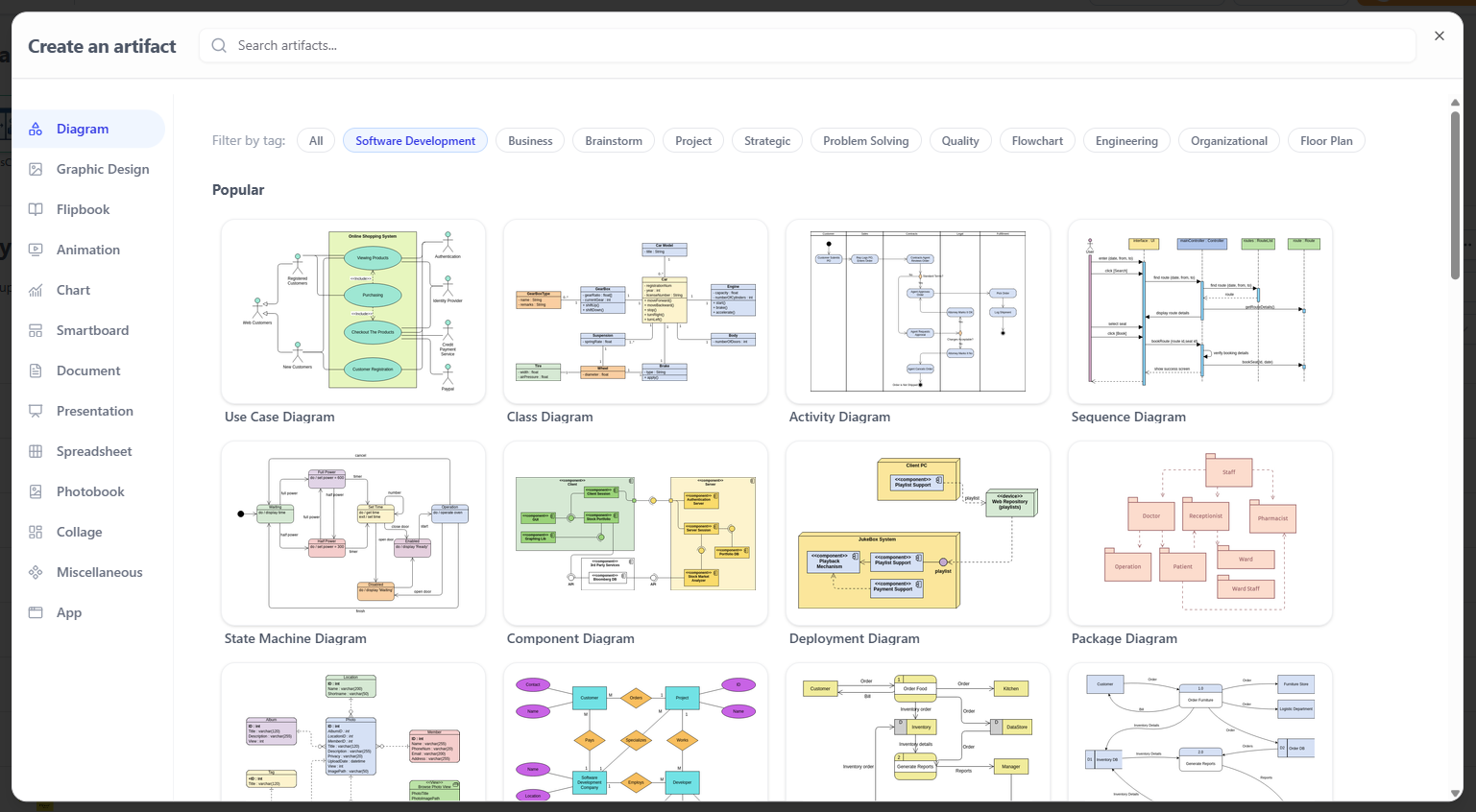
Tooling: Visual Paradigm Unified Platform + AI Ecosystem
The Unified Platform is not just a repository for static diagrams; it is a dynamic environment powered by an extensive AI ecosystem. With over 100 AI-powered apps available at your fingertips, the platform enables intelligent automation and enhanced creativity.
-
AI-Driven Modeling: Leverage AI to generate initial diagram structures from text descriptions, speeding up the initial design phase.
-
Smart Documentation: Use AI-assisted writing tools within the Document Editor and OpenDocs to refine technical specifications and ensure clarity.
-
Automated Insights: AI tools can analyze your models and projects to suggest improvements, identify bottlenecks in processes, or recommend best practices based on industry standards.
By integrating these AI capabilities directly into the Unified Platform, users can supercharge their productivity, moving from manual creation to intelligent augmentation.
Real-World Scenarios: Transforming Your Desktop Workflow
For Visual Paradigm Desktop users, the integration of the Unified Platform eliminates the context-switching that often slows down complex projects. Here are three practical scenarios demonstrating this synergy.
Scenario 1: Connect Heavy System Modeling with Product Requirements
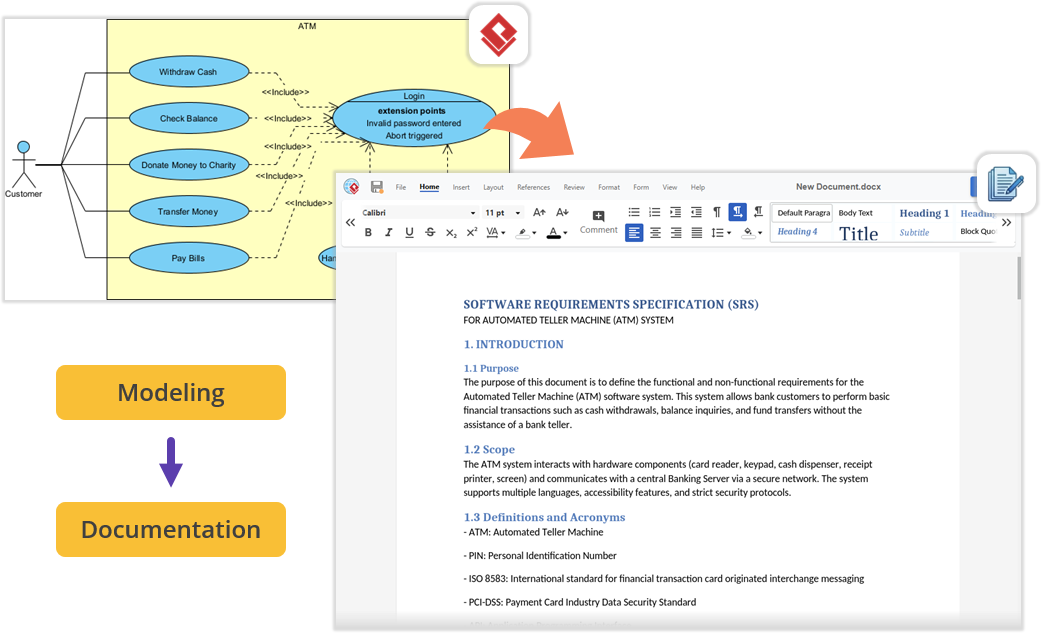
Imagine you are architecting a new software module using UML or SysML inside Visual Paradigm Desktop. Once the technical models are complete, you need to write the comprehensive Product Requirement Specification (PRD). Instead of minimizing Visual Paradigm, opening a local word processor, and exporting/importing image files, you can simply open the embedded Unified Platform. From there, launch the Document Editor app to write your requirements documentation right next to your active modeling environment—keeping everything perfectly organized under a single project space.
Scenario 2: Effortless Documentation via Pipeline and OpenDocs
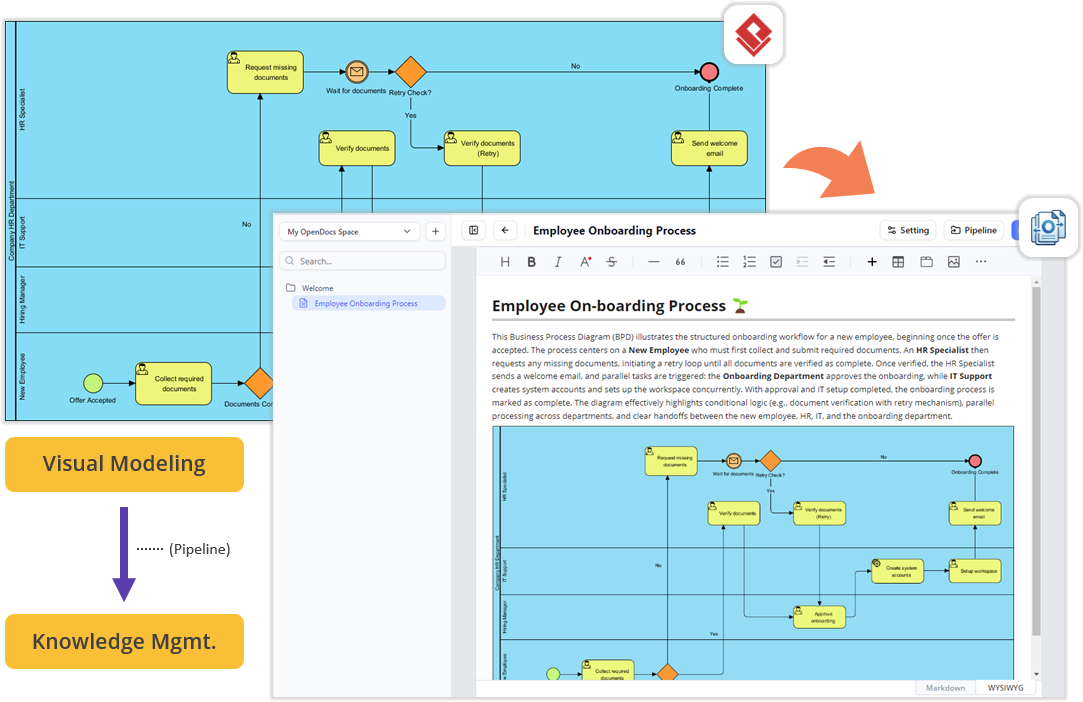
For teams looking to streamline their technical documentation, the flow between your desktop workspace and cloud features is now frictionless. You can build your diagrams locally in VP Desktop and send them to the cloud-based Pipeline. Next, switch over to the OpenDocs app within the Unified Platform panel. In the OpenDocs editor, you will find your Pipeline pane waiting for you. You can write your manuals or project guides and simply drag-and-drop your desktop-generated diagrams directly into the document canvas. No file exporting, no broken image links, and zero context-switching.
Scenario 3: Supercharge Projects with Agile and Management Tools
Software development requires far more than just architectural diagrams; it requires project management, scheduling, and team alignment. The Unified Platform instantly unlocks access to a massive library of specialized PM and Agile applications for desktop users. Within the same interface where you manage your codebase models, you can now jump into apps dedicated to Stakeholder Management, generate Development Plans, build interactive Gantt Charts, map out a RACI Matrix, or even design a prototype site using the Website Builder. It bridges the gap between engineering design and project execution.
Diagram Examples using PlantUML
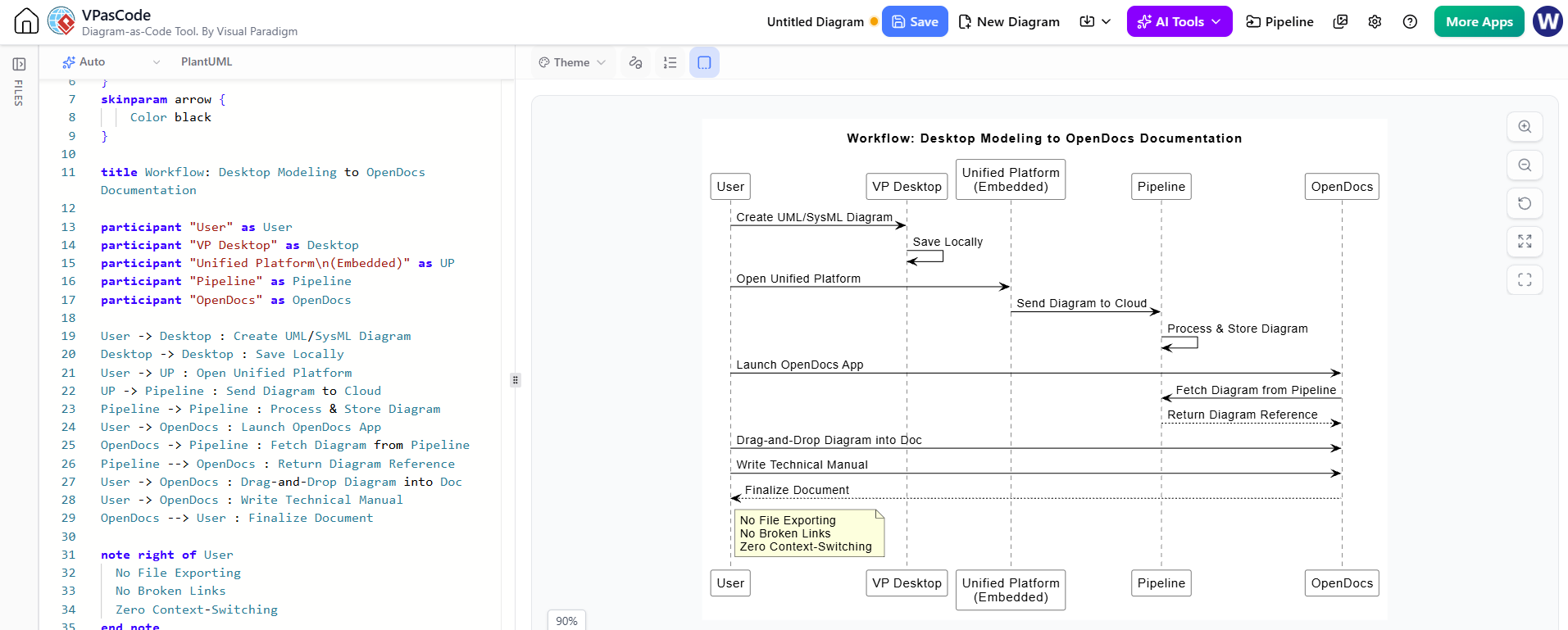
To illustrate the architectural shift and workflow integration enabled by the Unified Platform2. Workflow: Desktop Modeling to OpenDocs Documentation. This sequence diagram illustrates the frictionless workflow described in Scenario 2, where desktop diagrams are integrated into cloud documentation.
@startuml
skinparam backgroundColor white
skinparam participant {
    BackgroundColor white
    BorderColor black
}
skinparam arrow {
    Color black
}

title Workflow: Desktop Modeling to OpenDocs Documentation

participant "User" as User
participant "VP Desktop" as Desktop
participant "Unified Platform\n(Embedded)" as UP
participant "Pipeline" as Pipeline
participant "OpenDocs" as OpenDocs

User -> Desktop : Create UML/SysML Diagram
Desktop -> Desktop : Save Locally
User -> UP : Open Unified Platform
UP -> Pipeline : Send Diagram to Cloud
Pipeline -> Pipeline : Process & Store Diagram
User -> OpenDocs : Launch OpenDocs App
OpenDocs -> Pipeline : Fetch Diagram from Pipeline
Pipeline --> OpenDocs : Return Diagram Reference
User -> OpenDocs : Drag-and-Drop Diagram into Doc
User -> OpenDocs : Write Technical Manual
OpenDocs --> User : Finalize Document

note right of User
  No File Exporting
  No Broken Links
  Zero Context-Switching
end note

@enduml
How to Access the Unified Platform
Getting started with the new ecosystem is incredibly straightforward, whether you prefer working in a browser or inside our desktop software.
For Visual Paradigm Online Users
You can access the platform from any device via your web browser:
-
Log into your VP Online account at: https://online.visual-paradigm.com/login.jsp
-
Upon successful login, you will automatically be redirected to the new Unified Platform dashboard.
-
You can also bookmark and visit the platform directly at any time by going to: https://online.visual-paradigm.com/unified-platform/
For Visual Paradigm Desktop Users
To view your synchronized diagrams and access the 100+ embedded apps right inside your desktop client, use the following steps:
-
Ensure you are logged in: To see the Unified Platform menu, you must first connect your desktop application to your cloud repository. If you haven’t logged in yet, go to the main menu and select Team / Unified Platform > Select Repository and enter your VP Online credentials.
-
Open the Platform: Once logged in, simply navigate to Team / Unified Platform > Unified Platform in the main menu.

-
An embedded browser will open directly inside your workspace, revealing the centralized cloud drive and your entire app ecosystem.
Conclusion
The Visual Paradigm Unified Platform represents a significant leap forward in visual productivity and collaborative work. By centralizing data, integrating desktop and cloud environments, and providing seamless access to over 100 specialized apps, it addresses the long-standing challenges of fragmentation and siloed workflows.
Whether you are a system architect creating complex UML models, a product manager drafting requirements, or a team lead managing agile projects, the Unified Platform offers a cohesive environment that enhances efficiency and clarity. The integration of AI-powered tools further amplifies its value, enabling smarter and faster decision-making.
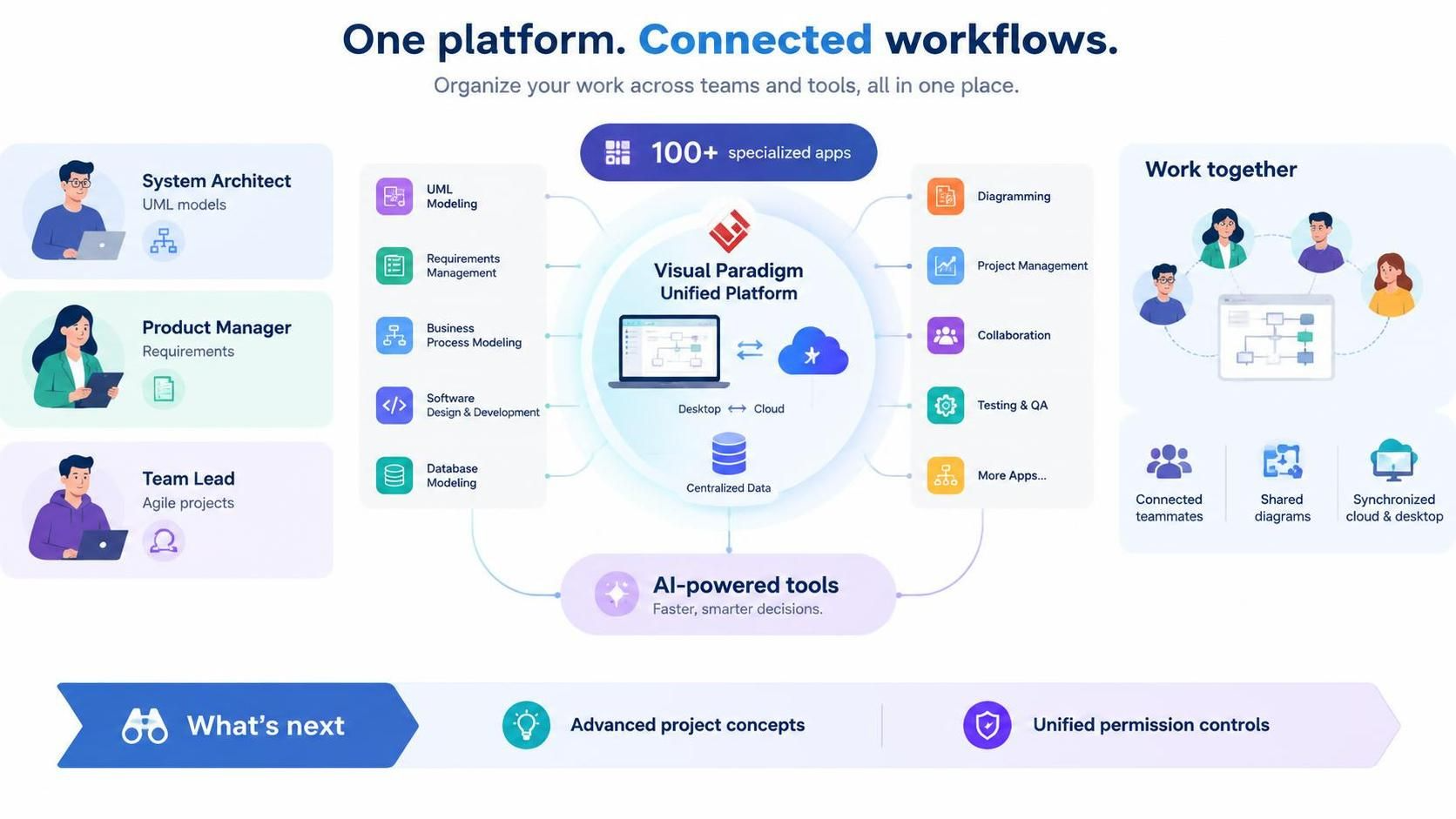
As Visual Paradigm continues to evolve, the Unified Platform lays the groundwork for future innovations, including advanced project concepts and unified permission controls. By adopting this new ecosystem, users can look forward to a more organized, flexible, and powerful workflow that keeps pace with the demands of modern software development and business strategy.
Update your Visual Paradigm Desktop application or log into your online portal today to experience the next generation of visual productivity.