Czym jest oszacowanie w metodyce zwinnej? Jakie są powszechne pułapki?

Czym jest oszacowanie w metodyce zwinnej? Jakie są powszechne pułapki?

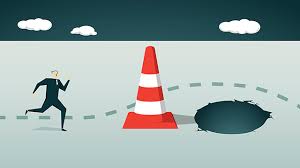
In software development , the usual “estimation” includes a quantitative evaluation of the work required to perform a given development task; this is usually expressed in terms of duration (hour / day) or estimated unit (story point). The purpose is to consolidate a number of such individual estimates in order to obtain an indication of the overall duration, work or cost of the software project.

Continue reading
Sprint Review vs Sprint Retrospective

Przegląd Sprintu vs Retrospektywa Sprintu

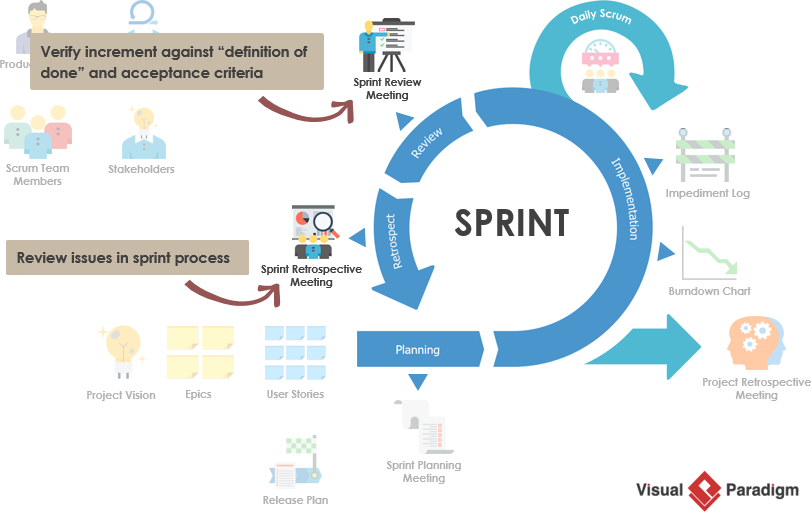
Each sprint ends with a two-part sprint review meeting. Such a meeting starts with a customer review and demonstration and ends with the team retrospective. Both of these components occur on the last day of the sprint. The Sprint Review focuses on the “inspect” and “adapt” of the increment (Potentially shippable), while the Sprint Retrospective give more focus on the “inspect” and “adapt” of the process of the sprint.

Continue reading
Scrum: Why Sprint Length should be Short?

Scrum: Dlaczego długość sprintu powinna być krótka?

Sprinting is running over a short distance in a limited period of time. It is used in many sports that incorporate running, typically as a way of quickly reaching a target or goal, or avoiding or catching an opponent. A sprint is a time box. Each sprint has a start and end date during which a set of selected user stories have to be completed and confirmed. The following image shows you the key elements of a sprint, which includes a set of user stories, the scrum members involved, the assignment of work, the duration and end date (top-right corner).

Continue reading
Scrum Team — I-Shaped vs T-Shaped People

Zespół Scrum — Ludzie w kształcie I vs w kształcie T

Some people are very proficient in a particular field, but rarely contribute outside of that field. These people are called “I-types” in the agile community because they are like the letter “I” in that they have depth, but not much breadth. In contrast, “T-people” have complementary expertise in one area, but less developed skills in related areas and good collaboration skills.

Continue reading