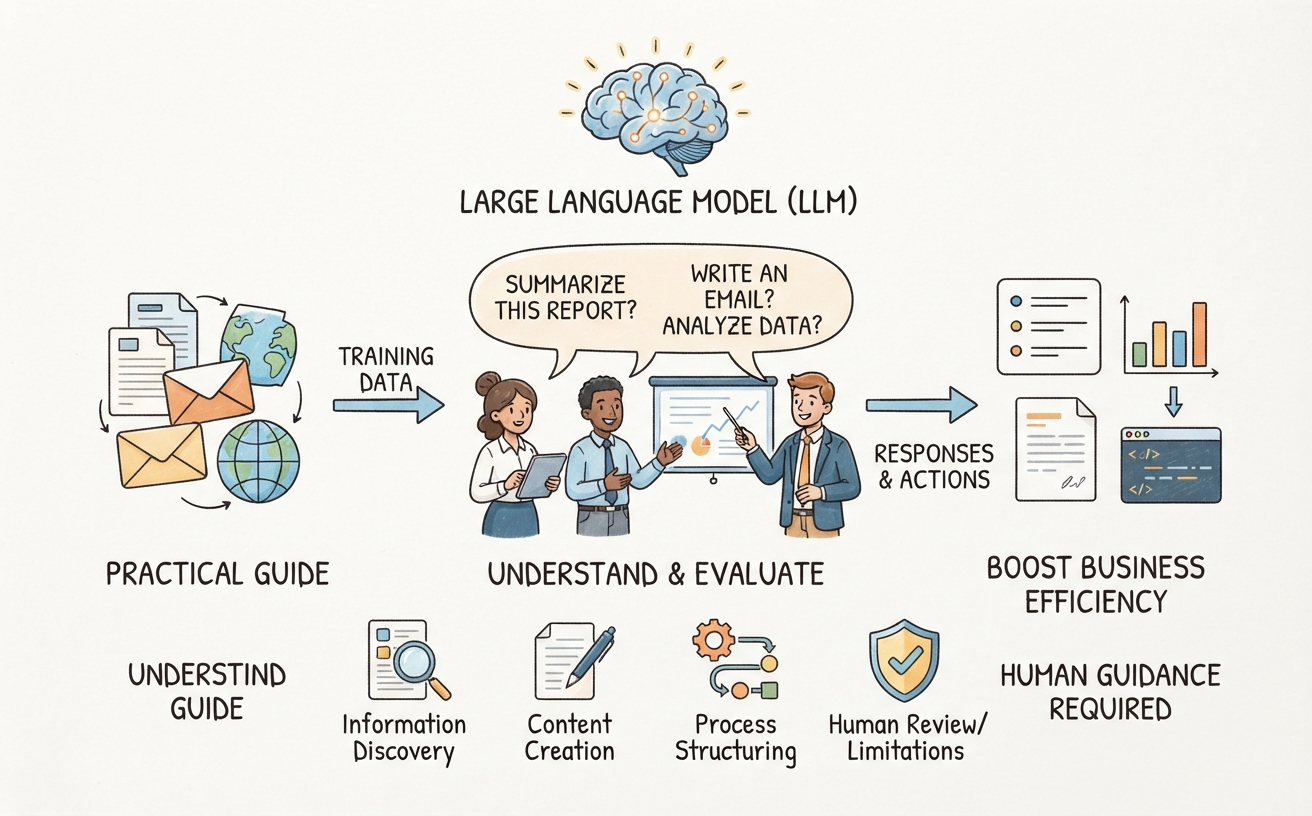
Large language models (LLMs) have become an important part of modern business technology. They can summarize documents, answer questions, draft content, explain technical concepts, and assist employees with many everyday tasks. However, choosing and using an LLM effectively requires more than knowing that it can generate text.
Businesses need to understand what these models actually do, how they process information, what their limitations are, and which characteristics matter when evaluating them for real-world workloads.
This guide explains the fundamentals of large language models from a practical business perspective, helping organizations make more informed decisions about AI adoption.
What Is a Large Language Model?
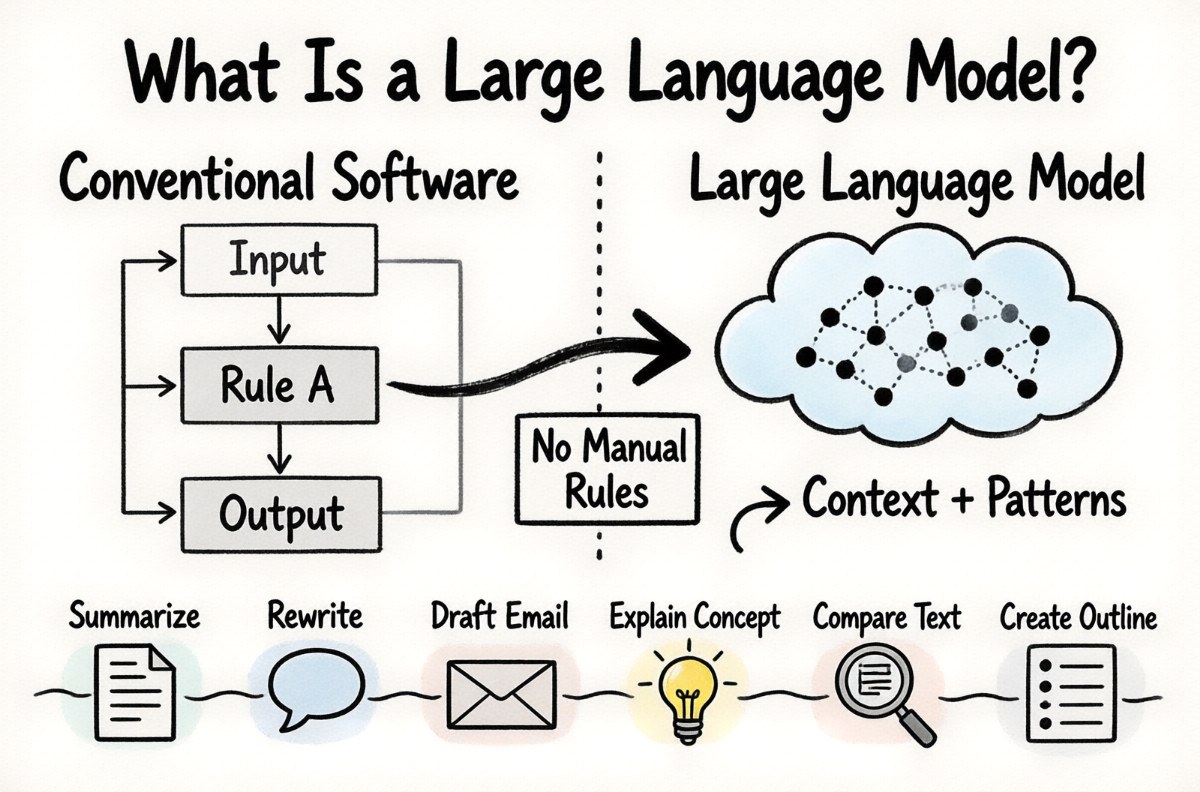
A large language model is an artificial intelligence model trained on large amounts of text and other data to recognize patterns in language and generate responses. It can interpret instructions, understand questions, summarize information, and produce text that resembles natural human communication.
Unlike a conventional software application that follows explicitly programmed rules for every operation, an LLM generates responses based on patterns learned during training and the context provided when it is used.
For example, an employee could ask an LLM to:
- Summarize a lengthy business report.
- Rewrite a technical explanation in simpler language.
- Draft an email based on a list of requirements.
- Explain a programming concept.
- Compare two descriptions and identify their differences.
- Turn a written process into a structured outline.
The model does not need a separate manually programmed rule for every possible request. Instead, it uses its learned language capabilities to interpret the instruction and generate a suitable response.
How Do Large Language Models Work?
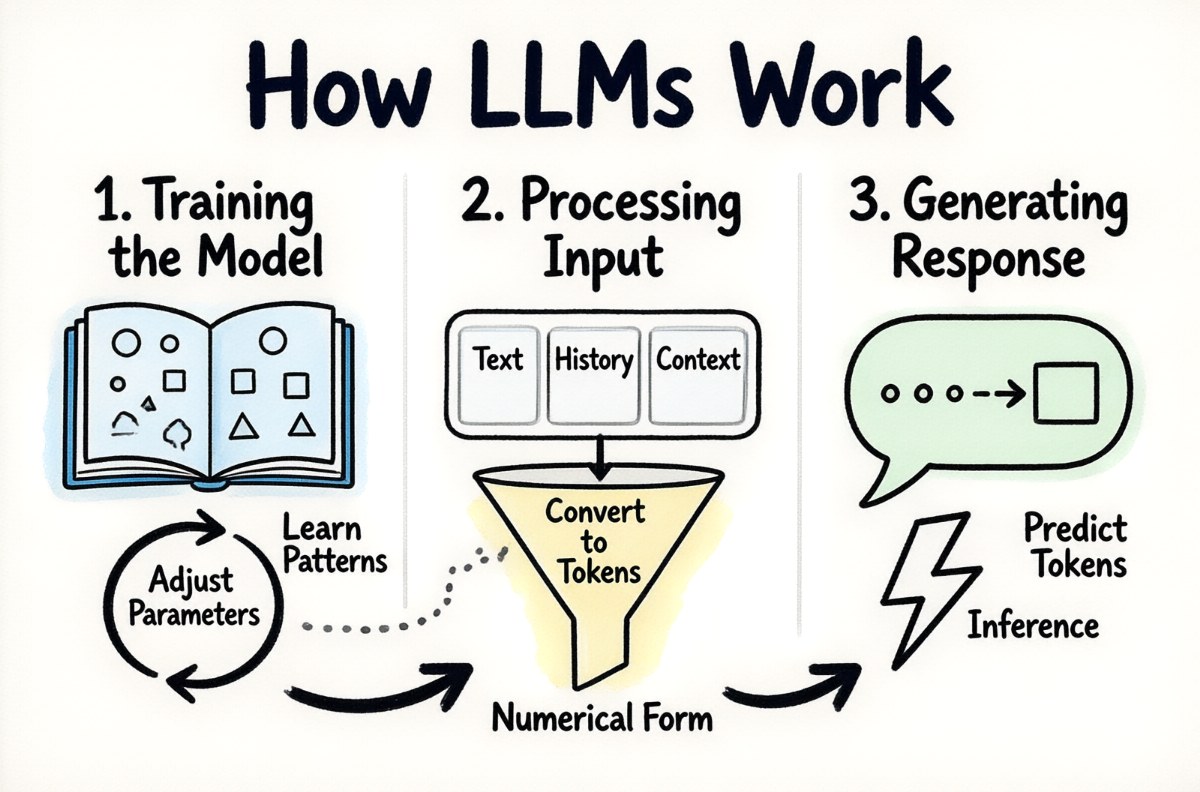
Although the underlying technology is complex, the basic process can be understood through three stages: training, input processing, and response generation.
1. Training the Model
During training, a model processes large datasets and learns statistical relationships between words, phrases, concepts, and other information. Many modern LLMs are based on a neural network architecture called the Transformer, which uses mechanisms such as attention to identify relationships between different parts of an input.
Through repeated training, the model adjusts its internal parameters to improve its ability to predict what text is likely to come next in a sequence. This process gives it the ability to generate coherent language and respond to a wide range of instructions.
Some models also undergo additional training or refinement to improve instruction-following, reasoning-style responses, safety behavior, or performance in particular domains.
2. Processing an Input
When someone submits a question or instruction, the model first processes the input. Text is divided into smaller units called tokens, which are represented internally in a numerical form that the model can process.
The input may contain more than the user’s latest message. Depending on the application, it can also include conversation history, system instructions, retrieved documents, or other contextual information.
This context helps the model interpret what the user is asking and determine what information is relevant to the response.
3. Generating a Response
The model generates an answer by predicting a sequence of tokens based on the input and its learned parameters. Each generated token contributes to the developing response, which continues until the model reaches an appropriate stopping point or output limit.
This process is known as inference. It is the stage at which a trained model is used to perform a task, rather than being trained on new data.
Inference requires computing resources. The amount of processing needed depends on factors such as model size, input length, output length, hardware, and the way the model is configured.
Important LLM Concepts Businesses Should Understand
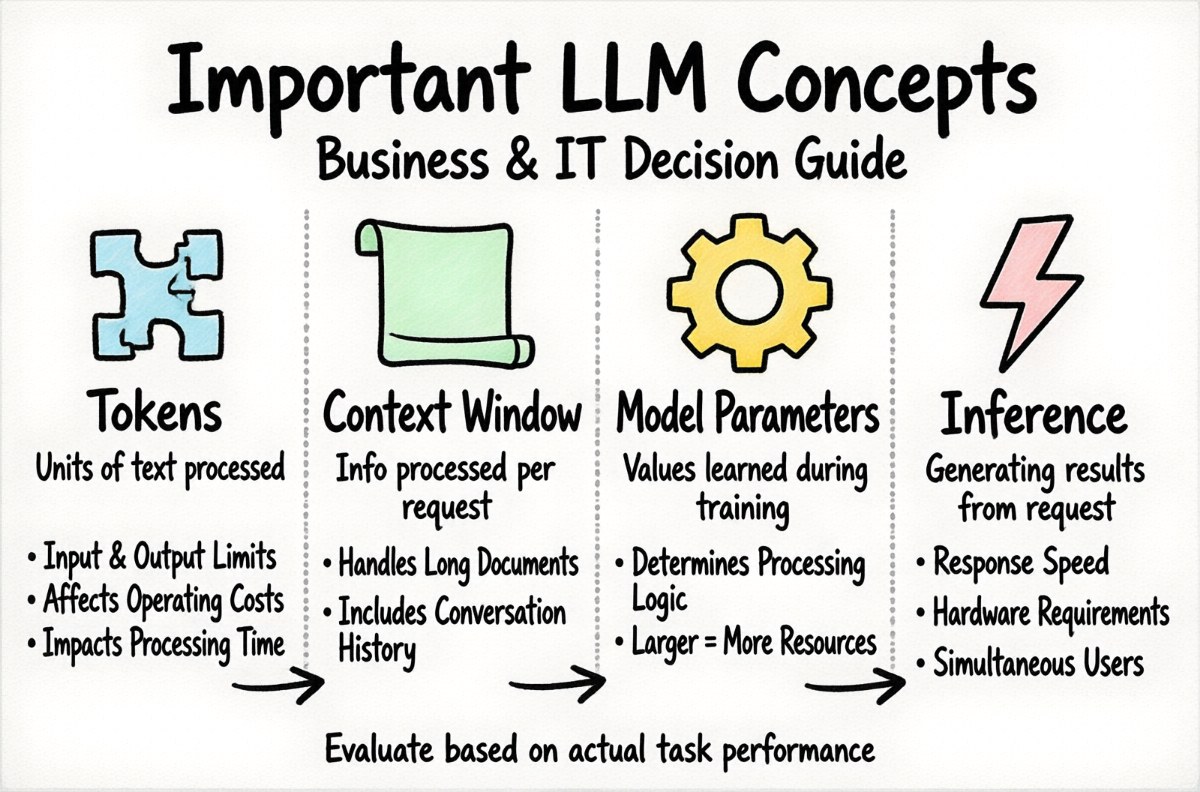
Several technical concepts can influence the cost, performance, and suitability of an LLM. Business and IT decision-makers do not need to become machine learning specialists, but understanding the following terms can make model evaluation much easier.
Tokens
Tokens are the units of text that a language model processes. A token may represent a complete word, part of a word, punctuation, or another text fragment. Tokenization varies between models, so a token does not always correspond to one word.
Tokens matter because many AI services measure usage and impose input or output limits in tokens. A long document or conversation generally consumes more tokens than a short question.
For businesses, token usage can affect:
- Operating costs: Some hosted AI services charge according to the number of input and output tokens.
- Processing time: Longer inputs and outputs can require more computation.
- Document handling: Large files may need to be divided into smaller sections before being processed.
- Application design: Developers need to manage how much information is included in each request.
Context Window
A model’s context window is the amount of information it can process within a single interaction or request. It is commonly measured in tokens and may include instructions, conversation history, supplied documents, and the response being generated.
A larger context window can be useful when employees need to work with lengthy documents, extensive conversations, or multiple pieces of information at once. However, a large context window does not automatically mean that a model will understand every detail equally well or retrieve the most relevant information.
Businesses should consider the actual size and structure of their typical workloads. A model with a very large context window may be unnecessary for short customer inquiries, while document-intensive workflows may benefit from a model that can handle more contextual information.
Model Parameters and Model Size
Parameters are numerical values learned during a model’s training. They help determine how the model processes information and generates responses.
Model size is often described in terms of the number of parameters. Larger models generally require more computing resources, but size alone does not determine quality. Training data, model architecture, training methods, instruction tuning, and task-specific performance also matter.
A smaller model may be sufficiently capable for a focused task while being faster or less expensive to operate. A larger model may be more suitable for complex language tasks, but it may also require more powerful hardware and higher inference costs.
Organizations should evaluate models based on actual task performance rather than assuming that the largest available model is always the best choice.
Inference
Inference is the process of using a trained model to generate a result. Every time an employee asks a question or an application sends a request to an LLM, inference takes place.
Inference performance can influence the user experience and operating cost of an AI application. Relevant considerations include response speed, throughput, hardware requirements, and the number of simultaneous users the system needs to support.
For an organization deploying AI internally, inference capacity is an important part of infrastructure planning.
What Can Large Language Models Do for Businesses?
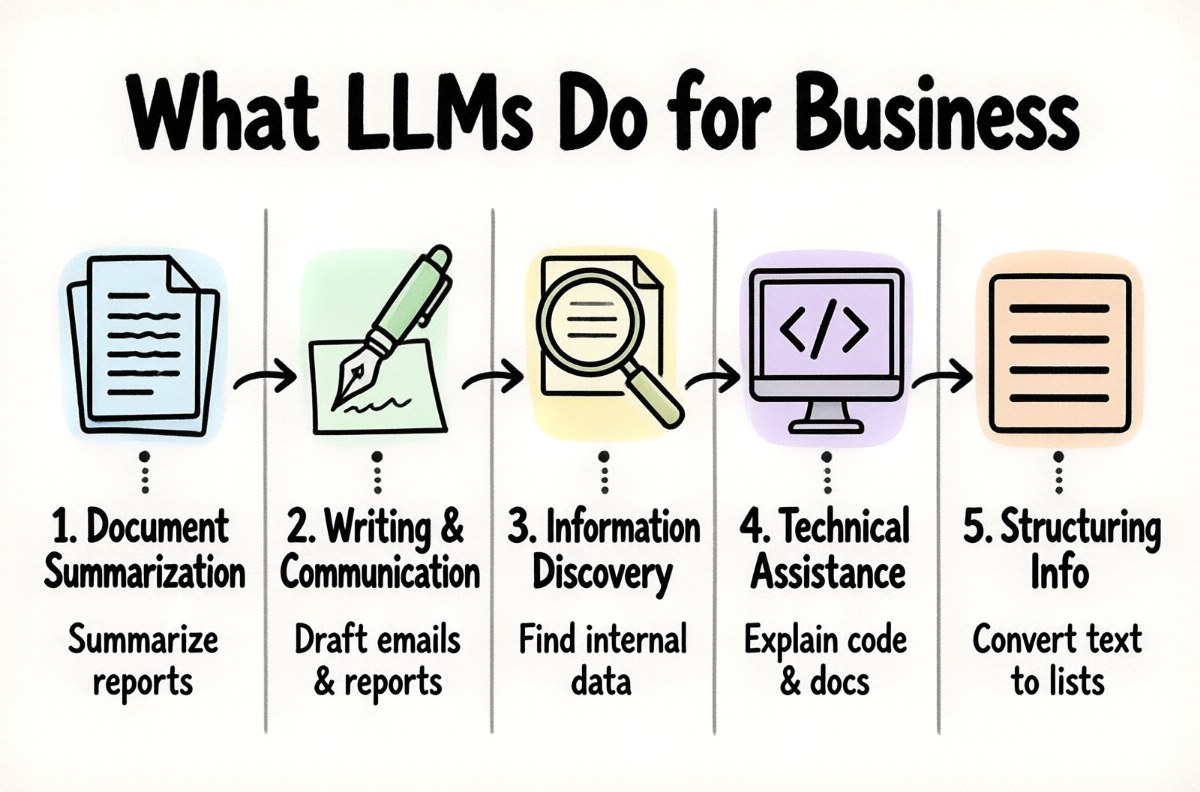
LLMs are useful because they can work with natural language, making AI capabilities accessible through familiar questions and instructions. Their applications extend across many departments and business activities.
1. Document Summarization and Analysis
Employees often spend considerable time reading reports, proposals, policies, meeting records, and technical documents. An LLM can help summarize lengthy material, extract key points, compare documents, and explain complicated passages.
For example, a project manager could ask an AI assistant to summarize several project reports and identify recurring issues that deserve further attention.
2. Writing and Communication
LLMs can help draft emails, proposals, reports, announcements, and other business communications. They can also revise existing content for clarity, tone, and structure.
Employees remain responsible for reviewing the output, checking factual details, and ensuring that the final communication is appropriate.
3. Information Discovery
When connected to suitable information sources, an LLM-based application can help employees locate relevant information without requiring them to know exactly where a document is stored or which search terms to use.
For example, an employee could ask a question about an internal procedure and receive an answer based on relevant company documentation. The usefulness of this approach depends on the quality of the connected information, retrieval process, and access controls.
4. Technical and Development Assistance
LLMs can explain programming concepts, help developers understand technical documentation, draft code examples, and assist with requirements analysis. They can also help transform written descriptions into structured technical content.
However, generated code and technical recommendations should be reviewed and tested. A fluent explanation is not proof that the underlying technical information is correct.
5. Structuring Business Information
LLMs can help convert unstructured descriptions into more organized outputs, such as lists, tables, outlines, requirements, and process descriptions. When combined with suitable modeling tools, they can also support the creation of visual representations such as diagrams and workflows.
This can help teams move from loosely written ideas toward information that is easier to review, communicate, and refine.
What Are the Limitations of Large Language Models?
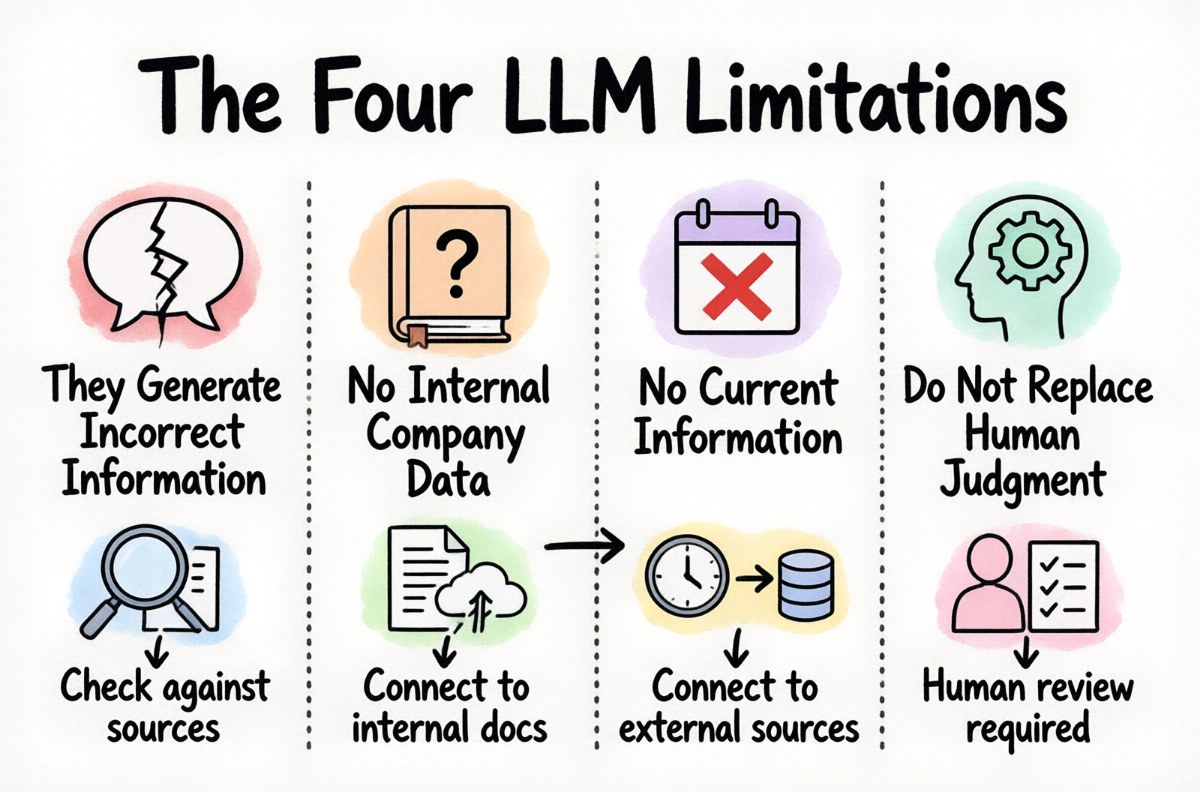
Despite their capabilities, LLMs are not reliable sources of truth by default. Understanding their limitations is essential before using them in business-critical workflows.
They Can Generate Incorrect Information
An LLM can produce an answer that sounds convincing but contains inaccurate details. This behavior is often described as hallucination.
It can happen when the model lacks sufficient context, misinterprets a question, or generates an answer based on patterns that do not accurately reflect the facts. Important outputs should be checked against authoritative sources, especially when they involve legal, financial, operational, or technical decisions.
They Do Not Automatically Know Your Company’s Information
A general-purpose model may have broad knowledge, but it does not automatically know an organization’s internal policies, project history, product specifications, or latest business decisions.
To make an AI application useful for company-specific work, it may need access to approved internal information through document retrieval, application integrations, or other controlled data connections.
Connecting company information to an LLM is different from training the model on that information. In many enterprise applications, relevant documents are retrieved and supplied as context when a question is asked, rather than being incorporated into the model’s parameters.
They May Not Have Current Information
A model’s training data has a cutoff point, and the model may not know about events, product changes, or company updates that occurred afterward. Some applications address this by connecting models to external information sources or updated internal knowledge repositories.
Even when external information is available, the application needs to retrieve suitable sources and present them correctly for the answer to be useful.
They Do Not Replace Human Judgment
LLMs can assist with analysis and recommendations, but they do not understand business consequences in the same way that experienced employees do. They may overlook context, misunderstand stakeholder priorities, or fail to recognize when a situation requires escalation.
Human review remains important for decisions involving accountability, sensitive information, compliance, and business risk.
How Should Businesses Evaluate an LLM?
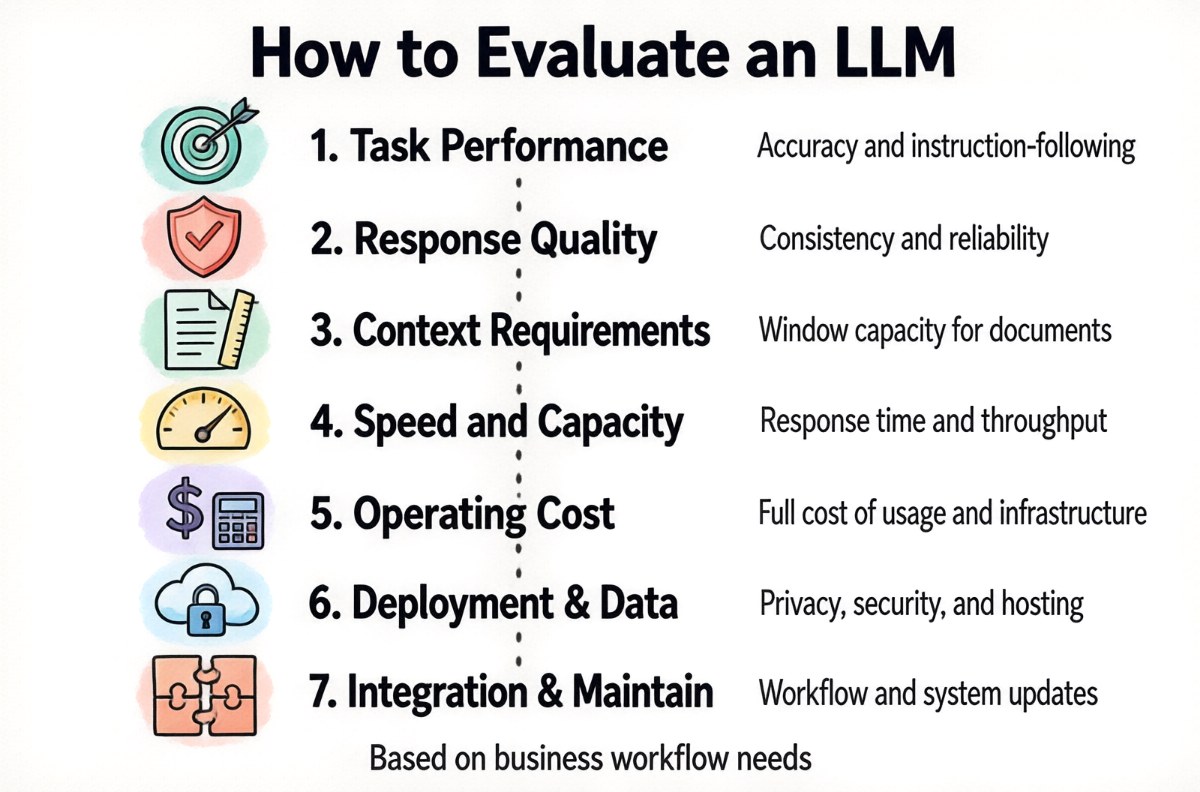
There is no single best language model for every organization. The right choice depends on the tasks being performed, the required quality, infrastructure, cost, data requirements, and user experience.
Consider the following factors when evaluating candidate models.
1. Task Performance
Start with the actual work the model is expected to perform. A model that performs well at general conversation may not be the strongest option for technical document analysis, structured data extraction, or complex reasoning tasks.
Prepare representative examples from your intended workflows and compare the models using consistent evaluation criteria. Assess accuracy, completeness, instruction-following, and the amount of human correction required.
2. Response Quality and Reliability
Evaluate not only whether the model can produce a good answer, but also how consistently it performs across different inputs. Test ambiguous questions, incomplete information, unusual cases, and requests that require the model to acknowledge uncertainty.
3. Context Requirements
Consider how much information your application needs to provide for each task. If employees regularly work with lengthy documents or multiple sources, context-window capacity may be important. If tasks are short and focused, a smaller context window may be sufficient.
4. Speed and Capacity
Response time matters when employees use AI throughout the working day. For larger deployments, organizations should also consider throughput and concurrency: how many requests the system can handle at the same time without unacceptable delays.
5. Operating Cost
Evaluate the full cost of using a model, not just its advertised price. Depending on the deployment approach, costs may include model usage, GPU infrastructure, hosting, storage, networking, maintenance, and technical support.
Estimate usage based on realistic workloads, including average input length, output length, request frequency, and expected user numbers.
6. Deployment and Data Requirements
Determine how the model will be accessed and where inference will take place. Options may include a hosted AI service, a dedicated cloud environment, or infrastructure operated by the organization.
Review the data-handling arrangements, access controls, contractual terms, and security responsibilities associated with the chosen approach. A model’s technical capabilities do not, by themselves, determine whether a deployment meets the organization’s privacy and governance requirements.
7. Integration and Maintainability
A model needs to work within the organization’s broader technology environment. Consider whether it can be integrated with the required applications, document repositories, authentication systems, and business workflows.
Also consider how the solution will be maintained, monitored, updated, and evaluated as business needs change.
Hosted Models vs. Self-Hosted Models
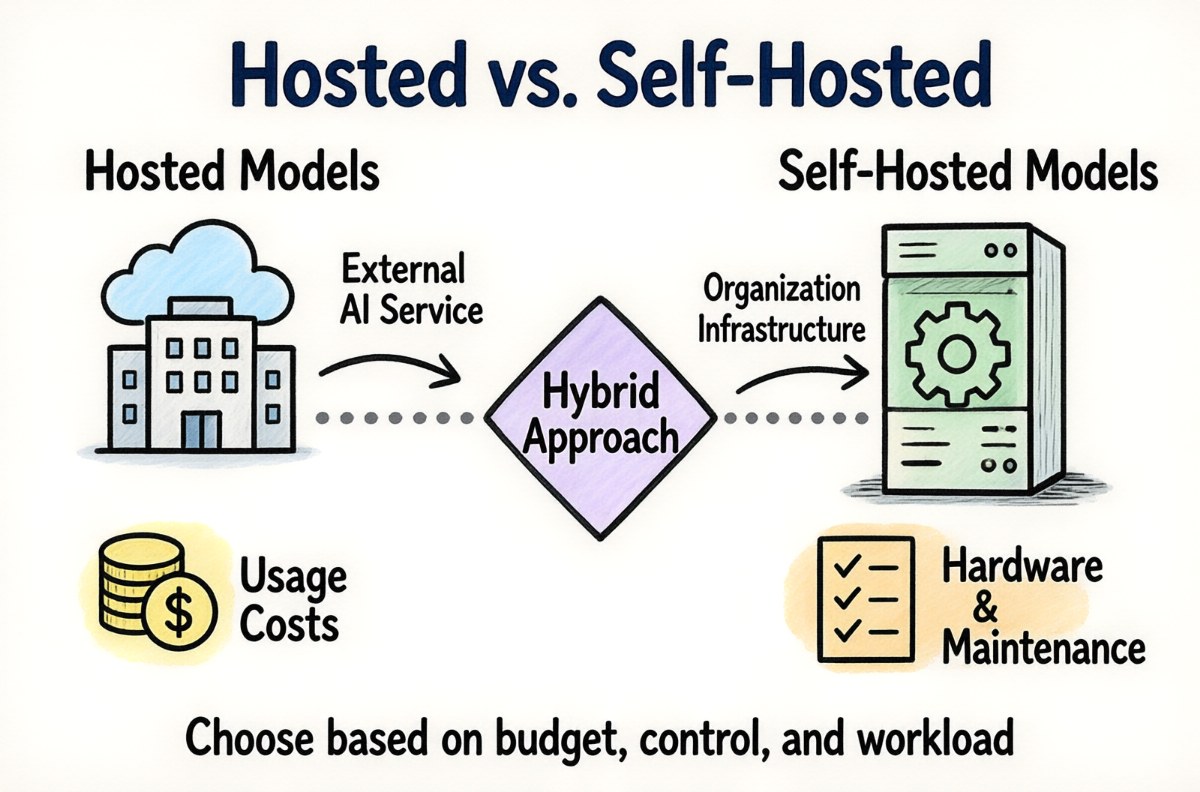
One important decision is how an organization will access and operate its chosen LLM.
Hosted models are provided through an external AI service. The organization sends requests to the provider’s endpoint and receives generated responses. This approach can reduce the need to manage model-serving infrastructure, although usage costs and data-handling arrangements depend on the provider and service configuration.
Self-hosted models run on infrastructure managed by the organization or its designated hosting environment. This can provide greater control over the deployment environment and configuration, but it also introduces responsibilities such as hardware planning, model serving, scaling, monitoring, and maintenance.
Neither approach is automatically right for every business. The decision should reflect the organization’s technical capabilities, data requirements, expected workloads, budget, and operational responsibilities.
It is also possible to adopt a hybrid approach, using different models or deployment methods for different tasks. For a more detailed discussion of these choices, see the available approaches to implementing private AI for business.
Choosing a Model Is Only One Part of an Enterprise AI Solution
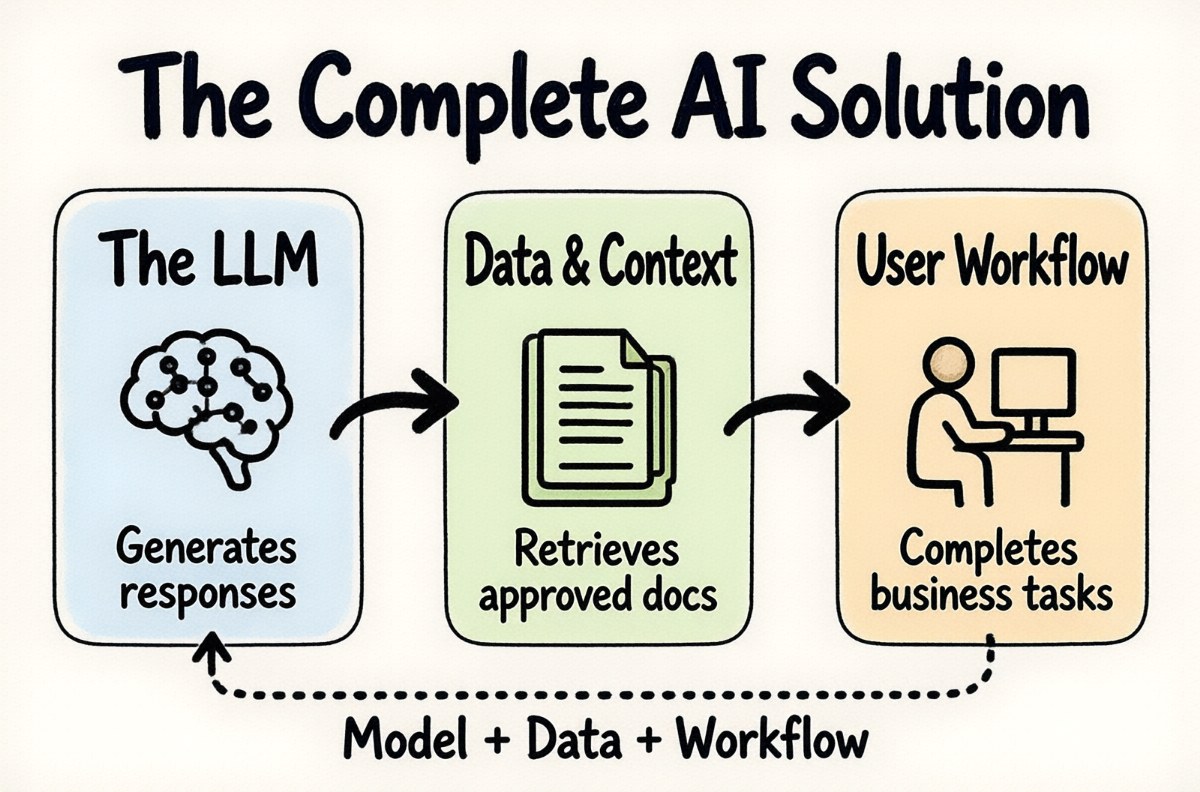
Selecting a capable LLM is an important step, but a successful business AI application involves much more than the model itself.
Organizations also need to consider how employees will interact with the system, which information it can access, how that information is retrieved, and how AI-generated results fit into existing workflows.
For example, a company knowledge assistant may combine an LLM with a searchable repository of approved documents. When an employee asks a question, the application retrieves relevant material and provides it to the model as context. The model then generates a response based on the question and the supplied information.
Other applications may combine an LLM with documentation tools, reporting systems, workflow applications, or visual modeling software. These integrations turn a general language capability into something employees can use to complete specific business tasks.
Organizations should therefore evaluate the complete solution: the model, infrastructure, data connections, user experience, security controls, integration requirements, and ongoing support.
Final Thoughts
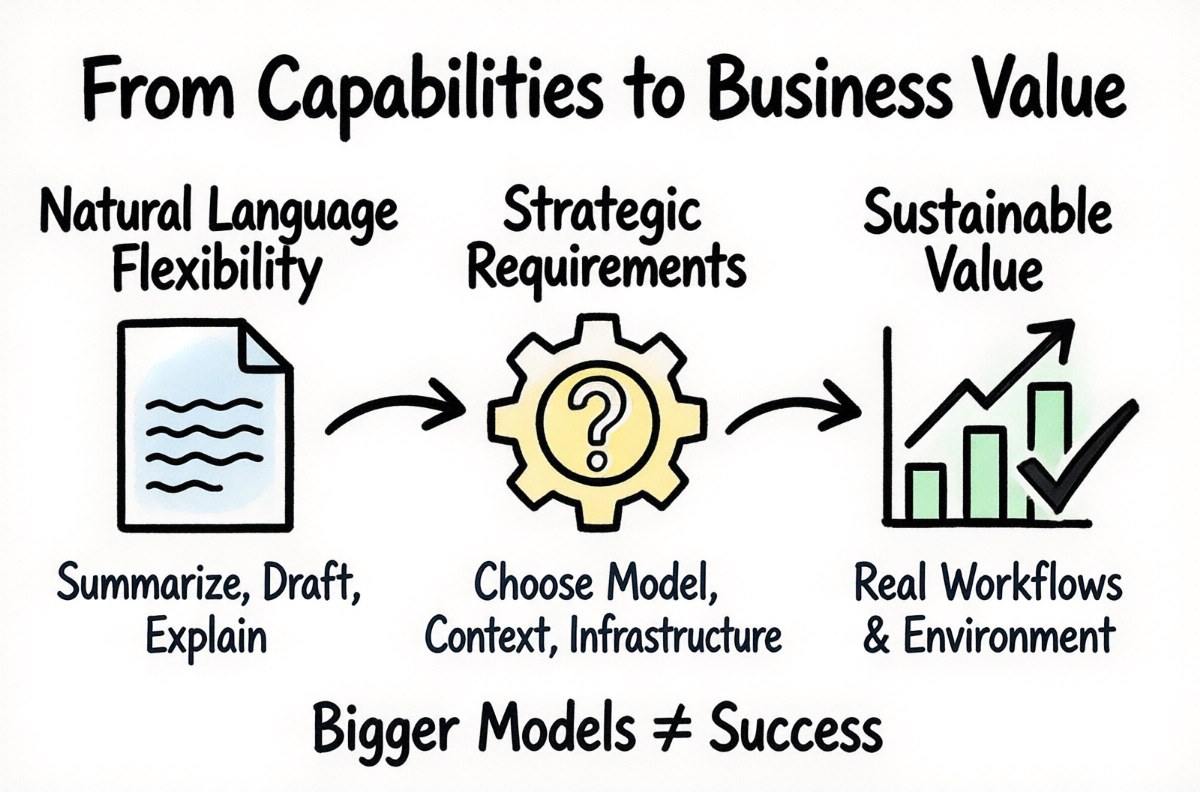
Large language models offer businesses a flexible way to work with information through natural language. They can support document analysis, communication, information discovery, technical work, and many other activities.
However, their usefulness depends on choosing an appropriate model, understanding its limitations, providing relevant context, and integrating it into a well-designed application. Bigger models are not always better, and a capable model alone does not guarantee a successful enterprise AI deployment.
Businesses that evaluate LLMs against real workflows and consider the surrounding infrastructure and knowledge environment will be better positioned to turn AI capabilities into practical, sustainable value.