
Desktop Community Edition & VP Online Free Edition

Executive Summary: Visual Paradigm offers two powerful, completely free UML tools for non-commercial use. The critical distinction? Desktop Community Edition is a professional modeling tool; VP Online Free Edition is an intuitive diagramming tool. This comprehensive guide helps you understand both platforms, their unique strengths, and how to choose—or combine—them for your projects.
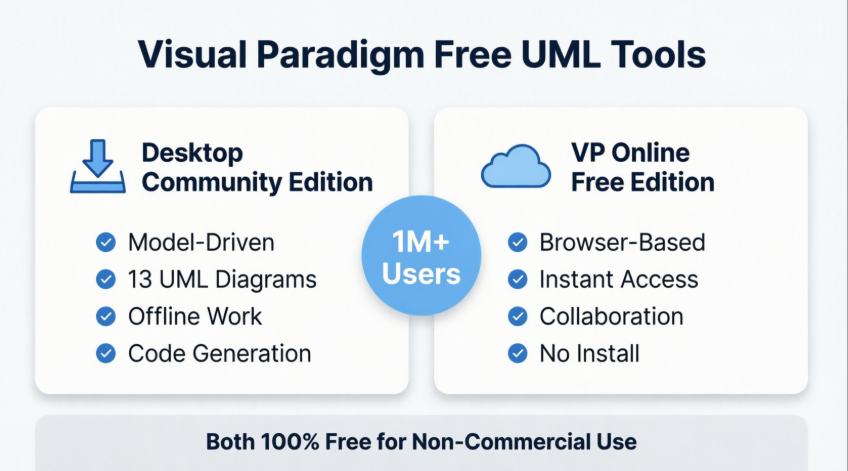
🎯 Core Philosophy: Understanding Models vs. Diagrams
Before exploring features, grasp the foundational difference that shapes every aspect of these tools [1, 2]:
🔷 Visual Models (Desktop Community Edition)
In Visual Paradigm Desktop, a “model” and a “diagram” are fundamentally different concepts [1]:
-
A model element is the underlying data or “truth” of your project (e.g., a specific Class named
Customer) -
Multiple diagrams can reference the same model element
-
Change once, update everywhere: Modify a class name in one diagram → it automatically updates across all diagrams where that element appears
-
This is “True Modeling” — enabling advanced engineering capabilities:
-
Code generation (Java, C#, Python, etc.)
-
Database reverse engineering & ORM
-
Requirement traceability matrices
-
Model-driven architecture transformations
-
🔷 Diagramming (VP Online Free Edition)
The online edition focuses primarily on visual representation [1, 3, 4]:
-
Shapes are primarily visual elements on a canvas
-
Excellent for quick communication, brainstorming, and “casual drawing”
-
Lacks deep data-linking, syntax validation, and model intelligence of desktop
-
Prioritizes speed, accessibility, and collaborative ease over engineering rigor
💡 Key Analogy: Think of Desktop as a database-backed application and Online as a powerful whiteboard. Both create visuals, but only one maintains structured, reusable data underneath.
🎨 Everything You Need, In One Place

UML Support
Draw ANY of the UML 2.x diagrams with full specification compliance.

Modeling Capability
Re-usable elements, syntax checking, sub-diagrams, model transformations, and more.

Efficiency
We care about the difference between a click and a drag. Optimized workflows for maximum productivity.

Cross Platforms
Modeling in ANY Java-enabled platform – Windows, Mac OS X, Linux.
🖥️ Visual Paradigm Community Edition (Desktop)
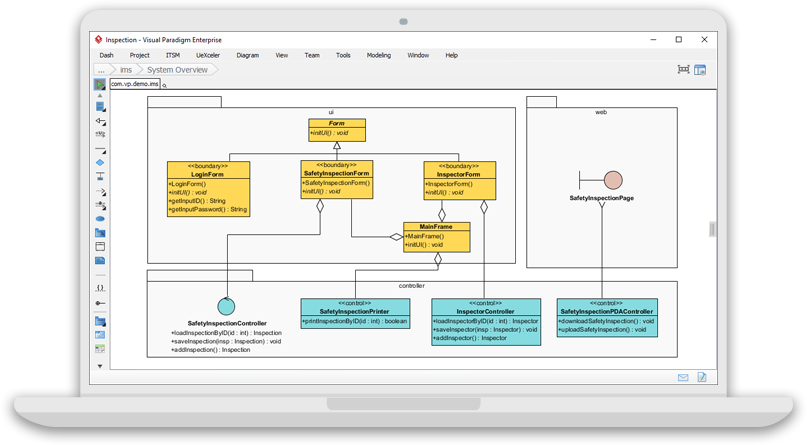
Overview
Launched in 2004, the Community Edition provides professional-grade UML modeling software completely free for non-commercial use. Designed for students, educators, researchers, and hobbyists who need serious modeling capabilities without budget constraints.
Diagram Capabilities
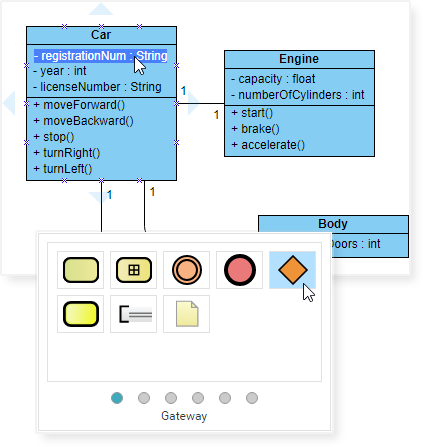
Design API with the Class Diagram Tool
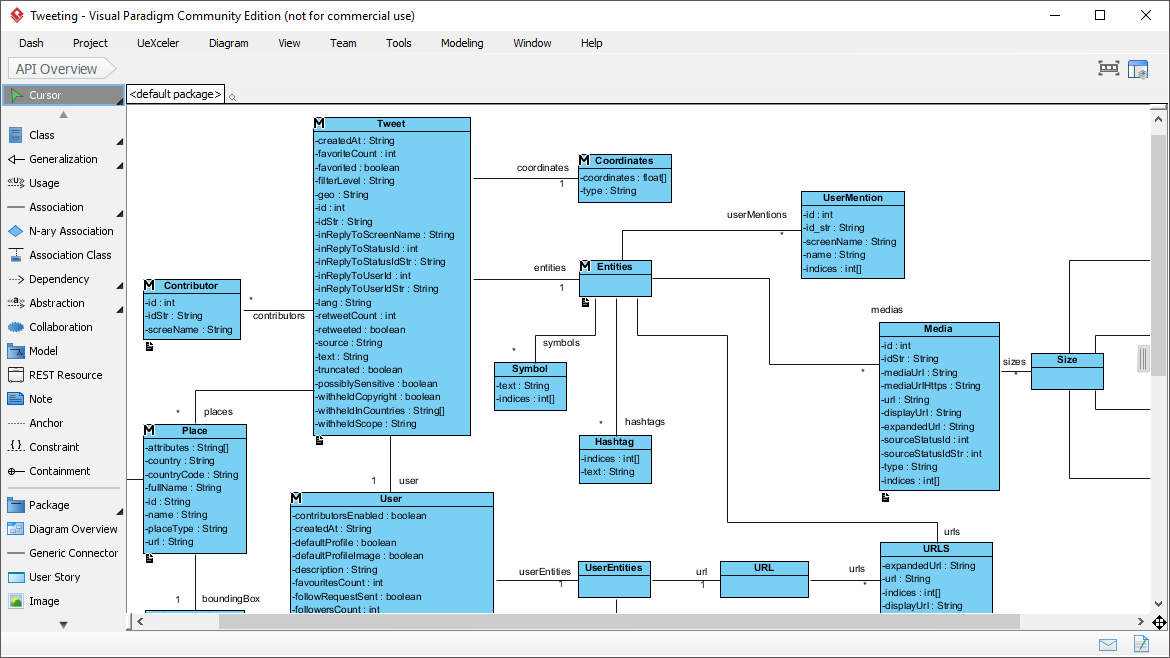
With no redundant widgets on the screen, you can design freely in a large diagram editor.
-
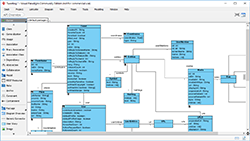 Class Diagram – Design API structures and relationships
 -
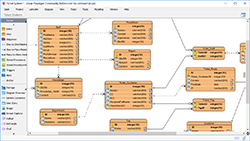 Entity Relationship Diagram – Model database schemas
 -
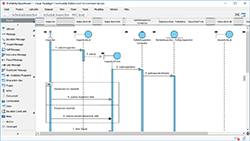 Sequence Diagram – Visualize object interactions over time
 -
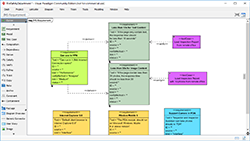 Requirement Diagram – Capture and manage system requirements
 -
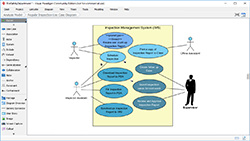 Use Case Diagram – Map user interactions with system functionality
Key Strengths
✅ True Model-Driven Architecture
-
Model Explorer: Centralized repository for all model elements, organized hierarchically [8, 9]
-
Element Reusability: Define a
Userclass once; reference it in Class, Sequence, and Deployment diagrams simultaneously -
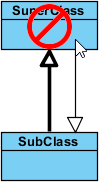
Syntax Checking: Real-time validation ensures your diagrams comply with UML 2.x specifications
-
Sub-diagrams & Abstraction: Break complex systems into manageable, linked views
✅ Engineering-Grade Capabilities
-
Code generation from UML models (forward engineering)
-
Reverse engineering: Import existing code to generate UML diagrams
-
Database design with ERD support and SQL script generation
-
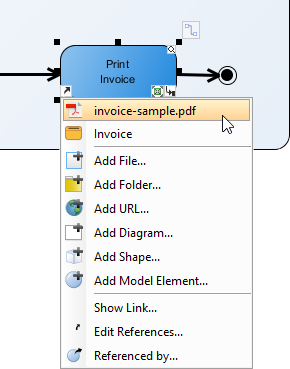
Requirement traceability: Link use cases to test cases and implementation artifacts
✅ Comprehensive UML 2.x Support
Draw any of the 13 official UML 2.x diagram types:
-
Class Diagram
-
Use Case Diagram
-
Sequence Diagram
-
Activity Diagram
-
State Machine Diagram
-
Component Diagram
-
Deployment Diagram
-
Package Diagram
-
Communication Diagram
-
Timing Diagram
-
Interaction Overview Diagram
-
Object Diagram
-
Composite Structure Diagram
Plus ERD, SysML, and BPMN (in paid editions).
✅ Cross-Platform & Offline Ready
-
Native applications for Windows, macOS, and Linux
-
Works fully offline after installation
-
Local file storage with optional cloud sync
Limitations (Free Edition)
-
Output images include a subtle watermark
-
Advanced features like team collaboration, BPMN, and report generation require paid upgrade
-
Steeper learning curve due to professional-grade feature set
🌐 VP Online Free Edition
Overview
VP Online is a browser-based diagramming platform designed for speed, accessibility, and zero-configuration use. Perfect for quick sketches, collaborative brainstorming, and presentation-ready visuals.
Finding a Free UML Tool?
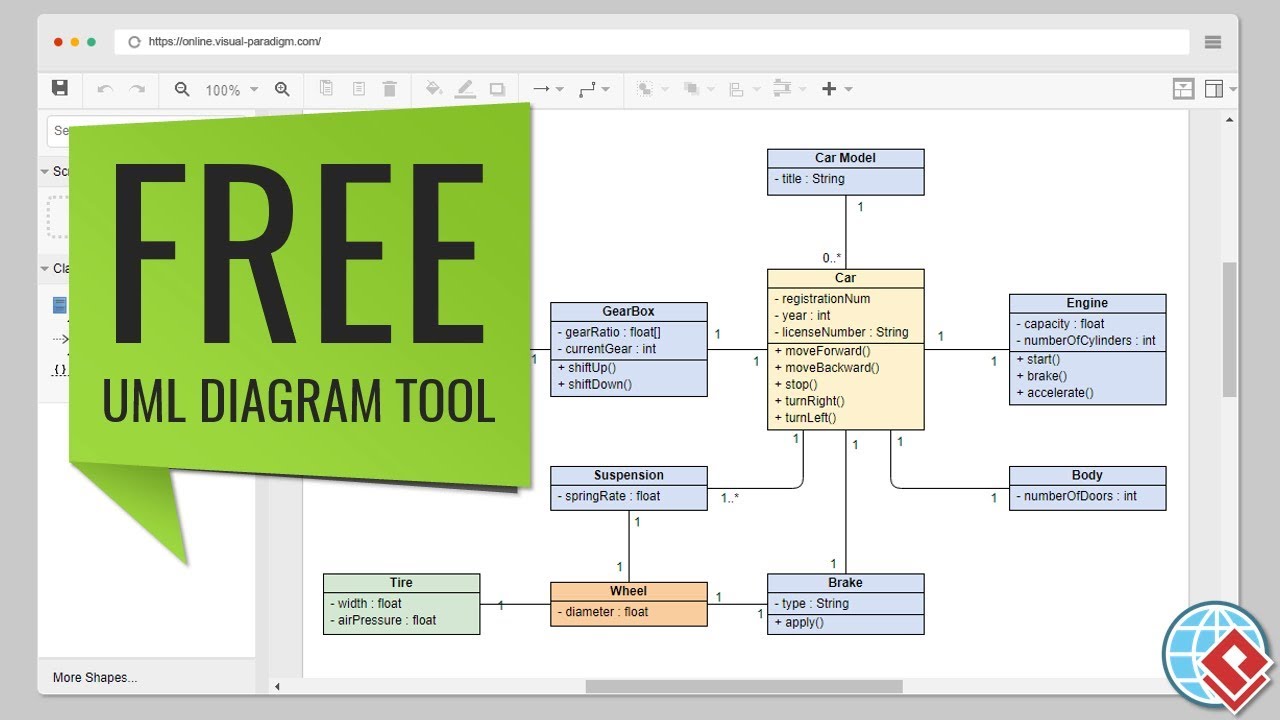
Visual Paradigm Online (VP Online) Free Edition is a free online drawing tool that supports UML, ERD, Organization Chart, etc. It features a simple, intuitive yet powerful UML editor, which allows you to create professional UML diagrams smoothly and quickly.
✅ No ads
✅ No limited period of access
✅ No limitations on number of diagrams or shapes
✅ You own the diagrams you create for personal and non-commercial purposes
Key Strengths
✅ Instant Access & Zero Setup
-
No download or installation required
-
Runs in any modern web browser
-
Start diagramming in seconds — ideal for workshops, meetings, or impromptu design sessions
✅ Intuitive Drag-and-Drop Interface
-
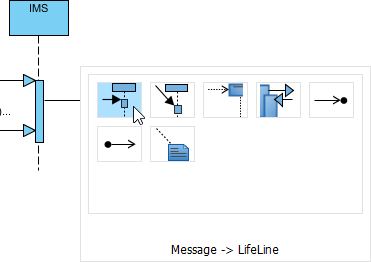
Resource Catalog: Smart shape suggestions based on context
-
Auto-attached connectors that never “float away”
-
Alignment guides and distribution tools for pixel-perfect layouts
-
Hundreds of pre-built templates and examples
✅ Flexible Output & Sharing
-
Export diagrams as PNG, JPG, SVG, GIF, or PDF
-
Google Drive integration for cloud storage and team sharing
-
Embed diagrams in wikis, documentation, or presentations with simple links
-
No watermarks on exported files (for free edition)
✅ Broad Diagram Support
While focused on UML, VP Online also supports:
-
Entity Relationship Diagrams (ERD)
-
Organization Charts
-
Floor Plans
-
Business Concept Diagrams
-
ITIL Process Maps
-
Mind Maps and Flowcharts
Limitations
-
Requires active internet connection
-
Shapes are primarily visual — limited model intelligence or cross-diagram consistency
-
No code generation, reverse engineering, or advanced validation
-
Diagram Navigator manages files visually, not as interconnected model data [3]
🎯 Drawing Professional UML Diagrams Quickly and Freely
Free UML Editor
Free UML Diagram tool for personal use:
-
✅ No limited number of diagrams and shapes
-
✅ No limited period of access
-
✅ No ads
-
✅ Output and share as PNG/JPG/GIF/SVG/PDF
Powerful UML Editor
UML diagramming can be simple and fun. Features include:
-
Drag-to-create shapes and connectors
-
Well-attached connectors (no separating apart)
-
Draw your own diagrams with custom shapes
-
Hundreds of diagram examples and templates
Impressive UML Diagrams
Precisely position shapes and connectors with alignment guides. Format your UML diagrams with:
-
Shape and line formatting
-
Font style options
-
Shape alignment and distribution tools
-
Embed images and URLs
-
Shadow effects and more
📋 Key Features and Benefits
-
Unlimited period of access
-
Unlimited number of diagrams
-
Unlimited number of shapes
-
Support for UML Tool, ERD editor, Org. Chart editor, Floor Plan tool, ITIL, Business Concept Diagram
-
Upgrade path to paid editions for more diagram types and advanced features
-
Cross-platform: Windows, Mac, Linux. Compatible with all web browsers
-
Easy to use: Create and connect shapes with drag and drop. Connectors snap to shapes and never separate.
-
Rich formatting: Apply different options for shapes and lines, solid and gradient paint, 40+ connector types, RTF caption, font options, shadow effects, etc.
-
Custom diagrams: Draw your own diagrams with your own shapes
-
Visio compatibility: Visio drawing and stencil import support
-
Export flexibility: Print, export and share your work in PNG, JPG, SVG, GIF, PDF formats
-
Quick start: Hundreds of diagram examples and templates to get started immediately
-
Cloud integration: Google Drive integration for easy storage and sharing
-
Rich content: Easily embed text, external images and web links to diagrams
🔍 But Don’t Take Our Word For It
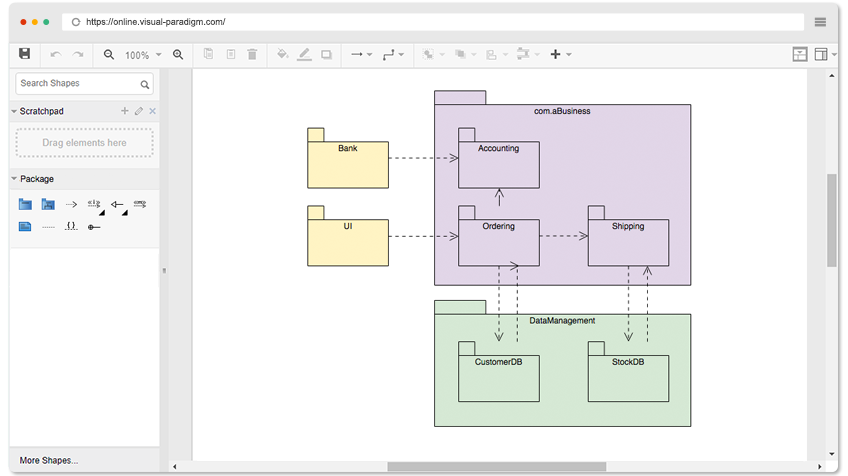
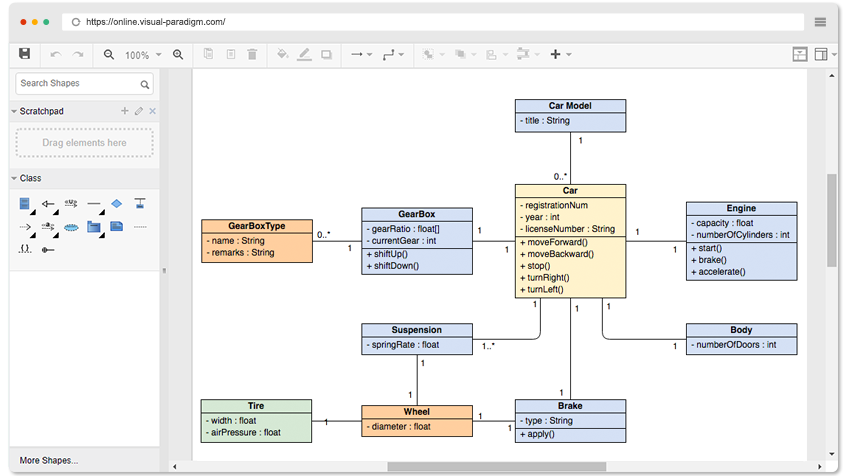
Try it yourself. Browse the UML Diagram examples below and click Open Diagram to open and edit. You will see for yourself that it is everything we say it is, or perhaps more.
Available diagram types:
-
Class Diagram
-
Use Case Diagram
-
Sequence Diagram
-
Activity Diagram
-
Deployment Diagram
-
Component Diagram
-
State Machine Diagram
-
Package Diagram
📊 Comprehensive Feature Comparison
| Feature [3, 4, 5, 6, 7, 8, 9, 10, 11, 12] | Desktop Community Edition | VP Online Free Edition |
|---|---|---|
| Core Paradigm | Model-driven: elements are reusable data objects | Canvas-driven: shapes are visual representations |
| Platform | Installable on Windows, macOS, Linux | Web-based; runs in any browser |
| Primary Use | Professional-grade modeling with syntax checking | Quick, intuitive diagramming |
| Internet Required | ❌ Works offline after install | ✅ Requires active connection |
| Project Structure | Model Explorer manages hierarchical, reusable data [8, 9] | Diagram Navigator manages separate visual files [3] |
| Consistency | Change an element once → updates everywhere automatically | Changes are manual; no cross-diagram synchronization |
| Syntax Validation | Real-time UML 2.x compliance checking | Basic shape connection rules only |
| Engineering Features | Code generation, DB reverse engineering, ORM [4, 5] | Visual communication only; no engineering output |
| Diagram Coverage | All 13 UML 2.x diagrams + ERD + SysML | UML, ERD, Org Charts, Floor Plans, Flowcharts |
| Complexity Handling | Ideal for large systems with traceability needs | Best for quick flowcharts, mind maps, basic UML |
| Collaboration | File-based sharing; team features in paid editions | Real-time co-editing, comments, Google Drive sync |
| Storage | Local files on your computer | Cloud-based (Google Drive integration) |
| Output | Images (watermarked in free edition) | Images (PNG, JPG, SVG, PDF) – no watermark |
| Learning Curve | Moderate to steep (professional toolset) | Gentle (intuitive, beginner-friendly) |
| Best For | System architecture, software design, academic research | Brainstorming, documentation, presentations, teaching |
Key Differences Explained
🔹 Modeling Intelligence: The Community Edition is a true modeling tool. It includes advanced features like element reuse (changing a class name in one place updates all diagrams) and syntax checking.
🔹 Convenience: VP Online is built for speed and zero configuration. It lacks the deep engineering features of the desktop app but offers an easier drag-and-drop interface for users who just need a quick diagram.
🔹 UML Coverage: While the online version covers major UML types like Class and Sequence diagrams, the Desktop Community Edition supports the full suite of 13 UML 2.x diagram types [1, 3, 7, 8, 9, 14].
🎯 Use Case Recommendations
Choose Desktop Community Edition when you need:
-
🎓 Academic projects requiring formal UML compliance
-
🔧 Software design with code generation or reverse engineering
-
🗃️ Complex systems needing requirement traceability
-
🔄 Multiple diagrams sharing the same model elements
-
💾 Offline work or local file management
Choose VP Online Free Edition when you need:
-
⚡ Quick diagrams for meetings or documentation
-
👥 Collaborative brainstorming with remote teams
-
🌍 Access from any device without installation
-
🎨 Presentation-ready visuals with minimal effort
-
🧭 Simple flowcharts, org charts, or basic UML sketches
Pro Workflow: Use Both Together
For teams or individuals who need both rigor and agility [11, 12]:
-
Brainstorm in VP Online: Rapidly sketch ideas with stakeholders using the intuitive online editor
-
Refine in Desktop: Import or recreate key diagrams in Community Edition to add model intelligence
-
Engineer & Document: Leverage desktop features for code generation, validation, and formal documentation
-
Share Outputs: Export polished visuals from either tool for presentations or reports
Desktop’s element referencing enables traceability across artifacts — a capability absent in pure diagramming tools.
✅ Pros and Cons Summary
Visual Paradigm Community Edition (Desktop)
| Pros | Cons |
|---|---|
| ✅ True model-driven architecture with element reuse | ❌ Watermarked exports in free edition |
| ✅ Full UML 2.x specification support + syntax checking | ❌ Steeper learning curve for beginners |
| ✅ Code generation & reverse engineering capabilities | ❌ Requires download and Java runtime |
| ✅ Works offline; local file control | ❌ Advanced collaboration requires paid upgrade |
| ✅ Trusted by academia and enterprise (paid editions) | ❌ Interface can feel dense for simple tasks |
VP Online Free Edition
| Pros | Cons |
|---|---|
| ✅ Zero installation; instant browser access | ❌ Requires active internet connection |
| ✅ Intuitive drag-and-drop; beginner-friendly | ❌ No model intelligence or cross-diagram consistency |
| ✅ Real-time collaboration & Google Drive sync | ❌ Limited to visual diagramming (no engineering) |
| ✅ Clean exports without watermarks | ❌ Fewer advanced UML diagram types |
| ✅ Excellent for teaching, brainstorming, docs | ❌ Less suitable for complex system modeling |
🏆 Why Visual Paradigm? Eight Compelling Reasons
Reason 1: Comprehensive UML Support
UML modelling tool free for all sorts of non-commercial purposes. Supporting the 13 UML 2.x diagrams

We are adopted by over 1 Million installations around the globe, and still growing. Many professionals use the paid editions of Visual Paradigm daily to draw professional UML and ERD diagrams for system and database design & analysis.
Reason 2: Trusted by IT Professionals and Large Organizations
Many blue-chip organizations, IT companies, consultants, universities, NGOs, and government units throughout the world have adopted Visual Paradigm (paid editions).

Reason 3: High Quality – Award-Winning
We are not just trusted by the best-known enterprises worldwide, but also recognized by the industry. Visual Paradigm is a multiple international awards winner.

Reason 4: Most Widely-Used Modeling Platform for Academia
The most widely-used UML tool for academia, adopted by thousands of Universities and Colleges worldwide.

Reason 5: Huge Collection of FREE Learning Resources
(Supported by VP Community Circle)
Hundreds of UML and ERD examples ready for importing into Visual Paradigm for instant experimentation or to get started with your own UML model. All for FREE.
Reason 6: Upgrade Path to Commercial Editions
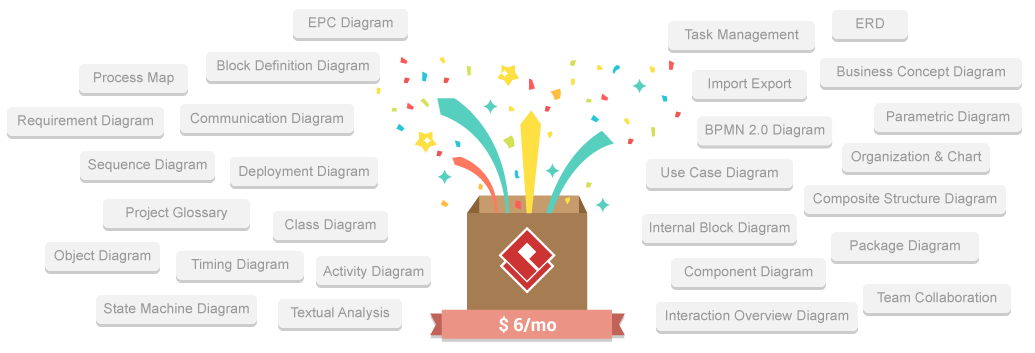
Easy upgrading for a huge set of additional features (BPMN, team collaboration support, etc.) and for commercial use, starting at $6/month.
Reason 7: Active User Forum for Support and Exchange
Support, share, and exchange your ideas with other people in Visual Paradigm’s active user forum.

Reason 8: Cross-Platform, User-Friendly, Fast & Responsive
Visual Paradigm runs on different platforms such as Windows, Linux, and Mac. Its intuitive interface and powerful modeling features make modeling fast and easy!

🚀 Getting Started Guide
Download Visual Paradigm Community Edition (Desktop)
📥 Download from visual-paradigm.com/download/community.jsp
System Requirements:
-
Java 8 or higher installed
-
Windows 7+/macOS 10.12+/Linux (with Java runtime)
-
2GB RAM recommended (4GB+ for large projects)
-
500MB disk space for installation
First Steps:
-
Install and launch the application
-
Create a new project → Select “UML Project”
-
Use the Model Explorer to organize your elements
-
Right-click in diagram canvas → Select diagram type to create
-
Explore templates via Tools > Resource Catalog
Start Using VP Online (Free Edition)
🌐 Open at online.visual-paradigm.com/diagrams.jsp
No account required to start!
First Steps:
-
Visit the URL in any modern browser
-
Click “Create New Diagram” or browse templates
-
Drag shapes from Resource Catalog onto canvas
-
Connect elements using smart connectors
-
Export via File > Export > [Format]
Free Learning Resources
📚 VP Community Circle – Hundreds of free UML/ERD examples and templates
🎓 Visual Paradigm Documentation – Official user guides and tutorials
💬 Community Forum – Ask questions and share experiences with other users
🏁 Final Verdict
Visual Paradigm delivers exceptional value with both free offerings — but they serve fundamentally different purposes.
🔹 For serious modeling work — system design, academic research, or projects requiring traceability and engineering output — the Community Edition (Desktop) is unmatched in the free tool category. Its model-driven approach, syntax validation, and code generation capabilities place it in professional territory.
🔹 For quick visuals, collaboration, or learning basics — meeting notes, documentation sketches, or introductory UML exercises — VP Online offers unparalleled convenience and accessibility.
🎯 Bottom Line: If you’re asking “Which should I use?”, start with this question: “Do I need this diagram to be part of a larger, interconnected model — or is it a standalone visual?”
• Model → Desktop Community Edition
• Diagram → VP Online Free Edition
Both tools reflect Visual Paradigm’s commitment to democratizing professional modeling capabilities. With over 1 million installations worldwide and adoption by leading universities and enterprises [6, 10], the platform’s quality and reliability are well-established.
- 📚 Reference List
- Online Diagram Editor Features: Official documentation detailing VP Online’s diagramming capabilities, interface design, and use cases for visual communication.
- VP Online Desktop Accessibility: Guide to cross-platform browser compatibility, performance considerations, and accessibility features for the web-based editor.
- Model Explorer vs. Diagram Navigator: Community forum discussion clarifying the structural differences between desktop’s model-centric and online’s diagram-centric project organization.
- Visual Modeling Tool Overview: Comprehensive feature list for Visual Paradigm’s model-driven approach, including element reuse, syntax checking, and engineering integrations.
- Visual Paradigm User Guide: Model Elements: Official documentation explaining how model elements function as reusable data objects across multiple diagrams in the desktop application.
- UML Tool Solution Page (CN): Chinese-language resource detailing UML modeling capabilities, use cases, and enterprise adoption of Visual Paradigm tools.
- Visio Alternative: Why VP Online?: Independent review comparing VP Online to Microsoft Visio, highlighting ease of use, collaboration features, and UML support.
- User Guide: Organizing Work with Model Explorer: Step-by-step instructions for using the Model Explorer to structure, navigate, and manage complex modeling projects in the desktop edition.
- User Guide: Model Element Reference: Technical documentation defining model elements, their properties, and how they enable consistency across diagrams in Visual Paradigm Desktop.
- Visual Paradigm Online: Ultimate Cloud-Based Platform: Detailed user review covering VP Online’s strengths for remote collaboration, education, and lightweight diagramming workflows.
- Cloud-Based Diagramming Tool Solution: Official page describing VP Online’s architecture, security, integration options, and hybrid workflows with desktop tools.
- Diagramming Tool on the Cloud – Features: Feature breakdown of VP Online’s collaboration tools, export options, template library, and upgrade paths to commercial editions.
- Free Online Diagram Software: Broader guide covering all diagram types supported by Visual Paradigm’s free online platform.
- Visual Paradigm Online: Ultimate Diagramming Tool: Blog post discussing use cases for businesses and individuals, with feature comparisons.
- ERD Tool – Visual Paradigm: Resource for Entity Relationship Diagram modeling using Visual Paradigm’s free and paid editions.
- UML Resources – University of Waterloo: Academic resource page with UML learning materials and tool recommendations, including Visual Paradigm.
💡 Quick Start Checklist
□ Need engineering-grade modeling? → Download Community Edition
□ Need quick diagrams or collaboration? → Open VP Online
□ Learning UML? → Explore free templates at circle.visual-paradigm.com
□ Need help? → Visit forums.visual-paradigm.com