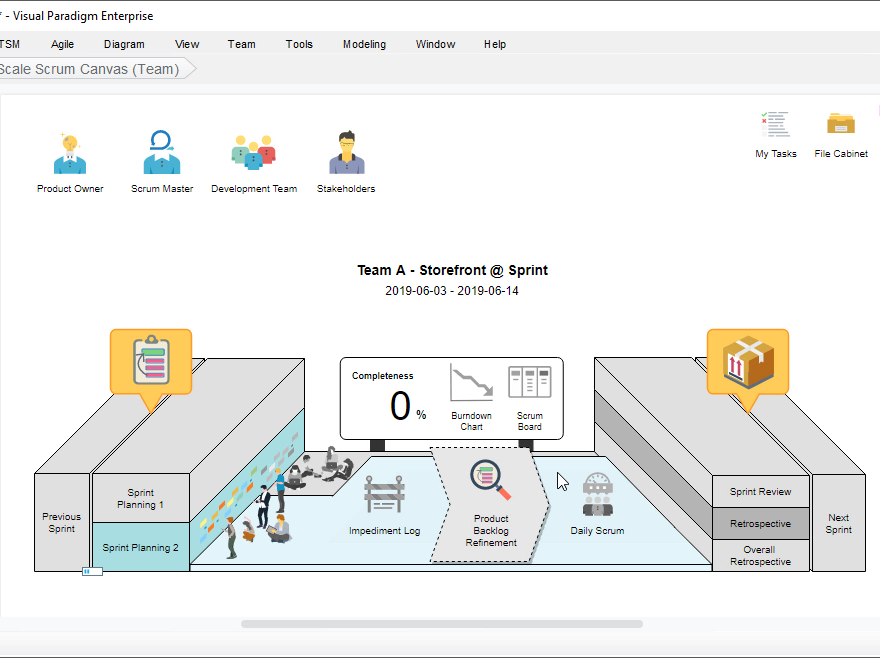
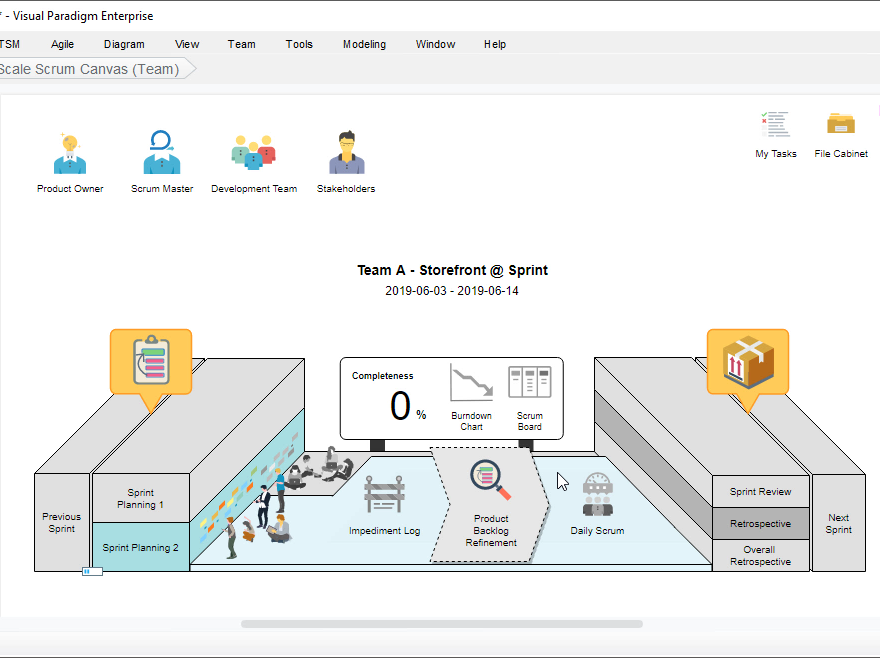
LeSS was created by Bas Vodde and Craig Larman from practical experience in scaling up Scrum, founded as the LeSS Company in 2014. The “More with LeSS” principle is at the heart of LeSS (Large Scale Scrum). Complex product development doesn’t require complex solutions. It requires a deep understanding of the essence of the problems, which can then be solved with simpler solutions.
Continue reading
शुरुआती उद्यमों के लिए शक्तिशाली मुफ्त उपकरण: कोडिंग के बिना ऑनलाइन फॉर्म-आधारित एप्लिकेशन
According to Deloitte research, “digitally advanced small businesses” earned more revenue per employee, were more likely to create jobs. The truth is, those who don’t embrace technology may be left behind! And yet, four of five U.S. small businesses aren’t taking full advantage of digital tools available to them. Today I would like to introduce an easy form builder for generating database applications without any IT technical background or coding, such as survey form, student questionnaire, order form, registration form and etc.
Continue reading
PERT चार्ट को RACI भूमिकाओं के साथ टास्क मैनेजर में एकीकृत करें
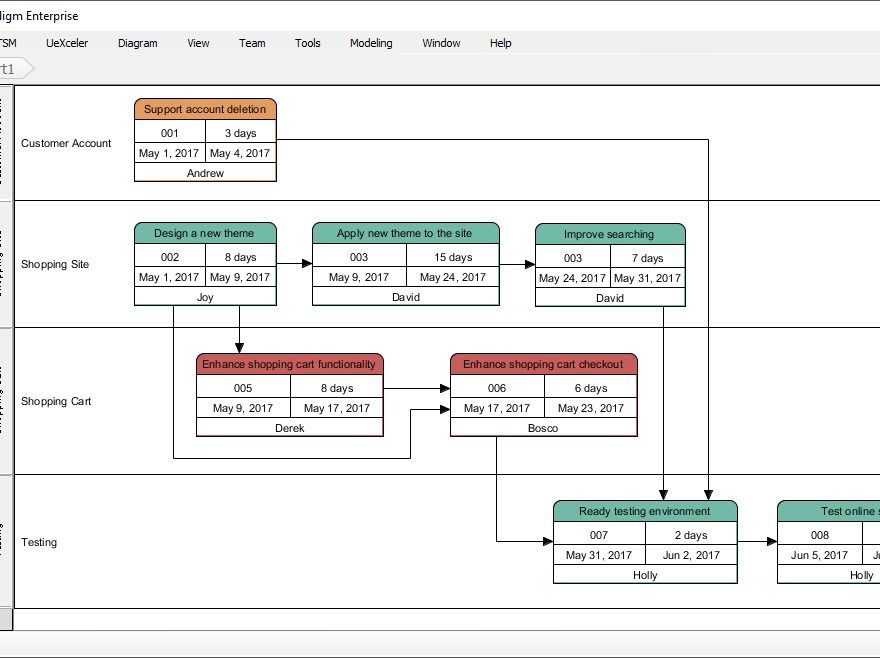
Today I would like to use Visual Paradigm to demonstrate how to perform task planning for team members who will take up the RACI roles and these tasks in the Enhanced PERT Chart can automatically be assigned to the automated task manager called “Tasifier” for project management. A traditional PERT chart is a project management tool used to schedule, organize, and coordinate tasks within a project. The enhanced PERT Chart tool adds four additional features for integrating with different Visual Paradigm building blocks. You can do all these within an enhanced PERT Chart modeler.
Continue reading
आपकी एजाइल टीम: बहुत बड़ी या बहुत छोटी?
Most Agile and Scrum training courses refer to a 7 +/- 2 rule, that is, agile or Scrum teams should be 5 to 9 members. Scrum enthusiasts may recall that the Scrum guide says Scrum teams should not be less than 3 or more than 9. Where does this thumb rule come from? and Why?
Continue reading
DMAIC कार्यान्वयन योजना कैसे बनाएं?
DMAIC refers to a data-driven quality strategy for improving processes and is an integral part of the company’s Six Sigma Quality Initiative. DMAIC is an acronym for five interconnected phases: Define, Measure, Analyze, Improve, and Control. All of the DMAIC process steps are required and always proceed in the given order.
Continue readingLeSS फ्रेमवर्क क्या है? स्क्रम बनाम LeSS बेसिक बनाम LeSS ह्यूज
LeSS is a lightweight, Agile framework for scaling Scrum to more than one team. Starting in 2005 Bas Vodde and Craig Larman developed the LeSS framework after using Scrum principles and rules on large scale projects. Their goal was to develop large scale projects successfully while staying within the constraints of Scrum.
Continue reading
व्यवसाय मॉडल कैनवास — मुफ्त ऑनलाइन सॉफ्टवेयर के साथ उदाहरणों के माध्यम से सीखें
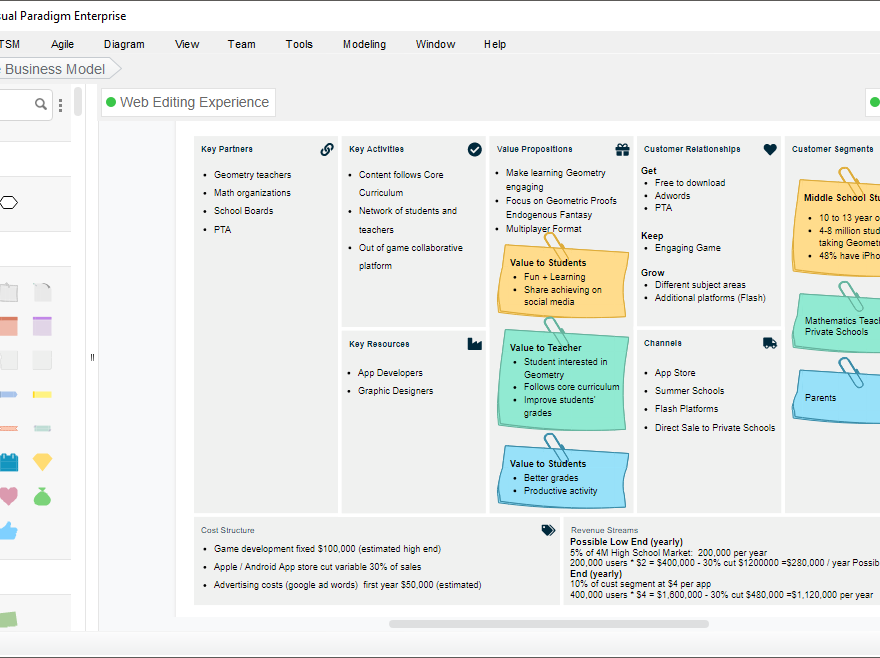
Business Model Canvas is a strategic and business management template for developing new or documenting existing business models. It is a visual chart with elements describing a firm’s or product’s value proposition, infrastructure, customers, and finances.
Continue reading
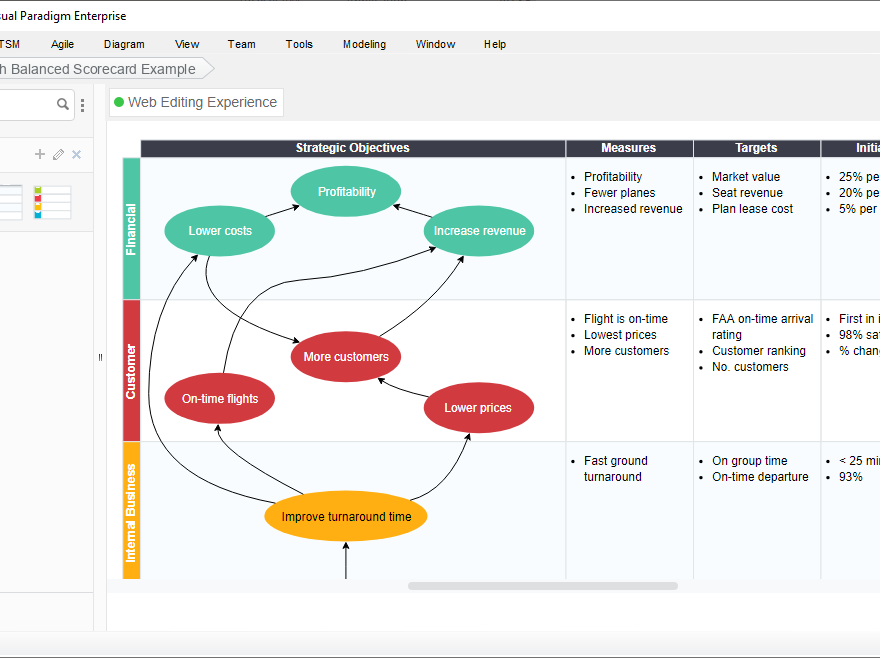
रणनीतिक योजना रणनीति मानचित्र और संतुलित लक्ष्य कार्ड के साथ
A strategy map developed by Robert S. Kaplan and David P. Norton as part of their Balanced Scorecard framework for strategic planning and management. A strategy map is a visual representation of a company’s overall objectives and how they relate to one another on a single page.
Continue reading
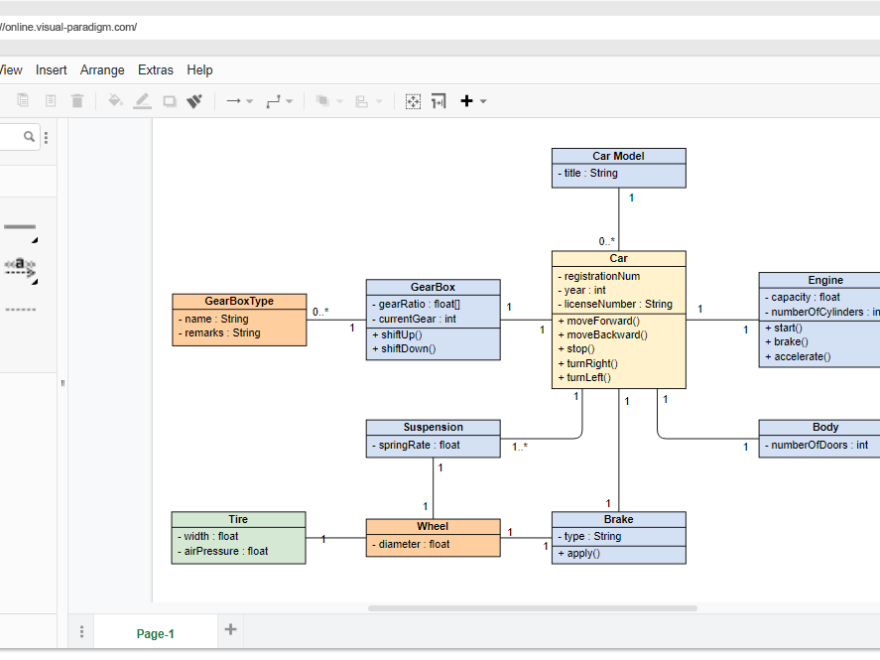
14 प्रकार के UML आरेख के लिए एक व्यापक मार्गदर्शिका
The Unified Modeling Language is a standardized general-purpose modeling language and nowadays is managed as a de facto industry standard by the Object Management Group (OMG). UML includes a set of graphic notation techniques to create visual models for software-intensive systems. In UML 2.2 there are 14 types of UML diagrams, which are divided into two categories
Continue reading
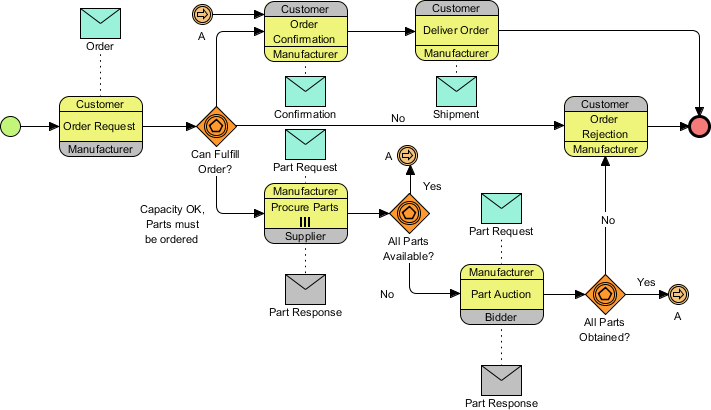
BPMN के लिए एक व्यापक गाइड
BPMN stands for Business Process Modeling Notation. BPMN is very similar to the concept of flowcharting that has been around since the 1980s. Like flowcharting BPMN modeling has the aim of allowing a person to map a workflow in such a way that it can be understood easily by other interested parties.
Continue reading