


Note: This guide reflects the current state of ArchiMate 4 as a pre-release specification (often referred to as ArchiMate Next or ArchiMate 4 Draft), based on official announcements from The Open Group and early adopter implementations—most notably Visual Paradigm 18.0 Enterprise Edition. The official release of ArchiMate 4 is expected in Q2 2026, with the current standard remaining ArchiMate 3.2 (2022).
🔹 Introduction: Why ArchiMate 4?
ArchiMate® is the open, vendor-neutral enterprise architecture (EA) modeling language developed by The Open Group. It enables organizations to describe, analyze, and visualize complex relationships across business, IT systems, and infrastructure.
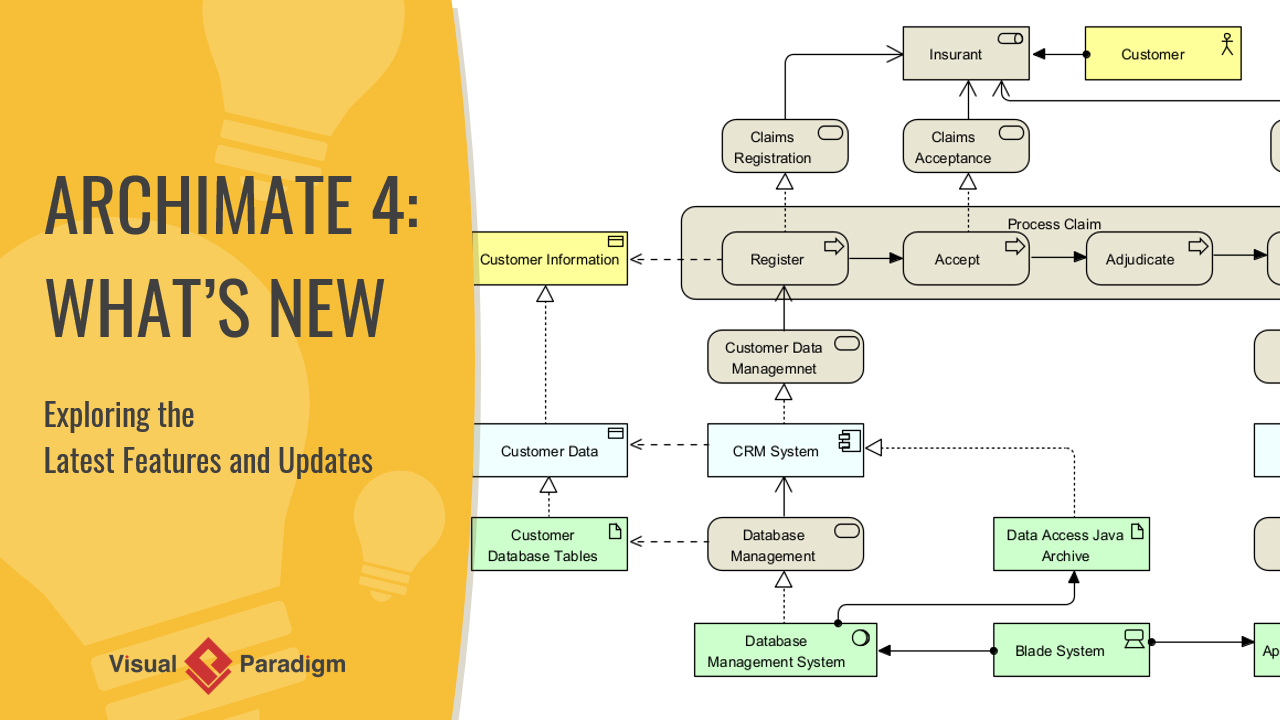
With ArchiMate 4, the language takes a bold step toward simplicity, clarity, and stakeholder alignment, guided by the principle:
“Simplicity over Comprehensiveness.”
This evolution isn’t about adding more features—it’s about removing noise, reducing redundancy, and focusing on what truly matters: driving architecture through goals, outcomes, and stakeholder needs.
✅ Key Drivers Behind ArchiMate 4
-
Simplify for the 80%: Reduce cognitive load for everyday modeling tasks.
-
Center on Motivation: Make goals and outcomes the foundation of architectural decisions.
-
Eliminate Redundancy: Consolidate overlapping concepts and obsolete constructs.
-
Enable Precision Without Complexity: Introduce formal constraints (e.g., multiplicity) without shifting to instance-level modeling.
🔹 The Big Shift: Introducing the ArchiMate Hexagonion
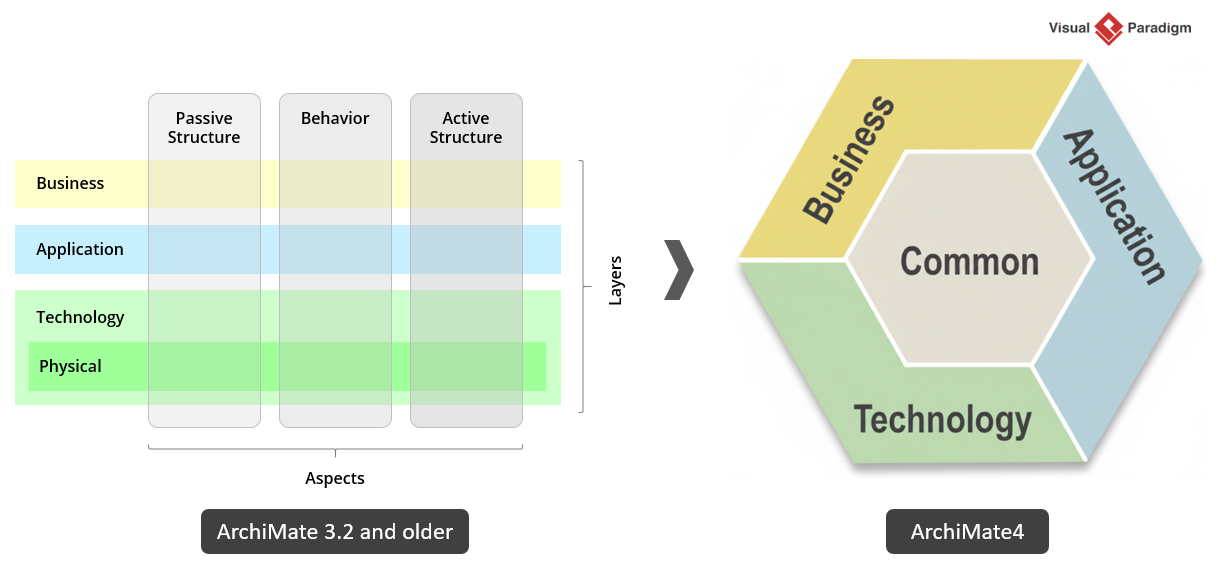
The most transformative change in ArchiMate 4 is the visual and conceptual reorganization of the metamodel—from the traditional 3×3 matrix to the ArchiMate Hexagonion.
🔄 From Layers to Domains
-
“Layer” → “Domain”: The rigid notion of hierarchical layers (Business → Application → Technology) is replaced with flexible domains.
-
This avoids implying forced dependencies or strict top-down structures, reflecting modern, agile, and cross-functional enterprise environments.
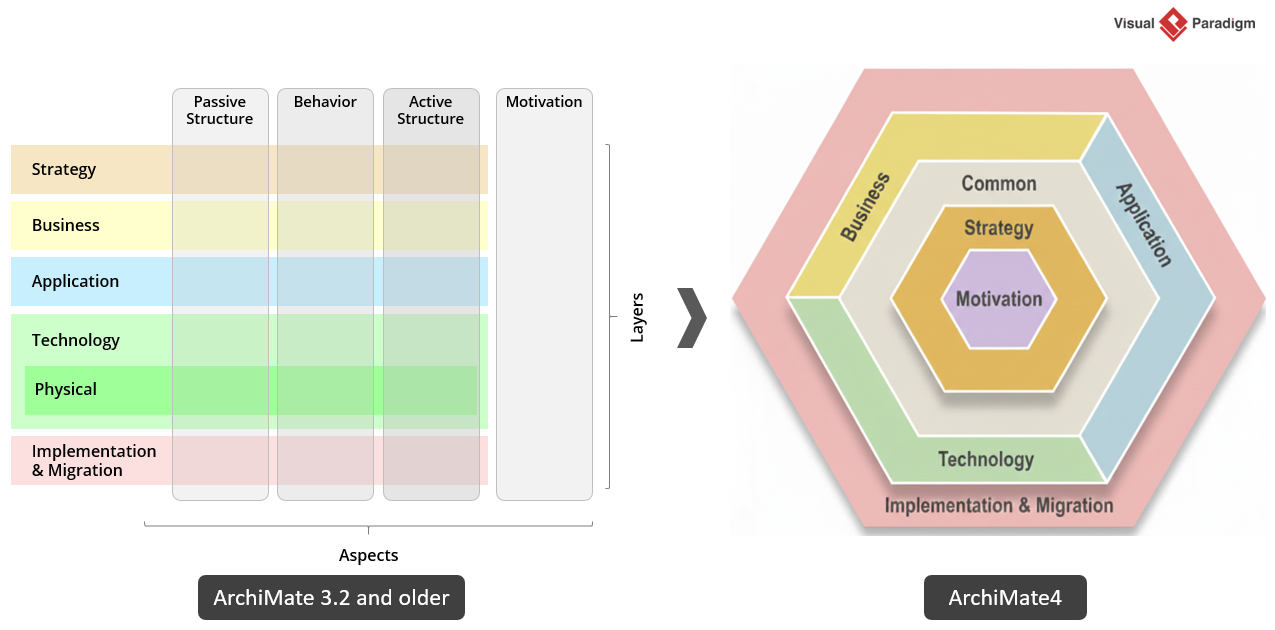
🌟 Motivation at the Core
-
The Motivation Domain is now central to the Hexagonion, surrounded by:
-
Strategy (direction and intent)
-
Business, Application, Technology (the operational core)
-
Implementation & Migration (evolution and transition)
-
This design reflects a fundamental truth: Enterprise architecture is not about systems—it’s about achieving goals.
🧩 The Operational Core: Unified Domains
-
Business, Application, and Technology domains are no longer siloed.
-
They are integrated into a cohesive Operational Core, emphasizing how business capabilities, application services, and technical components work together.
📌 Why It Matters
-
Better models for cross-domain integration.
-
Easier communication with executives and non-technical stakeholders.
-
Supports goal-driven architecture from day one.
🔹 Streamlined Elements: Less to Learn, More to Gain
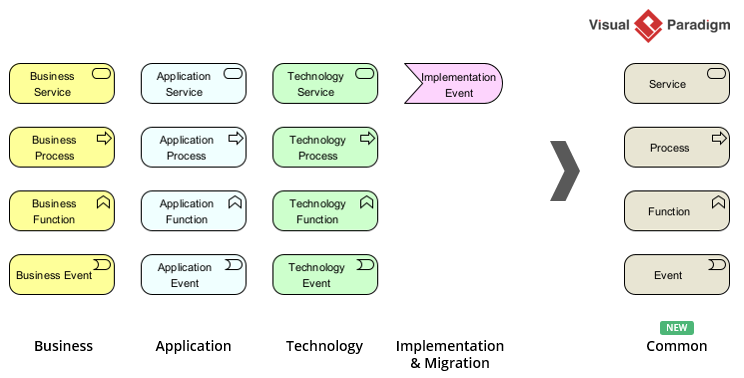
ArchiMate 4 reduces complexity by merging redundant or overlapping elements into generic, reusable types.
✅ Unified Behavior Elements
| Old (ArchiMate 3.2) | New (ArchiMate 4) |
|---|---|
| Process (Business) | ✅ Process (universal) |
| Service (Application) | ✅ Service (universal) |
| Function (Technology) | ✅ Function (universal) |
| Event (Implementation) | ✅ Event (universal) |
All behaviors are now domain-agnostic—use the same element across domains.
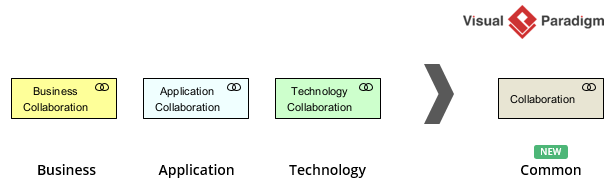
✅ Unified Collaboration
-
Business, Application, Technology Collaboration → merged into a single Collaboration element.
-
Supports modeling partnerships and interactions regardless of domain.
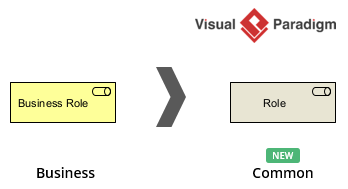
✅ Generic Role
-
Replaces “Business Role”.
-
Can be assigned to any active structure element (e.g., Business Actor, Application Component).
-
Increases reusability and consistency.
✅ Common Domain (New)
-
A new Common Domain houses generic elements (e.g., Event, Process, Service) that can be used across all domains.
-
Enables reuse, reduces duplication, and simplifies tooling.
💡 Benefit: Fewer elements to memorize. Easier onboarding. More consistent models.
🔹 Enhanced Relationships: Precision Without Complexity
ArchiMate 4 introduces powerful new capabilities for expressing constraints and relationships—without overcomplicating diagrams.
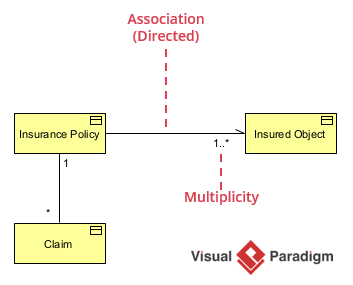
🔢 Multiplicity Support
-
Connectors now support cardinality notation (e.g.,
1..*,0..1,1). -
Example: “A Business Process Realizes exactly one Service” →
1..1.
✅ No need to model instances—this is structural constraint, not instance-level detail.
🚫 Removal of Composition
-
Composition (as in 3.2) has been retired.
-
Replaced by:
-
Aggregation (for part-whole relationships)
-
Grouping (for organizing elements into logical sets)
-
Simplifies metamodel and reduces confusion between aggregation and composition.
🔄 Path Updates
-
Path is now a generic element in the Common Domain.
-
Active structure elements Realize a Path instead of Aggregate it.
-
More semantically accurate: “Realization” reflects how elements fulfill or deliver a capability.
✅ Cleaner semantics. Better alignment with goal-driven modeling.
🔹 Retired Elements: Removing the Noise
ArchiMate 4 removes outdated or redundant constructs to keep the language lean and focused.
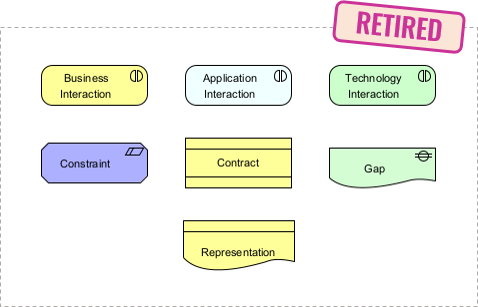
❌ Removed Elements
| Element | Migration Path |
|---|---|
| Interactions (Business/Application/Technology) | Use Collaboration or Event |
| Constraint | Specialization of Requirement |
| Contract | Specialization of Business Object |
| Gap | Replaced by Gap Analysis in strategy context |
| Representation | Use Information or Data Object |
These are not lost—they’re replaced with more expressive, reusable alternatives.
🛠 Migration Tips
-
Retired elements are still viewable in ArchiMate 3.2 models.
-
New models should use generic equivalents (e.g., use
Eventinstead ofImplementation Event). -
Visual Paradigm 18.0 automatically maps legacy elements to their ArchiMate 4 equivalents.
✅ No forced migration. Your existing models remain fully editable.
🔹 Backward Compatibility: No Forced Upgrades
-
ArchiMate 3.2 models are fully supported in ArchiMate 4 environments.
-
You can mix 3.2 and 4.0 elements in the same project.
-
New features (e.g., multiplicity, Common Domain) apply only to new diagrams or newly created elements.
This ensures a smooth, non-disruptive transition when ArchiMate 4 officially launches.
🔹 Visual Paradigm 18.0: First to Support ArchiMate 4 (Pre-Release)
As of February 2026, Visual Paradigm Enterprise Edition 18.0 is the first enterprise-grade tool to offer full, standards-compliant support for ArchiMate 4 in pre-release form.
✨ Key Features in Visual Paradigm 18.0
-
Brand-new ArchiMate 4 diagram editor with a modern, intuitive palette.
-
Native multiplicity support on connectors (1..*, 0..1, etc.).
-
Complete removal of retired elements (no clutter).
-
Full backward compatibility with ArchiMate 3.2 models.
-
Enhanced document generation, Project Publisher, and XMI export/import.
-
Real-time team collaboration with ArchiMate 4 support.
🏆 Visual Paradigm is leading the charge, enabling early adopters to experiment with ArchiMate 4 before the official release.
🔹 Example Use Case: Cross-Domain Integration
Imagine modeling a digital transformation initiative:
-
Goal: Improve customer onboarding time by 50%.
-
Strategy: Launch a new self-service portal.
-
Business Process: Customer Onboarding
-
Application Service: Onboarding Portal Service
-
Technology: Cloud-based API Gateway
-
Constraint: One onboarding process must realize exactly one service.
In ArchiMate 4, this is modeled cleanly using:
-
Common Domain elements (Process, Service, Event)
-
Multiplicity on the realization link
-
Motivation (Goal) at the center
✅ Result: A single, integrated diagram that speaks to business leaders, architects, and developers alike.
🔹 Benefits Summary: Why ArchiMate 4 Matters
| Benefit | Impact |
|---|---|
| Simplified Learning Curve | Easier onboarding for new modelers |
| Goal-Driven Modeling | Aligns architecture with business outcomes |
| Cross-Domain Integration | Better reflects modern, agile enterprises |
| Precise Constraints | Multiplicity enables formal rules without complexity |
| Future-Proof | Designed for maintainability and evolution |
| Tool Readiness | Early support from leaders like Visual Paradigm |
🔚 Conclusion: Prepare for the Future of Enterprise Architecture
ArchiMate 4 (pre-release) is not just an incremental update—it’s a paradigm shift toward clarity, integration, and purpose-driven architecture.
With:
-
The ArchiMate Hexagonion at its core,
-
Simplified, unified elements,
-
Enhanced precision via multiplicity,
-
And early tooling support from Visual Paradigm,
…enterprise architects now have the tools to model smarter, communicate better, and deliver faster.
📅 What’s Next?
-
Q2 2026: Expected official release of ArchiMate 4 by The Open Group.
-
Certifications & Training: Updated materials will follow.
-
Wider Tool Adoption: Expect more vendors to support ArchiMate 4 in late 2026.
🛠 Recommended Action Steps
-
Download Visual Paradigm 18.0 Enterprise Edition (free trial available).
-
Experiment with ArchiMate 4 diagrams—try the Hexagonion, multiplicity, and Common Domain.
-
Update training materials to reflect ArchiMate 4 concepts.
-
Engage with The Open Group for official updates: https://www.opengroup.org/archimate
🔗 Stay informed: Follow The Open Group ArchiMate resources for the latest on the official release.
Final Thought:
“The best architecture isn’t the most complex—it’s the one that gets everyone on the same page, faster.”
— ArchiMate 4, in spirit.
Author: [Your Name]
Organization: [Your Company / Team]
Date: February 2026
Tool Reference: Visual Paradigm 18.0 Enterprise Edition (Pre-Release)
Standards Source: The Open Group ArchiMate Specification (Draft v4.0)
Let me know if you’d like:
-
A PDF version of this guide
-
A slide deck (PPT/Keynote) for presentations
-
A Twitter/X thread summary
-
Or a comparison table of ArchiMate 3.2 vs 4.0
Happy modeling! 🏗️✨
This post is also available in Deutsch, Español, فارسی, Français, English, Bahasa Indonesia, 日本語, Polski, Portuguese, Ру́сский, Việt Nam, 简体中文 and 繁體中文.