
“A business process consists of a set of activities that are performed in coordination in an organizational and technical environment. These activities jointly realize a business goal.”
🎯 Purpose of BPMN
The primary goal of Business Process Model and Notation (BPMN) is to provide a standardized, universally understandable notation for all business stakeholders:
-
Business Analysts: Create initial process drafts
-
Technical Developers: Implement technology to execute processes
-
Business Managers: Monitor and manage operational processes
Key Characteristics:
-
✅ Based on familiar flowcharting techniques
-
✅ Graphical objects represent activities and flow controls
-
✅ Shapes are distinguishable and intuitive for modelers
-
✅ Bridges the gap between process design and executable implementation (BPEL4WS)
Three Application Levels:
| Level | Description |
|---|---|
| Descriptive Process Models | High-level modeling; comfortable for flowchart users |
| Analytic Process Models | Contains concepts commonly covered in BPMN training |
| Common Executable Process Models | Focuses on elements required for executable processes |
📜 Evolution of BPMN
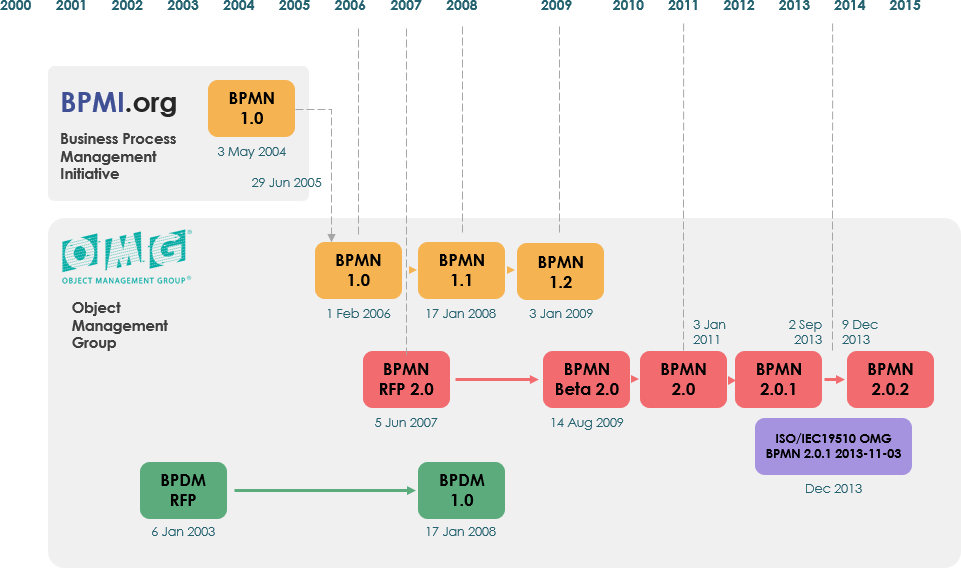
| Version | Date | Organization |
|---|---|---|
| BPMN 1.0 | May 2004 | Business Process Management Initiative (BPMI) |
| BPMN 1.x | Feb 2006 | Object Management Group (OMG) |
| BPMN 2.0 | 2010 | OMG |
| BPMN 2.0.2 | Dec 2013 | ISO/IEC 19510:2013 Standard |
🔷 BPMN Core Elements
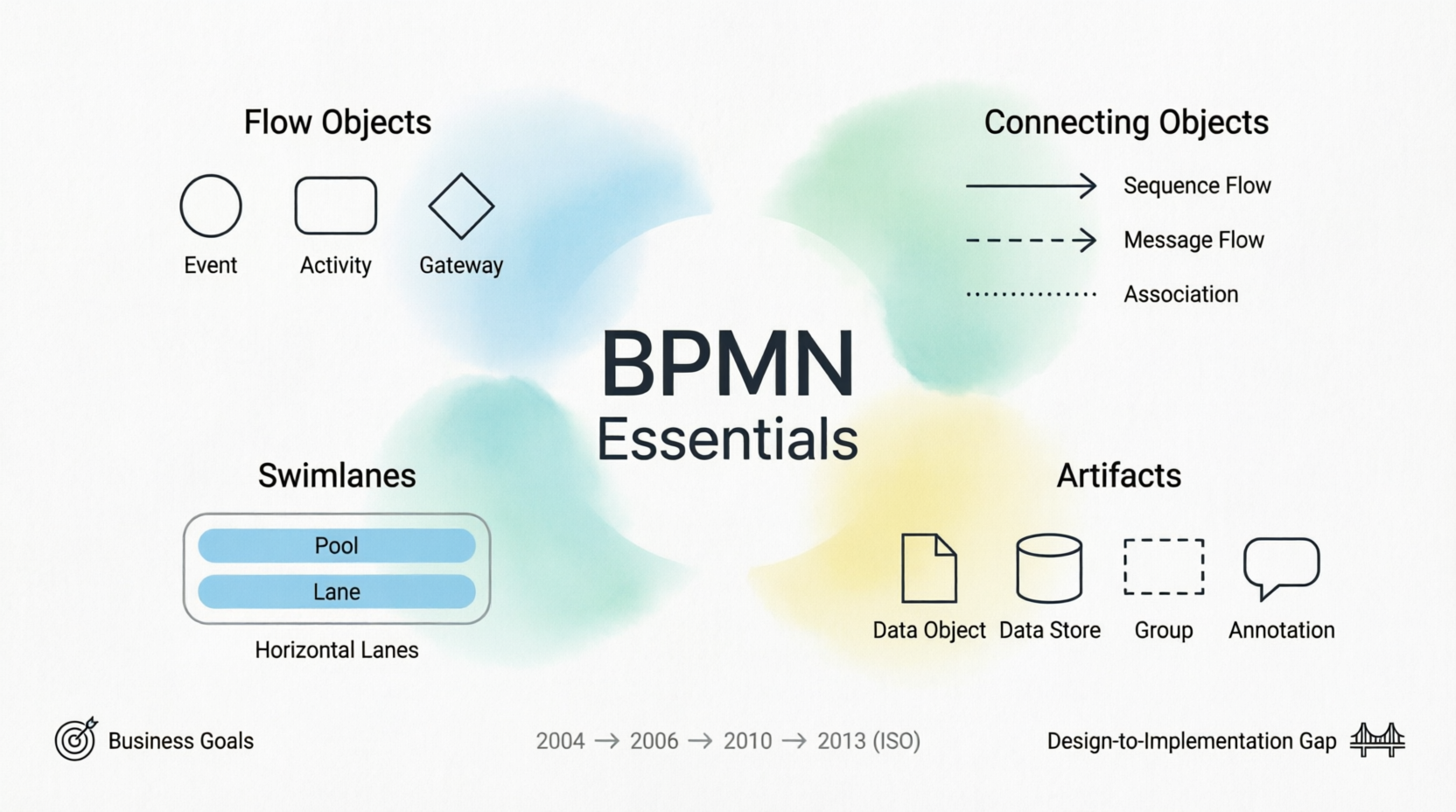
BPMN organizes graphical notation into four fundamental categories to balance simplicity with expressive power:
-
Flow Objects ⚙️
-
Connecting Objects 🔗
-
Swimlanes 🏊
-
Artifacts 📎
⚙️ Flow Objects
The three foundational building blocks of any Business Process Diagram (BPD):
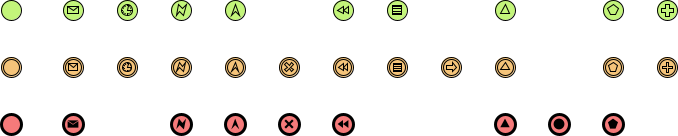
Event ○
Something that happens during a business process, affecting flow with a trigger or result.
-
Represented by a circle with an open center for internal markers
-
Three Types:
-
Start Event: Triggers process initiation
-
Intermediate Event: Occurs between start and end
-
End Event: Indicates process completion
-
Activity ▭
Generic term for work performed by the organization.
-
Represented by a rounded-corner rectangle
-
Two Types:
-
Task: Atomic unit of work
-
Sub-Process: Compound activity (marked with + sign)
-
Gateway ◇
Controls divergence and convergence of Sequence Flow (decisions, forks, merges, joins).
-
Represented by a diamond shape with internal markers indicating behavior
| Gateway Type | Symbol | Behavior |
|---|---|---|
| Exclusive | ✕ | Follow only one path (XOR logic) |
| Inclusive | ○ | Follow one or more paths (OR logic) |
| Parallel | + | Follow all paths simultaneously (AND logic) |
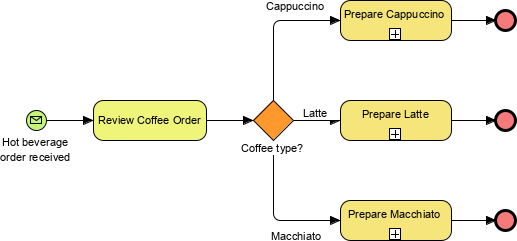
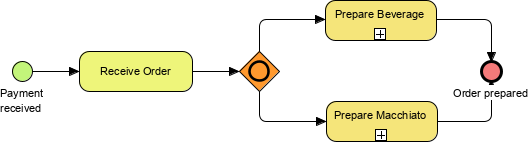
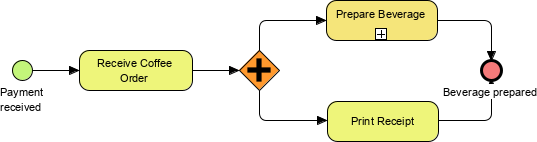
📊 Flow Object Summary Visual Reference


🔗 BPMN Connecting Objects
Connect flow objects to create the skeletal structure of business processes:
| Connector | Symbol | Purpose |
|---|---|---|
| Sequence Flow | ➤ Solid line with arrow | Shows order of activity execution (not called “control flow” in BPMN) |
| Message Flow | ⇢ Dashed line with open arrowhead | Represents information flow across organizational boundaries; may include envelope icon |
| Association | Dotted line | Links artifacts (annotations, data) to flow objects for documentation |

🏊 BPMN Swimlanes
Organize activities by responsibility or functional capability:
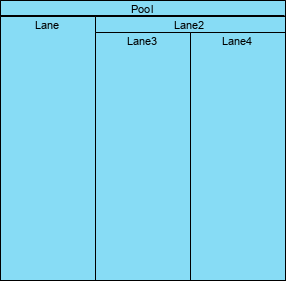
Pool 🏢
-
Represents a Participant in a process (e.g., organization, system, role)
-
Acts as a graphical container separating activities from other participants
-
Commonly used in B2B process modeling
Lane 🛣️
-
Sub-partition within a Pool
-
Extends full length of Pool (vertically or horizontally)
-
Used to categorize activities by department, role, or system
📎 BPMN Artifacts
Extend diagrams with contextual information without altering process flow:
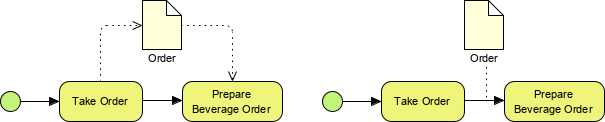
Data Object 📄
-
Shows data required or produced by activities
-
Connected via Associations
Data Store 🗄️
-
Represents persistent storage accessible by the process
-
Data survives beyond process scope
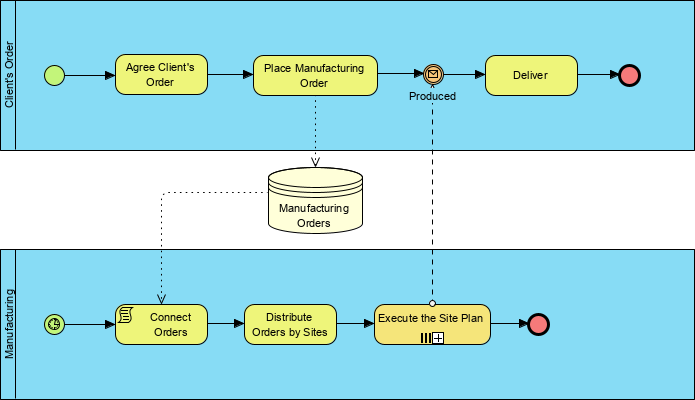
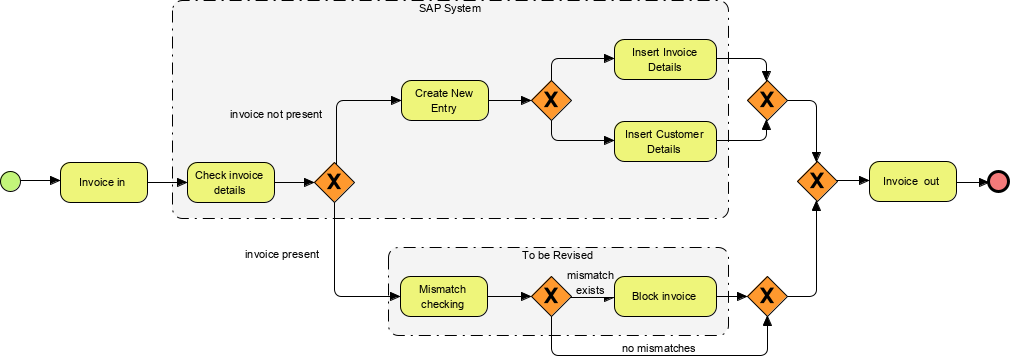
Group ⧉
-
Rounded rectangle with dashed border
-
Used for documentation or analysis; does not affect Sequence Flow
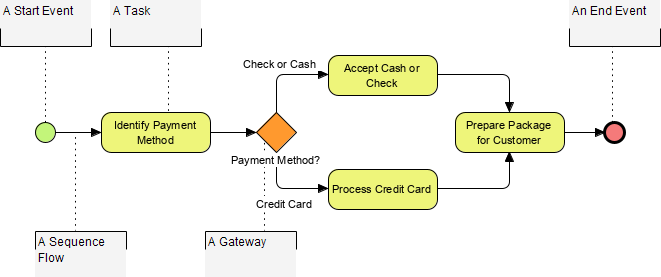
Annotation 💬
-
Provides explanatory text for diagram readers
-
Connected via Association to relevant elements
🎨 BPMN Notation: Simple or Complex?
BPMN achieves an elegant balance: simple core elements enhanced with modular variations to handle complexity without disrupting visual consistency.
Event Complexity Matrix
Events combine base shapes with internal/external markers to represent triggers, results, and timing:
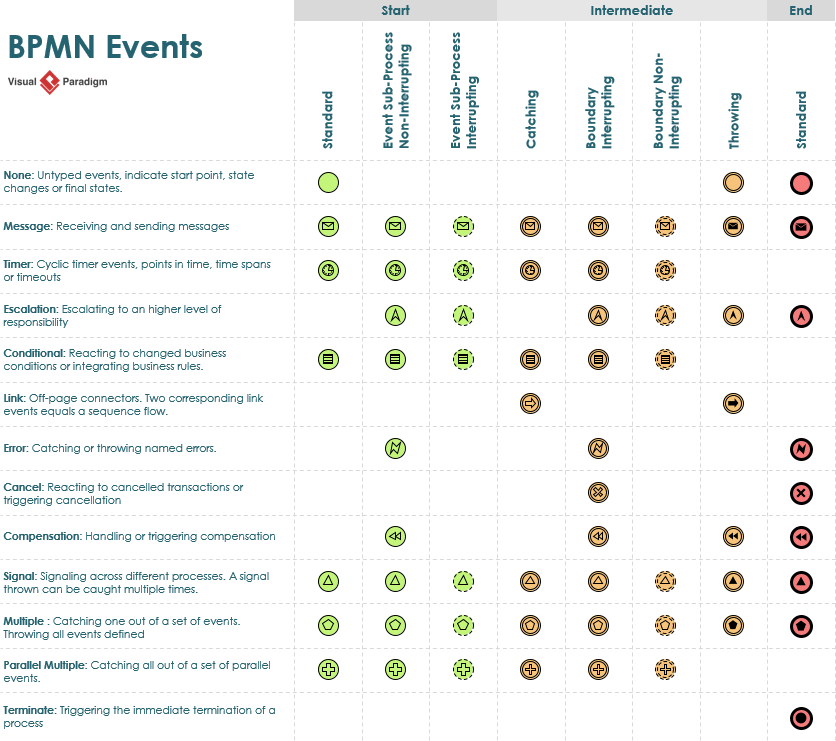
✅ Key Insight: Learn the 4 core categories first. Add complexity markers only as needed for your use case.
🔗 Reference List
BPMN Notation Overview: Comprehensive introduction to BPMN graphical notation, core philosophy, and foundational concepts for business process modeling.
Purpose of BPMN: Explains BPMN’s goal of bridging business and technical stakeholders through intuitive, standardized process diagrams across descriptive, analytic, and executable modeling levels.
Evolution of BPMN: Historical timeline from BPMI’s 2004 BPMN 1.0 release through OMG stewardship to ISO/IEC 19510:2013 standardization of BPMN 2.0.2.
BPMN Core Elements: Introduces the four foundational categories—Flow Objects, Connecting Objects, Swimlanes, and Artifacts—that structure all BPMN diagrams.
Flow Objects: Details the three essential flow elements: Events (circles), Activities (rounded rectangles), and Gateways (diamonds) that drive process logic.
Flow Object Summary: Visual reference guide consolidating Events, Activities, and Gateways with representative icons and usage contexts.
Events: Explores Start, Intermediate, and End Events—the triggers and outcomes that initiate, interrupt, or conclude process flows.
Activities: Covers Tasks and Sub-Processes as representations of work units, including atomic and compound activity modeling.
Gateways: Explains decision and synchronization points—Exclusive, Inclusive, and Parallel Gateways—for controlling process branching and merging.
BPMN Connecting Objects: Describes Sequence Flow, Message Flow, and Association connectors that define order, communication, and documentation links.
BPMN Swimlanes: Details Pools (participants) and Lanes (sub-partitions) for organizing responsibilities and visualizing cross-functional processes.
BPMN Artifacts: Covers Data Objects, Data Stores, Groups, and Annotations—supplementary elements that enrich diagrams without altering execution logic.
BPMN Notation: Simple or Complex?: Discusses BPMN’s scalable design philosophy: maintaining visual simplicity while supporting advanced modeling through modular event markers and extensions.
BPMN (Business Process Model and Notation) is a standardized, flowchart-based graphical language designed to model business processes in a way that is intuitive for business analysts yet precise enough for technical implementation. It organizes diagrams into four core element categories—Flow Objects (Events, Activities, Gateways), Connecting Objects (Sequence/Message Flows, Associations), Swimlanes (Pools/Lanes), and Artifacts (Data Objects, Annotations)—enabling scalable complexity while preserving visual clarity. From high-level descriptive models to executable workflows, BPMN bridges the gap between business strategy and system execution, evolving since 2004 into an ISO-standardized notation trusted globally for process optimization and digital transformation.