Learn how to develop a Communications Plan. Lists the information needs of stakeholders, and describes how these needs can be satisfied through appropriate communications activities.
Continue reading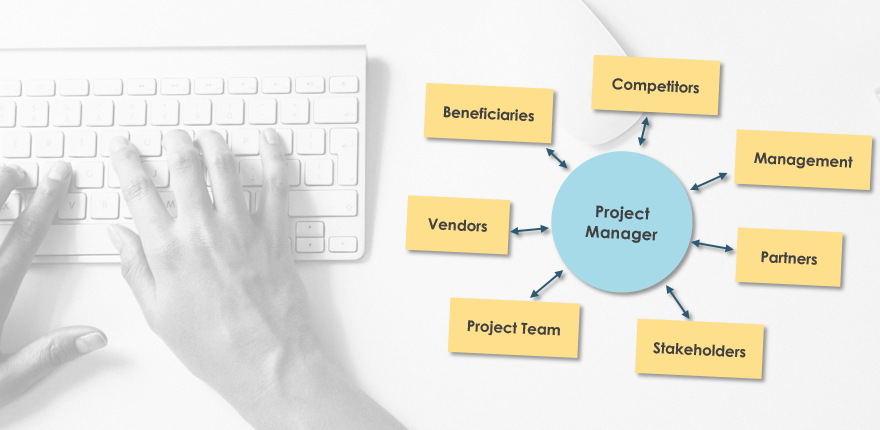
Learning one new thing everyday
Learn how to develop a Communications Plan. Lists the information needs of stakeholders, and describes how these needs can be satisfied through appropriate communications activities.
Continue reading
Scrum is the most popular subset of agile. It is not only a lightweight agile development process framework, but also the most widely used framework. Here are the most basic agile and scrum resources for agile and scrum practitioners
Continue reading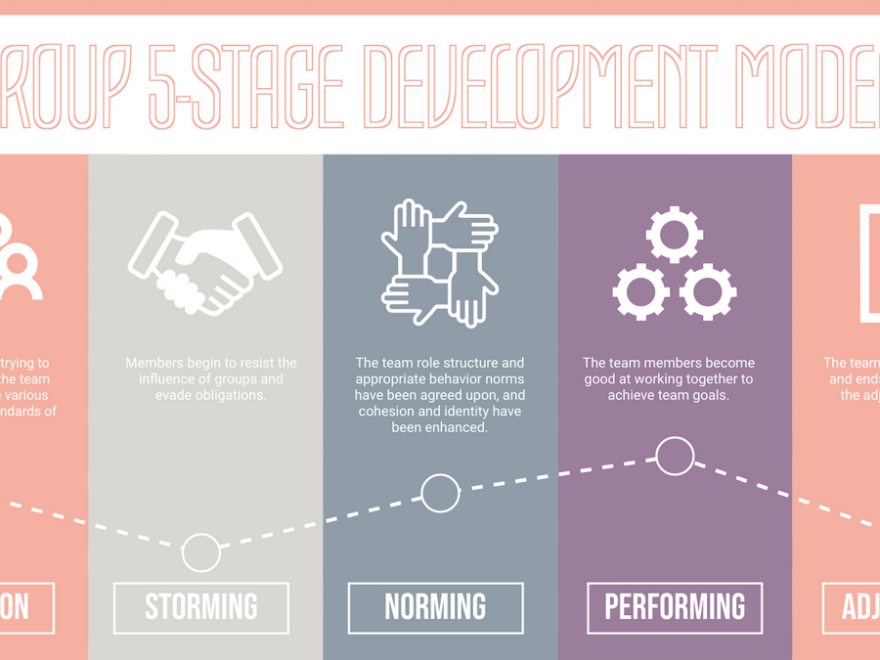
The forming–storming–norming–performing model of group development was first proposed by Bruce Tuckman in 1965, who said that these phases are all necessary and inevitable in order for the team to grow, face up to challenges, tackle problems, find solutions, plan work, and deliver results. The theory remains a good explanation of team development and behavior.
Continue reading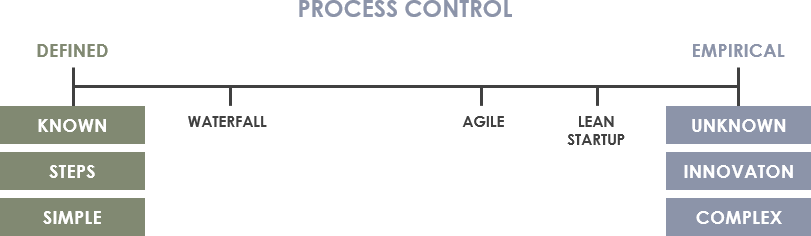
Most software development projects are considered complex and unpredictable in nature due to the convergence of three factors: people, requirements and technology. The various approaches used for delivering and managing projects could be more easily understood in the context of process control models and project complexity.
Continue reading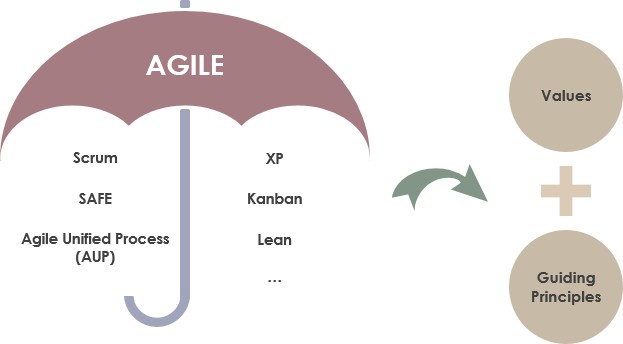
The Agile Manifesto details some fundamental agile philosophies, one of which is a preference for Empirical Process control — which maintains that knowledge is derived from experience and decision making is based on what is known. Scrum is an Empirical Process based on inspection, adaptation, and transparency. gave the name “Agile” to the movement.
Continue reading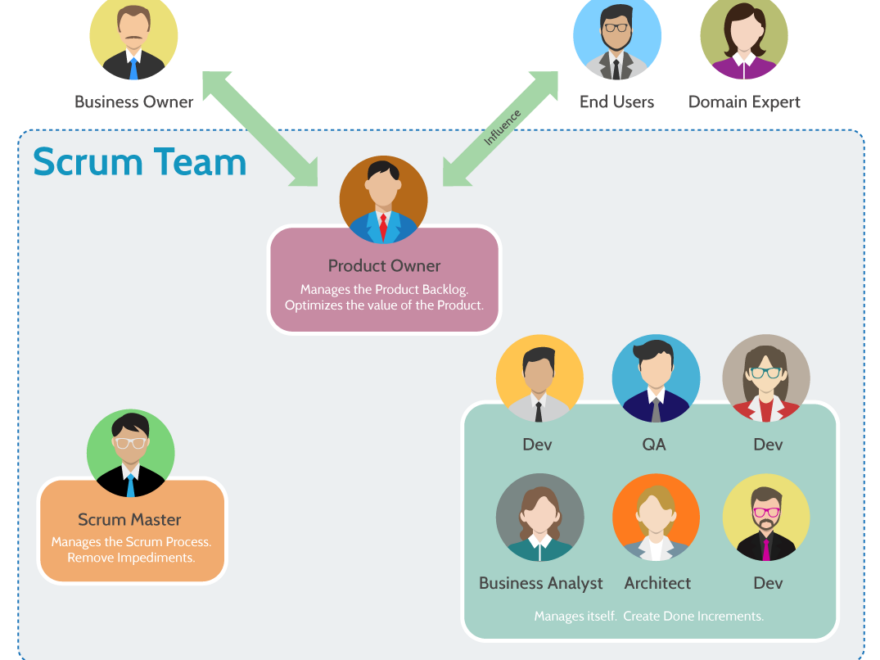
Product owner — holds the vision for the product; Scrum Master — helps the team best use Scrum to build the product; Development team — builds the product
Continue reading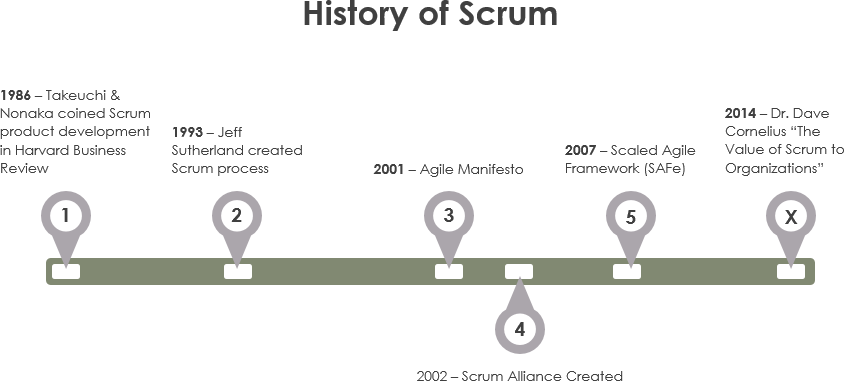
The history of the Scrum method starts in 1986. That year, two Japanese business experts introduced the term in the context of product development. Hirotaka Takeuchi and Ikujiro Nonaka published the article, “New New Product Development Game” (the double “New” is indeed part of the title) in the Harvard Business Review. The authors described a new approach to commercial product development that would increase speed and flexibility. Their inspiration came from case studies from manufacturing firms in the automotive, photocopier, and printer industries.
Continue reading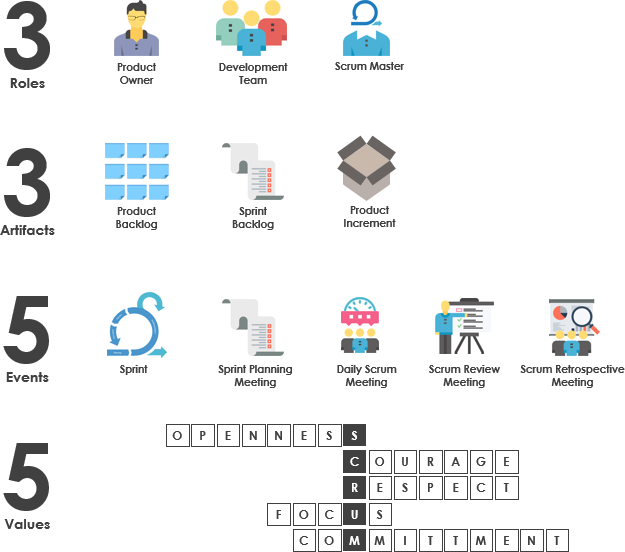
Scrum is a framework for developing and maintaining complex products and is an incremental, iterative development process. In this framework, the entire development process consists of several short iteration cycles, a short iteration cycle called a Sprint, and each Sprint is 2 to 4 weeks long.
Continue reading
A Product Owner is responsible for telling what should be developed and the order of items that needs to be fulfilled. You can consider him as the sole authority that would tell the rest of the team what they need to create and which features should come first. In short, he is the one who tells the other members of the team about what they should be coming up with.
Continue reading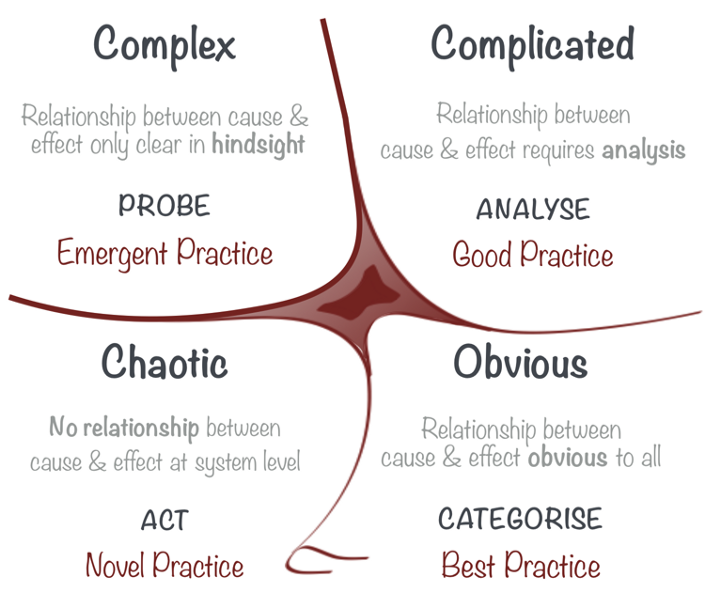
Cynefin Framework helps managers to identify how they perceive situations and make sense of their own and other people’s behavior. It draws on research into systems theory, complexity theory, network theory and learning theories.
Continue reading