What is Reverse Brainstorming?

طوفان فکری معکوس چیست؟

The reverse brainstorming lets you create unusual and wild ideas if the brainstorming process fails to meet the requirements. When typical brainstorming encounters difficulties, it’s time to be creative. A highly creative brainstorming technique is called reverse brainstorming. It can not only make ideas flow, but also bring a lot of fun. More importantly, it can stimulate innovative ideas and useful insights to produce positive results.

Continue reading
What is Case Management Model and Notation (CMMN)

مدل و نشانه‌گذاری مدیریت پرونده (CMMN) چیست

CMMN is a graphical notation used for capturing work methods that are based on the handling of cases requiring various activities that may be performed in an unpredictable order in response to evolving situations. Using an event-centered approach and the concept of a case file, CMMN expands the boundaries of what can be modeled with BPMN, including less structured work efforts and those driven by knowledge workers. Using a combination of BPMN and CMMN allows users to cover a much broader spectrum of work methods.

Continue reading
How to Perform Gap Analysis with BPMN?

چگونه تحلیل شکاف را با BPMN انجام دهیم؟

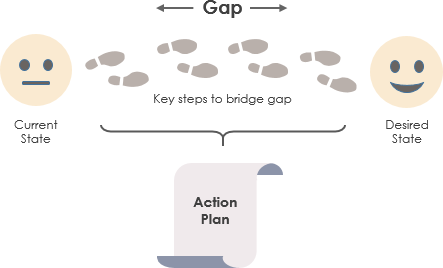
Gap analysis involves the comparison of actual performance with potential performance. For example, a company does not make the best use of current resources, it may perform below an idealized potential. In other words, gap analysis is the process people use to examine their current state (or as-is process) with their desired state (to-be process) of a company. It typically is used to determine if the company is meeting expectations and effectively using resources that measure time, money and labor. The management team can then create an action plan to move the organization forward and close the performance gap.

Continue reading
Cross-Functional Flowchart – with Templates and examples

نمودار جریان چندوظیفه‌ای – با الگوها و مثال‌ها

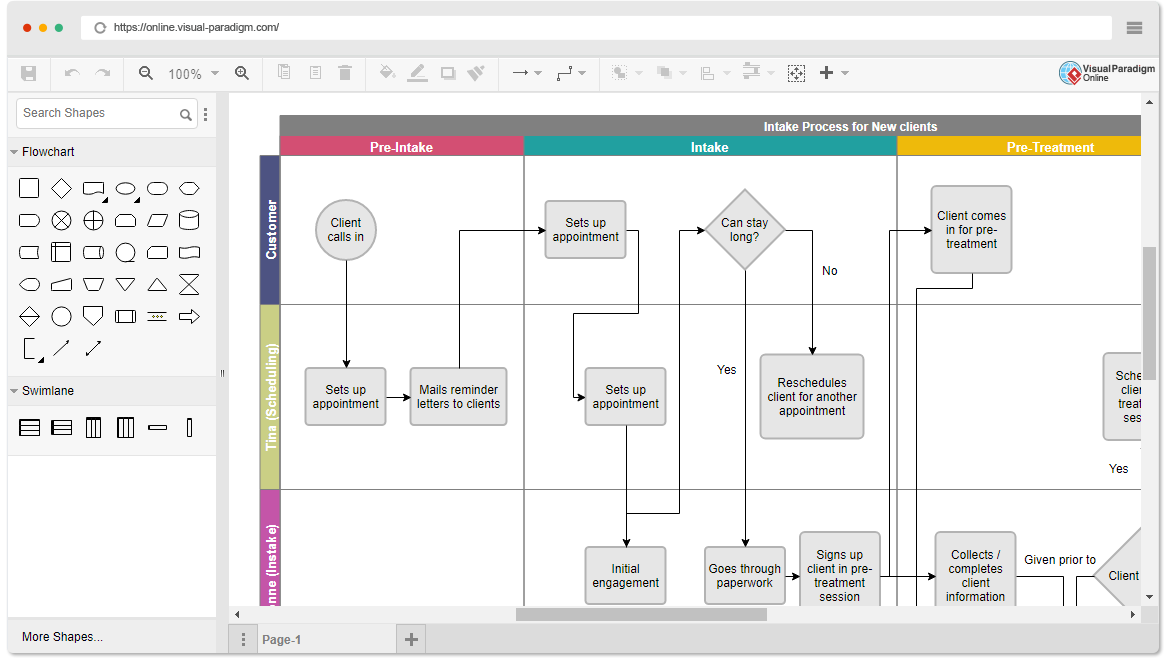
Cross functional flow charts show who did what and when in swimlane or grid charts. These charts are organized into multiple parts to provide additional dimensions by assigning each process step to a category. In other words, you can use a cross functional flowchart to describe the relationship between the steps in the process and the department or functional area responsible for those steps.

Continue reading
The 20 most frequently mentioned rules and guidelines in Scrum

20 قانون و راهنمایی که در اسکرام بیشتر ذکر شده‌اند

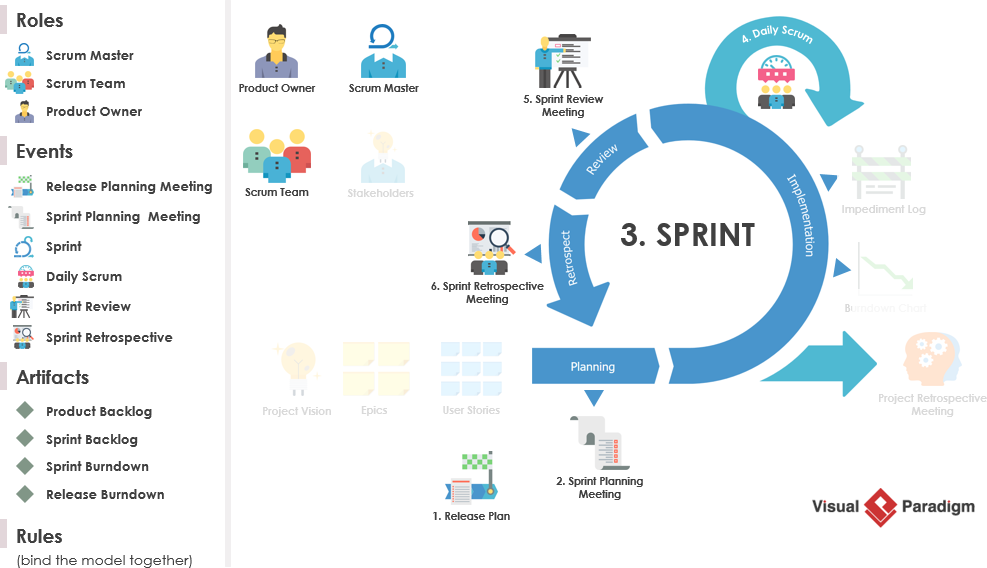
The Scrum framework consists of Scrum Teams and their associated roles, events, artifacts, and rules. Each component within the framework serves a specific purpose and is essential to Scrum’s success and usage. The rules of Scrum bind together the roles, events, and artifacts, governing the relationships and interaction between them as shown in the Figure below:

Continue reading